How Do You Read a Piste Map? Lifts, Routes and Warnings
A piste map has three layers: lifts (gondolas, chairlifts, drag lifts and magic carpets; usually straight lines), runs (blue, red and black by difficulty; often numbered) and services (rental, first aid, restaurants, meeting points). When reading the map, first find where you are and your return point, then the runs that suit your level and the lifts that take you up to them. The live board at the resort entrance shows which lifts and runs are open (green) or closed (red) and any avalanche warning; plan your day accordingly.
Usually straight lines; base and top stations marked with dots
Going up; the lift's name or letter is shown
Runs
Coloured, winding lines; often numbered
The way down; the colour shows the difficulty
Services
Icons
Rental, ski school, first aid, restaurant, car park, meeting point
Some maps also show snowparks, sledging areas, night skiing runs and race runs with separate icons; for example, Erciyes's official catalogue has separate legend entries for the snowpark, the snowkite area and the accredited race run.
Get to know the lift types
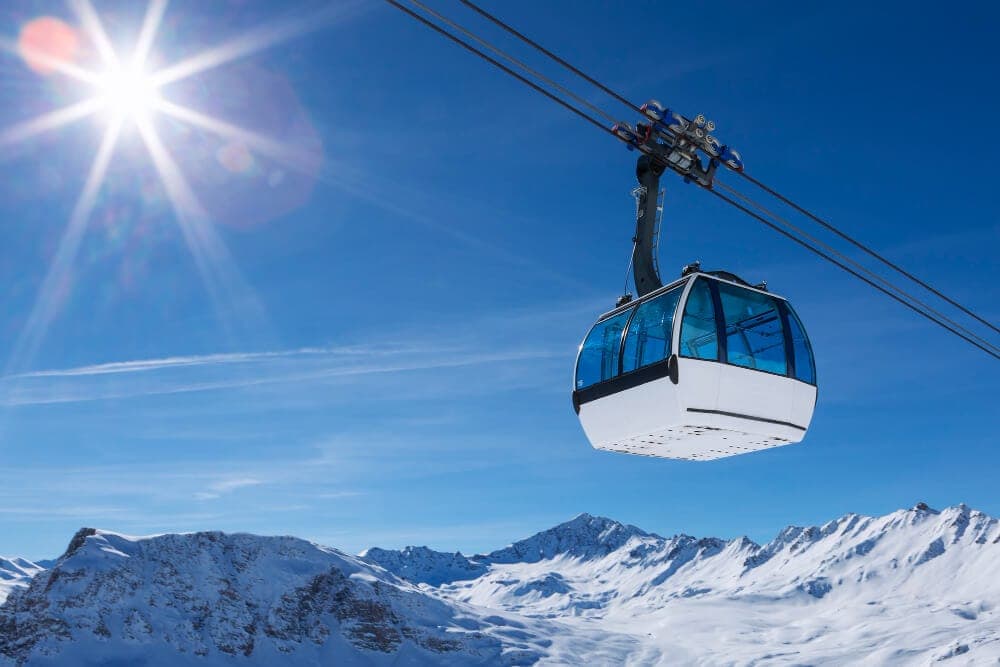
Gondola (cable car cabin): An enclosed cabin; you take your skis off and bring them inside. Usually the resort's main access line.
Chairlift: A lift with open or covered chairs; you get on with your skis on.
Drag lift (T-bar, button): Pulls you up while you stand on your skis; it can be tricky for beginners.
Magic carpet: The conveyor belt in beginner areas; the lift you will use most on your first day.
In Europe, runs are blue (easy), red (intermediate) and black (difficult); in some countries the easiest are green. Yellow or orange lines are “ski routes”, which are not groomed and not checked by the ski patrol. For what the colours mean, see our guide Ski run colours and difficulty ratings.
Run numbers let you match the map to the signs at the side of the run. If you get lost, the best thing to do is find the number on the nearest run sign on the map.
The live board: what is open today?
The printed map shows the whole resort; the boards at the entrance and at lift stations show what is open that day. According to the Swiss piste guidelines, an orientation board should show at least the following:
Whether the lifts are running (green running, red not running) and the last ride up,
The colours of the runs, whether they are open or closed, and the time of the last check,
Space for the avalanche warning sign and flashing light, sledging runs and protected areas,
A notice that the ski patrol checks only marked and open runs, and that runs are closed outside lift operating hours.
In Erciyes, too, green on the live board means open and red means closed; you can get the printed map free of charge from the information offices.
Avalanche warnings
In Europe, avalanche danger is announced on a five-level scale: 1 low, 2 moderate, 3 considerable, 4 high, 5 very high. Under the Swiss guidelines, from level 3 onwards a warning sign and a flashing light are displayed at the entrances; under the Austrian standard, an orange flashing light is mandatory at levels 4–5. In France, the yellow, chequered and black flags used in the past are being replaced by pictograms. Marked and open runs are secured against avalanches; the warning is a reminder not to go off-piste.
Planning your day with the map: 5 steps
Mark where you are: Your hotel, the gate or the gondola base station.
Find out your return point and the last lift time: Know where you need to get down to at the end of the day.
Choose runs that suit your level: Look at the colours and numbers.
Find the lifts that take you up to those runs: Some runs can be reached by more than one lift.
Agree on a meeting point: If you are skiing with a group, a lift base station or a restaurant.
Examples: the Erciyes, Sarıkamış and Bansko maps
Each resort's map is read according to its own logic. The Erciyes map is read by its four gates (Develi, Tekir, Hisarcık, Hacılar), the Sarıkamış map by its two sections, and the Bansko map by the areas that spread out from Banderishka Polyana, where the gondola arrives. Each of our run guides has a “Reading the map” section.
The map when skiing as a group
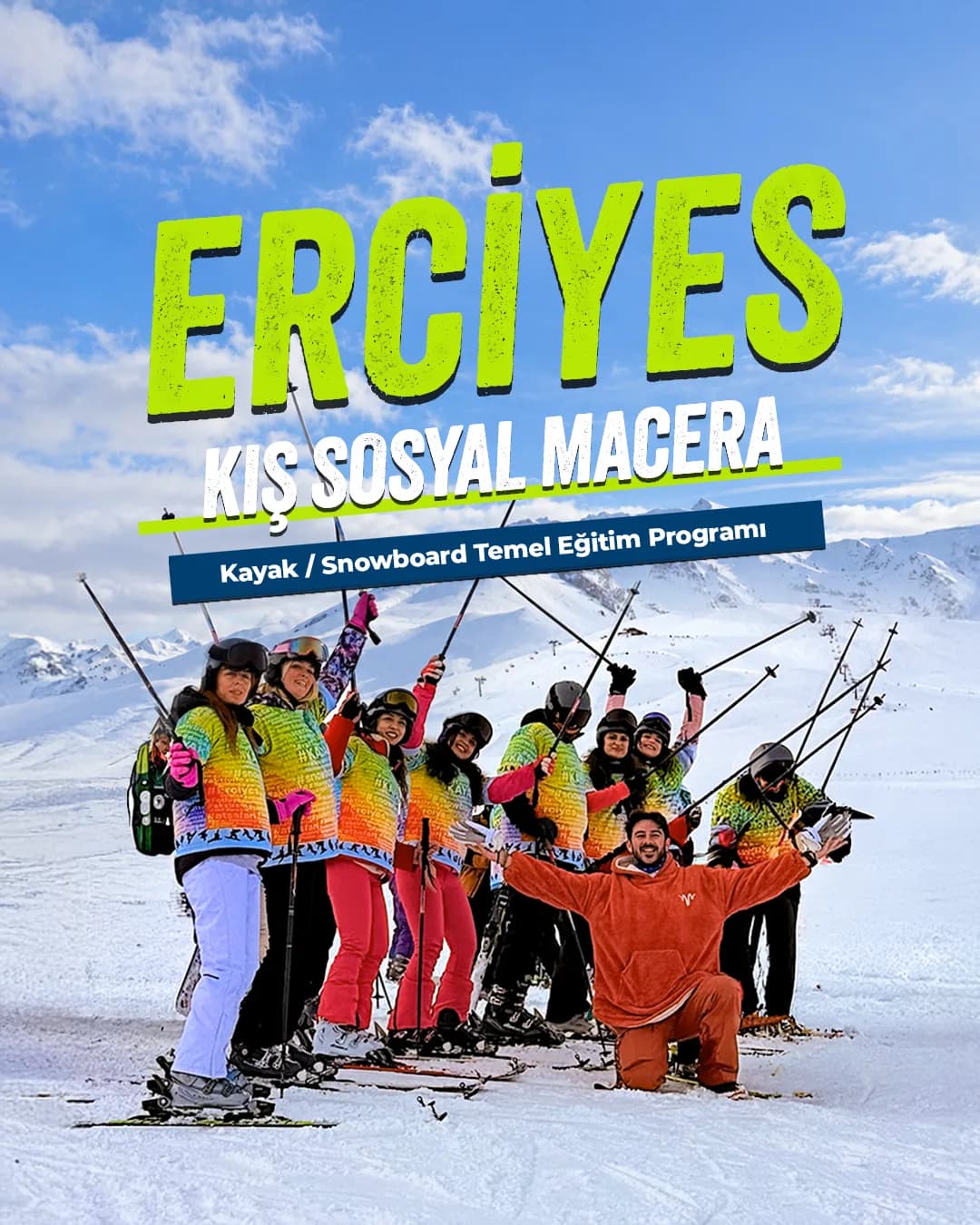
On an activity holiday, the group leader usually handles the map: they keep track of meeting points, return times and which runs are open. Even so, being able to read the map yourself means you can get back to the meeting point safely if you get separated from the group. On Doğadayız winter activity holidays, beginners ski with an instructor and those who can already ski go as a group; in the evenings, everyone comes together as part of a social adventure holiday.
Doğadayız Packages
Doğadayız packages for your level
Winter activity holidays with accommodation, ski pass and equipment included, shared with a group.
The easiest way to learn to ski: a winter activity holiday
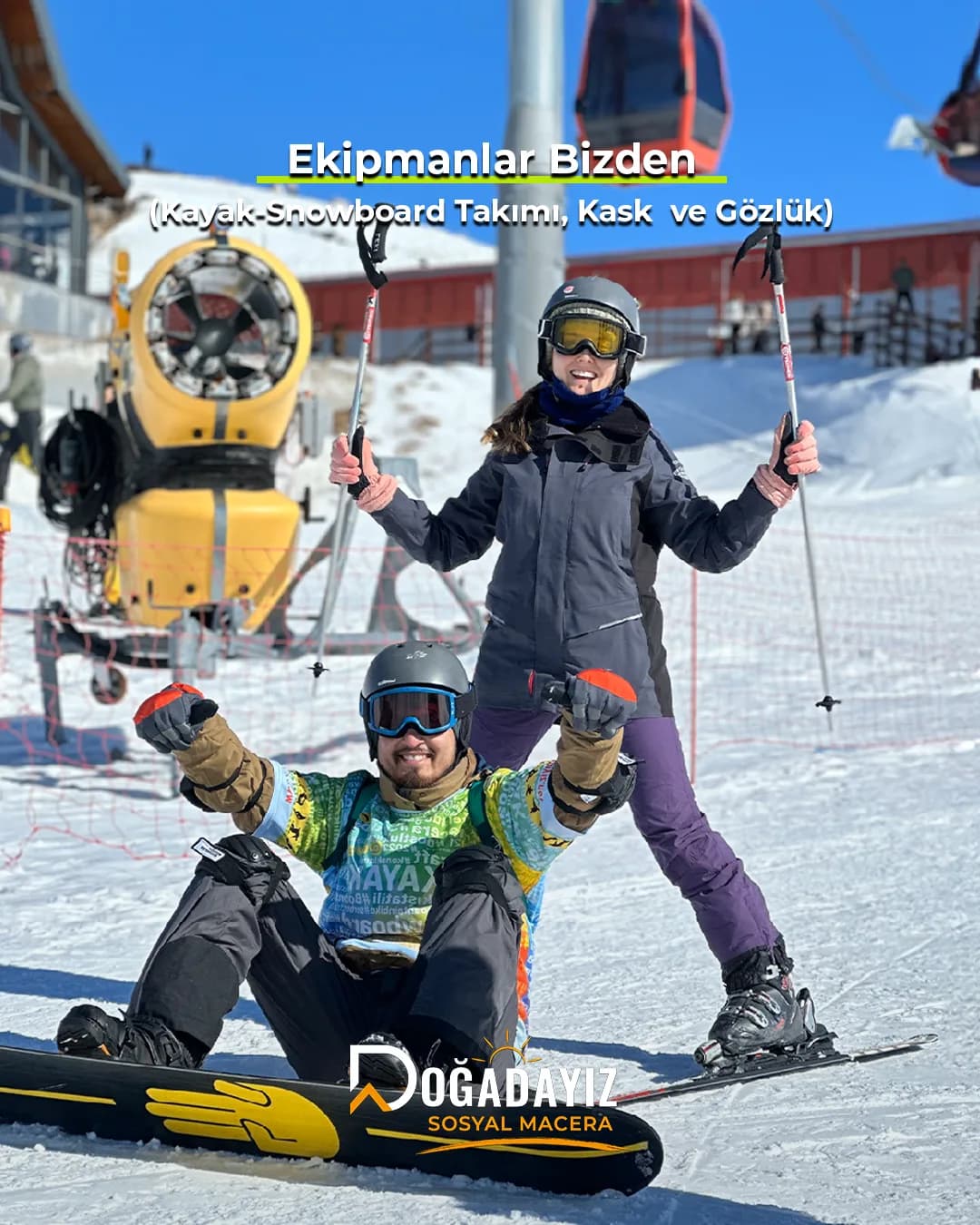
An activity holiday puts a sport at the heart of your trip: transport, accommodation and meals are planned, so you can focus on learning on the slopes. On Doğadayız winter activity holidays, accommodation, ski pass and ski or snowboard equipment are included in every package; course packages include basic lessons with instructors affiliated with the Turkish Ski Federation, while experience packages let you practise on the slopes at your own level.
What makes the programme different is the group: sharing the slopes with people at a similar level, dinners and nights out together, and a group leader by your side at all times. Solo travellers become part of this social adventure holiday from day one. That is why we describe our programmes as a social adventure holiday.
On maps, lifts are usually shown as straight lines, with their base and top stations marked by dots. Runs, on the other hand, are winding lines coloured according to their difficulty.
How can I tell whether a run is open?
Look at the live boards at the resort entrance and at lift stations. Usually green means open and red means closed; it is the same in Erciyes. The printed map only shows the whole resort, not the situation on the day.
What should I do if I get lost at a ski resort?
Find the number on the nearest run sign on the map and head down to the nearest lift station. If you are skiing with a group, go to the meeting point you agreed in advance; do not go beyond the piste boundary.
What does an avalanche warning light mean?
It shows that the avalanche danger in the area has risen. In Switzerland, it is displayed from danger level 3 onwards. Marked and open runs are secured against avalanches; the warning is a reminder not to go off-piste.
In Europe, runs are marked by difficulty as blue (easy), red (intermediate) and black (difficult); in some countries, such as France, and at some resorts, green is also used for the easiest runs. Under the Austrian standard, the gradient of a blue run should not exceed 25% and that of a red run 40%; anything steeper is black. In North America, the symbols green circle, blue square and black diamond are used, and difficulty is relative only to that resort's own runs. Turkey has no national standard; resorts use the European system. After the first days, beginners should start on blue (or, where available, green) runs.
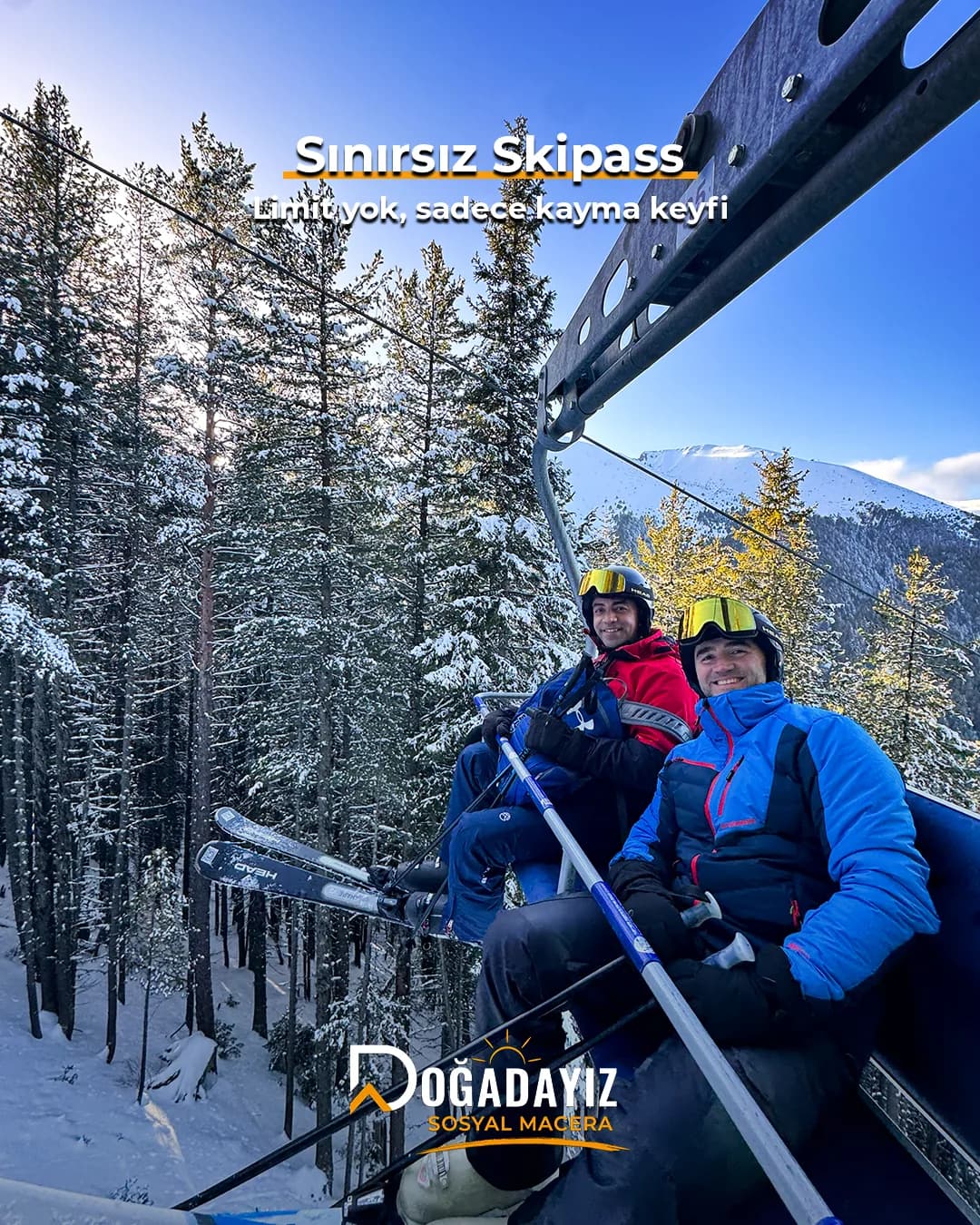
Ski resorts have four types of lift: the magic carpet, the drag lift (T-bar), the chairlift and the gondola. Beginners master the magic carpet first, then the chairlift; the drag lift is the hardest because it takes balance. The basic rule on a chairlift: watch the chair over your shoulder, sit all the way back, lower the safety bar once everyone is seated, raise it as you approach the top and move away from the ramp straight away. On a snowboard, you ride the lifts with your back foot out of the binding. Under the Erciyes rules, children may not ride the lifts without an adult.
Erciyes Ski Resort lies on the slopes of the 3,917-metre Mount Erciyes in Kayseri. You enter the resort through four gates: Hacılar, Hisarcık, Tekir and Develi. According to the official table of Erciyes A.Ş., there are 41 runs (18 easy, 17 intermediate, 6 difficult) and 19 lift installations: 14 lifts, 2 of them gondolas, and 5 magic carpets. The ski area lies between 2,088 and 3,346 metres. Beginners spend their first days in the beginner areas with magic carpets at the gates and in the training area at Hisarcık.