
Skip to content

Outdoor Academy

Skiing Guide

New to skiing? Start with the beginner guides; once you have moved beyond the snowplough, carry on with the intermediate technique articles. Every guide points you to the next lesson.

92 guides · filter by level

Guides

  • BeginnerLearningSkiing · KIS-001

    How Do You Start Learning to Ski?

    You start skiing with a beginner lesson with an instructor, rental equipment and easy (beginner) slopes. On day one you put on your skis, glide on flat ground, learn to stop with the snowplough and ride the magic carpet; on day two you come down an easy slope under control with snowplough turns. For an adult who has never skied, this stage usually takes 2 days.

    Read the guide →
  • BeginnerTechniqueSkiing · KIS-003

    The Correct Basic Ski Stance: Balance, Centre of Mass and Body Position

    The correct basic ski stance is the position the American instructors' association PSIA calls the athletic stance: in a fairly tall stance your weight is spread evenly over both feet; your ankles, knees, hips and spine are slightly flexed forward; your upper body is upright but relaxed and your hands are comfortably forward, within your field of vision. Your hips and upper body are centred over your feet; your head and shoulders appear stacked over your hips and feet. According to PSIA, feeling your ankle flex into the tongue of the boot and your weight on the balls of your feet eliminates leaning back, the most common beginner mistake.

    Read the guide →
  • BeginnerLearningSkiing · KIS-004

    Walking, Gliding and Changing Direction on Skis on Flat Ground

    Moving on skis on flat ground starts with four basic skills: walking in small steps and sliding your feet, turning on the spot with a star turn, climbing with a side-step or herringbone (V-step) and moving across the flat with a skating step. The instructors' associations PSIA in the USA and CSIA in Canada teach these skills, together with getting to know the equipment and falling and getting up safely, before the first glide on a slope. Poles are for balance, not support; your weight always stays on your feet.

    Read the guide →
  • BeginnerTechniqueSkiing · KIS-005

    The Snowplough (Pizza) Technique: Speed Control and Stopping Safely

    The snowplough (pizza) is the V position made by bringing the tips of your skis together and pushing the tails apart, and it is how a beginner controls speed and stops. The American instructors' association PSIA distinguishes two types: the braking snowplough, which is wider and presses on the edges and is used to cut speed and stop; and the gliding snowplough, which is narrower with little friction and is used to learn turns. According to PSIA, in a good snowplough turn speed is controlled by the shape of the turn, not by the width of the snowplough; a big braking snowplough, on the other hand, makes your hips drop back.

    Read the guide →
  • BeginnerTechniqueSkiing · KIS-010

    Using Ski Poles: The Right Grip, Length and Turn Rhythm

    Ski poles are used for balance, rhythm and pushing on flat sections. According to the American instructors' association PSIA, your hands should be comfortably up and forward, with your elbows at least level with your breastbone and forward of it, “as if carrying a tray of glasses full of water”. The pole is planted together with the edge change, that is, at the least balanced moment of the turn, slightly in front of and to the side of your boots, with a small swing from the wrist. For pole length, the manufacturer LEKI recommends that your arm forms a 90° angle when the pole is held vertically on the ground, or about 70% of your body height. Letting go of your poles when you fall matters: falling with your pole in your hand can lead to “skier's thumb”, an injury to the ligament of the thumb.

    Read the guide →
  • BeginnerEquipmentSkiing · KIS-041

    How Do You Choose Your First Skis? Height, Weight, Level and Intended Use

    For a beginner, skis should be short and easy to turn. Manufacturers' rules differ slightly: Atomic recommends a length at about chin height for beginners; Salomon says to choose skis 10–15 cm shorter than your height, and 15 cm shorter for complete beginners; Head points to between the chin and the nose. If you are light and inexperienced, choose the shorter end; if you are heavy or sporty, the longer end. A short turn radius (about 12–15 m) and a little rocker make turning easier. In your first season, renting rather than buying is the easiest way to try out the right length.

    Read the guide →
  • BeginnerEquipmentSkiing · KIS-050

    How Do You Choose Ski Boots? Size (Mondopoint), Flex and Last Width

    When choosing ski boots, you look at four things: size, flex (stiffness), last width and fit. Ski boot sizes are given in the Mondopoint system: your foot length in centimetres (e.g. 26.5). For beginners, a soft to medium flex is recommended; Nordica gives this range as 40–80, while Atomic puts it at the lower end of a scale starting at around 70, but there is no common measuring standard for flex across brands. The most common mistake is buying boots that are too big: according to Atomic's shell test, 2 cm of space behind the heel in the boot with the liner removed is right for most skiers, and 3 cm is too big.

    Read the guide →
  • BeginnerEquipmentSkiing · KIS-051

    What Are Ski Bindings and the DIN Setting? Why Professional Adjustment Matters

    The DIN setting is the setting that determines the force at which a ski binding releases your boot in a fall; the name comes from an old German standard, and today settings are made according to the ISO 8061 and ISO 11088 standards. The value is chosen by weight, height, age, boot sole length and skier type (I, II, III). According to the 2015 edition of ISO 8061, the value is reduced by 15% for a type 1 skier and increased by 15% for type 3; it is also reduced by 15% for skiers under 10 and over 50. A setting that is too low can make the binding release unnecessarily, while one that is too high can stop it releasing in a fall and lead to injury. That is why the setting is made and tested by a trained technician; all you need to do at the rental shop is give your correct weight, height, age and level.

    Read the guide →
  • BeginnerEquipmentWinter Sports · KIS-053

    Rent or Buy Skis and Snowboards?

    For a beginner, the right approach is to rent in your first season. According to Burton, while you are learning you should prioritise lessons over new equipment, rent your gear and invest once you have learned the basics. When you decide to buy, the usual order is: first personal items (helmet, goggles, gloves, socks), then boots that fit your feet perfectly, and skis or a snowboard last. The main risk with rental equipment is a poor setting: for short-term rentals, the binding should be set by a technician according to ISO 13993. On a winter activity holiday package, equipment is usually already included.

    Read the guide →
  • BeginnerEquipmentWinter Sports · KIS-062

    Choosing Ski Goggles: Lens Category (VLT), UV Protection and Fit

    Ski goggles protect your eyes from wind, snow and reflected sunlight. According to the World Health Organization, fresh snow reflects up to 80% of UV radiation, and the UV level rises by about 10% with every 1,000 metres; so if you do not protect your eyes in the mountains, there is a risk of snow blindness. When choosing a lens, look at the filter category: categories 0–1 (clear lens) are for overcast and foggy weather, category 2 for changeable weather and category 3 for sunny weather; category 4 is for very intense light and is not suitable for driving. Goggles should fit your helmet without leaving a gap. The international standard for ski and snowboard goggles is ISO 18527-1.

    Read the guide →
  • BeginnerSafetyWinter Sports · KIS-063

    Choosing a Ski Helmet: Fit, Certification and Protection

    When choosing a ski helmet, check three things: certification, fit and goggle compatibility. In Europe the standard for ski and snowboard helmets is EN 1077 (class A covers the ears and has a stricter penetration test; class B offers more ventilation and better hearing); in the USA it is ASTM F2040. The helmet should fit snugly but without hurting, stay put when you shake your head, and leave room for two fingers under the chin strap. According to a meta-analysis of 12 studies, helmet wearers are about 35% less likely to suffer a head injury, and neck injuries do not increase. After a serious impact, a helmet should be replaced even if there is no visible damage.

    Read the guide →
  • BeginnerSafetyWinter Sports · KIS-083

    Ski Run Colours and Difficulty Ratings: Green, Blue, Red, Black

    In Europe, runs are marked by difficulty as blue (easy), red (intermediate) and black (difficult); in some countries, such as France, and at some resorts, green is also used for the easiest runs. Under the Austrian standard, the gradient of a blue run should not exceed 25% and that of a red run 40%; anything steeper is black. In North America, the symbols green circle, blue square and black diamond are used, and difficulty is relative only to that resort's own runs. Turkey has no national standard; resorts use the European system. After the first days, beginners should start on blue (or, where available, green) runs.

    Read the guide →
  • BeginnerSafetyWinter Sports · KIS-084

    How Do You Read a Piste Map? Lifts, Routes and Warnings

    A piste map has three layers: lifts (gondolas, chairlifts, drag lifts and magic carpets; usually straight lines), runs (blue, red and black by difficulty; often numbered) and services (rental, first aid, restaurants, meeting points). When reading the map, first find where you are and your return point, then the runs that suit your level and the lifts that take you up to them. The live board at the resort entrance shows which lifts and runs are open (green) or closed (red) and any avalanche warning; plan your day accordingly.

    Read the guide →
  • BeginnerSafetyWinter Sports · KIS-085

    How to Use Chairlifts, Drag Lifts and Gondolas: A Lift Guide

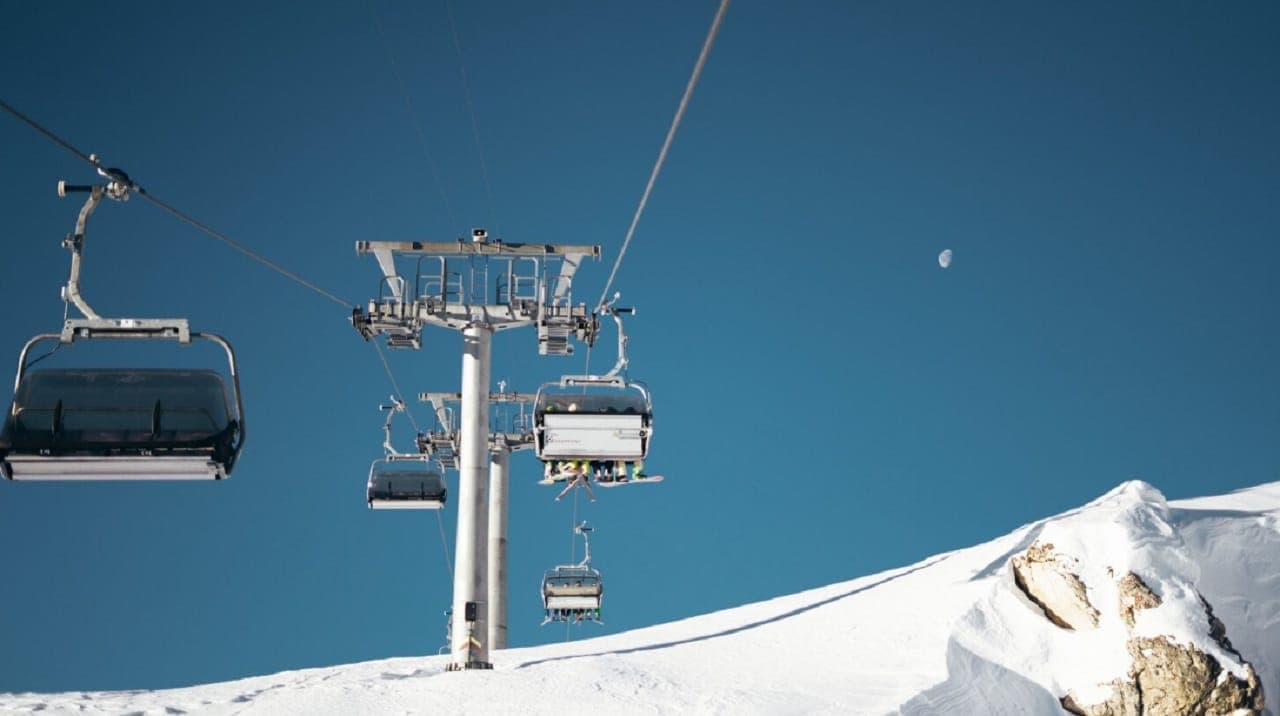
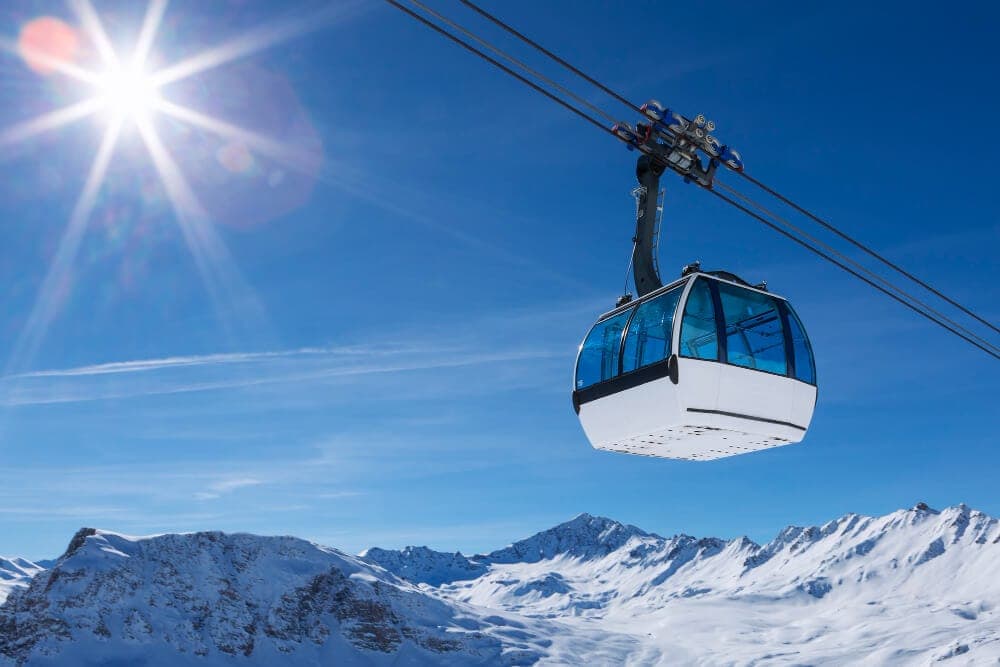
    Ski resorts have four types of lift: the magic carpet, the drag lift (T-bar), the chairlift and the gondola. Beginners master the magic carpet first, then the chairlift; the drag lift is the hardest because it takes balance. The basic rule on a chairlift: watch the chair over your shoulder, sit all the way back, lower the safety bar once everyone is seated, raise it as you approach the top and move away from the ramp straight away. On a snowboard, you ride the lifts with your back foot out of the binding. Under the Erciyes rules, children may not ride the lifts without an adult.

    Read the guide →
  • BeginnerSafetyWinter Sports · KIS-105

    A Guide to Physical Preparation for Skiing and Snowboarding

    Physical preparation for skiing and snowboarding gives you two things: less fatigue in the first few days and keeping control at the end of the day. The American Academy of Orthopaedic Surgeons (AAOS) recommends arriving in good condition, stopping when you get tired, and warming up for 3–5 minutes before skiing and starting with a few slow runs; many skiing injuries happen at the end of the day. To be honest, though, according to a systematic review there is not enough evidence that fitness training reduces injuries in recreational skiers; the evidence is strongest for knee injury awareness training and, in snowboarding, for wrist guards.

    Read the guide →
  • BeginnerLearningWinter Sports · KIS-113

    Nutrition, Hydration and Energy Management on a Ski Holiday

    Depending on effort, skiing and snowboarding are moderate- to high-intensity exercise: according to the 2024 Compendium of Physical Activities, active skiing time comes to 4.3 METs at light effort, 6.3 at moderate effort and 8.0 at vigorous effort; for someone weighing 70 kg, that means roughly 300, 440 and 560 kcal per hour (only while skiing; less on the lift and in the queue). In the cold, you feel less thirsty: in one study, cold conditions reduced thirst by up to 40%. That is why you should drink water regularly without waiting to feel thirsty, start the day with a filling breakfast, top up your energy during the day with small snacks and eat well in the evening to recover. Alcohol is linked to ski injuries; in a case-control study, even drinking the night before could increase the risk.

    Read the guide →
  • BeginnerDestinationsWinter Sports · KIS-118

    How to Combine Ski Lessons in Erciyes with a Cappadocia Holiday

    Erciyes Ski Resort is about an hour's drive from Cappadocia, so you can learn to ski in Erciyes and stay in Cappadocia. The plan is simple: lessons and practice in Erciyes during the day, dinner and nightlife in Cappadocia in the evening, and, depending on the length of the programme, one day for a balloon ride, the valleys and the underground cities. On Doğadayız Erciyes programmes, accommodation is in cave hotels in Ürgüp; on the 4-night, 5-day programme, a balloon ride, an ATV safari and a Cappadocia regional tour are included in the package alongside two days of lessons. It is a complete winter activity holiday that combines skiing with exploring a region.

    Read the guide →
  • BeginnerDestinationsWinter Sports · KIS-129

    How to Choose a Destination for Your First Ski Holiday: 8 Criteria for Beginners

    The best resort for your first ski holiday is not the biggest one but the one that suits a beginner best. Look at eight criteria: (1) a beginner area with a magic carpet, (2) the share of easy runs and access to them, (3) altitude and reliable snow, (4) travel time, (5) the hotel's distance from the slopes, (6) crowds, (7) off-slope experiences and social life, (8) budget and visa. In Türkiye, Erciyes stands out for first-timers with its large beginner areas and training area; once you can ski, the forest runs of Sarıkamış or, abroad, Bansko make a good next step. Once you have chosen the resort, a winter activity holiday that combines lessons, equipment and ski pass in a single package makes your first experience easier.

    Read the guide →
  • BeginnerHolidaysWinter Sports · KIS-130

    How to Plan Your First Ski Holiday: A Winter Activity Holiday Plan in 7 Steps

    The easiest way to plan your first ski holiday is to get the order right: assess your level → choose the resort → allow at least 2–3 days on the slopes → pick dates with the mid-year school holiday crowds in mind → plan lessons, equipment, ski pass and accommodation together → get your clothing ready → check safety and insurance. For someone who has never skied, a resort with a large training area (e.g. Erciyes) and lessons with an instructor are essential. A winter activity holiday that brings all these pieces together in one package is the way to make the fewest mistakes on your first trip.

    Read the guide →
  • BeginnerHolidaysWinter Sports · KIS-131

    How Many Days Should a Ski Holiday Be? The Ideal Length for Your Level

    For someone who has never skied, a ski holiday should include at least 2–3 full days on the slopes; with travel days this usually means a holiday of between 2 nights/3 days and 4 nights/5 days. A common benchmark at ski schools is that a beginner can get down an easy run after three days of lessons. If you can already ski on your own, 3–4 days on the slopes is enough to get to know different runs. What matters is not the total number of nights but the number of full days you spend on the slopes; count travel days separately.

    Read the guide →
  • BeginnerHolidaysWinter Sports · KIS-133

    What Is a Ski Pass? Types, Prices and What to Check Before You Buy

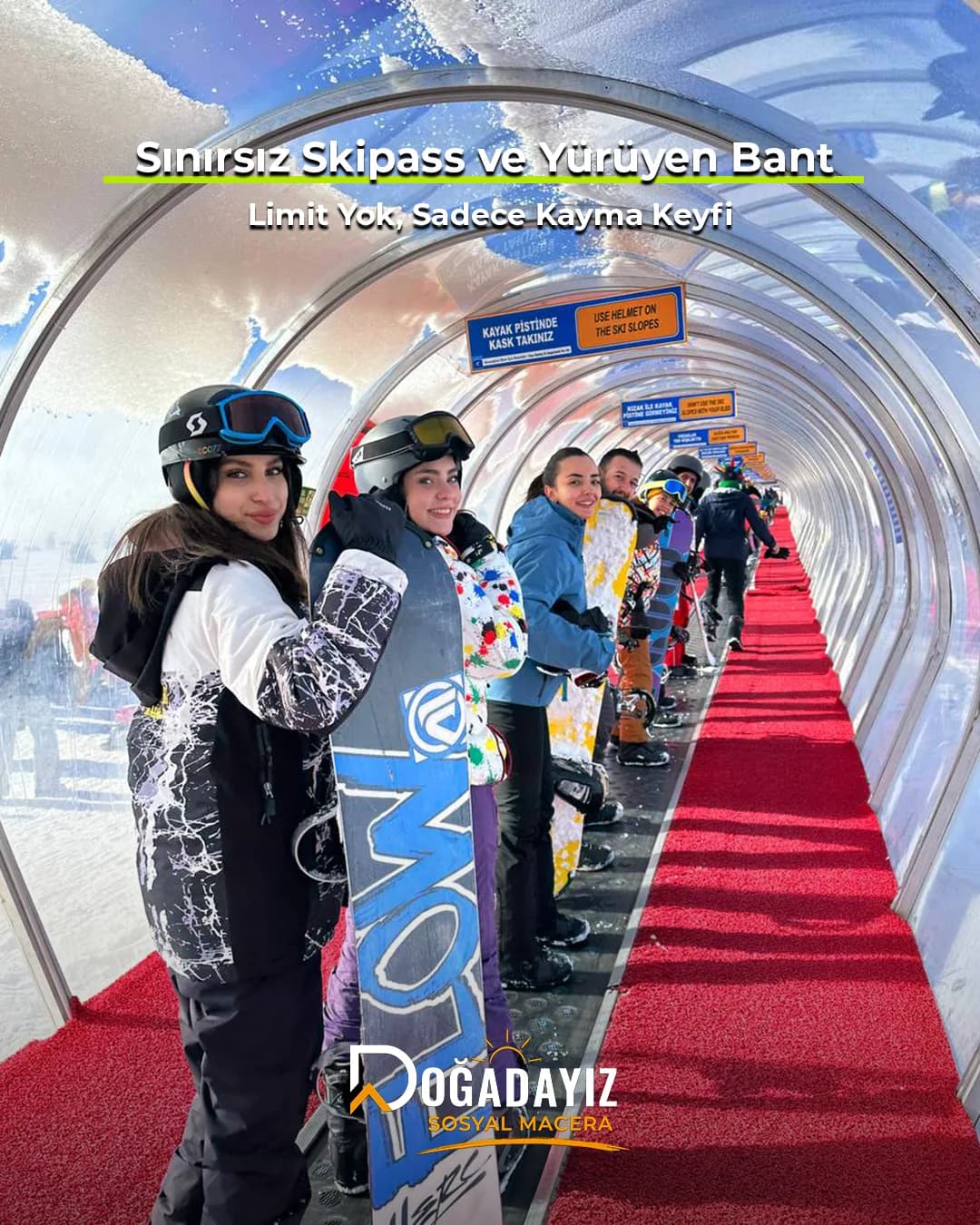
    A ski pass is an electronic card that gives you the right to use the lifts at a ski resort (gondola, chairlift, drag lift). It is scanned at the turnstile and comes in two basic types: unlimited use for a set period (day, multi-day, season) or a set number of rides. In Turkey, Erciyes works entirely on rides; Palandöken, Sarıkamış and Uludağ offer both day and ride options. A ski pass is personal, is non-refundable at most resorts, and a separate deposit is charged for the card. On a winter activity holiday package, the ski pass is usually included in the price.

    Read the guide →
  • BeginnerHolidaysWinter Sports · KIS-135

    What Is a Ski-in/Ski-out Hotel? Advantages and What to Watch Out For

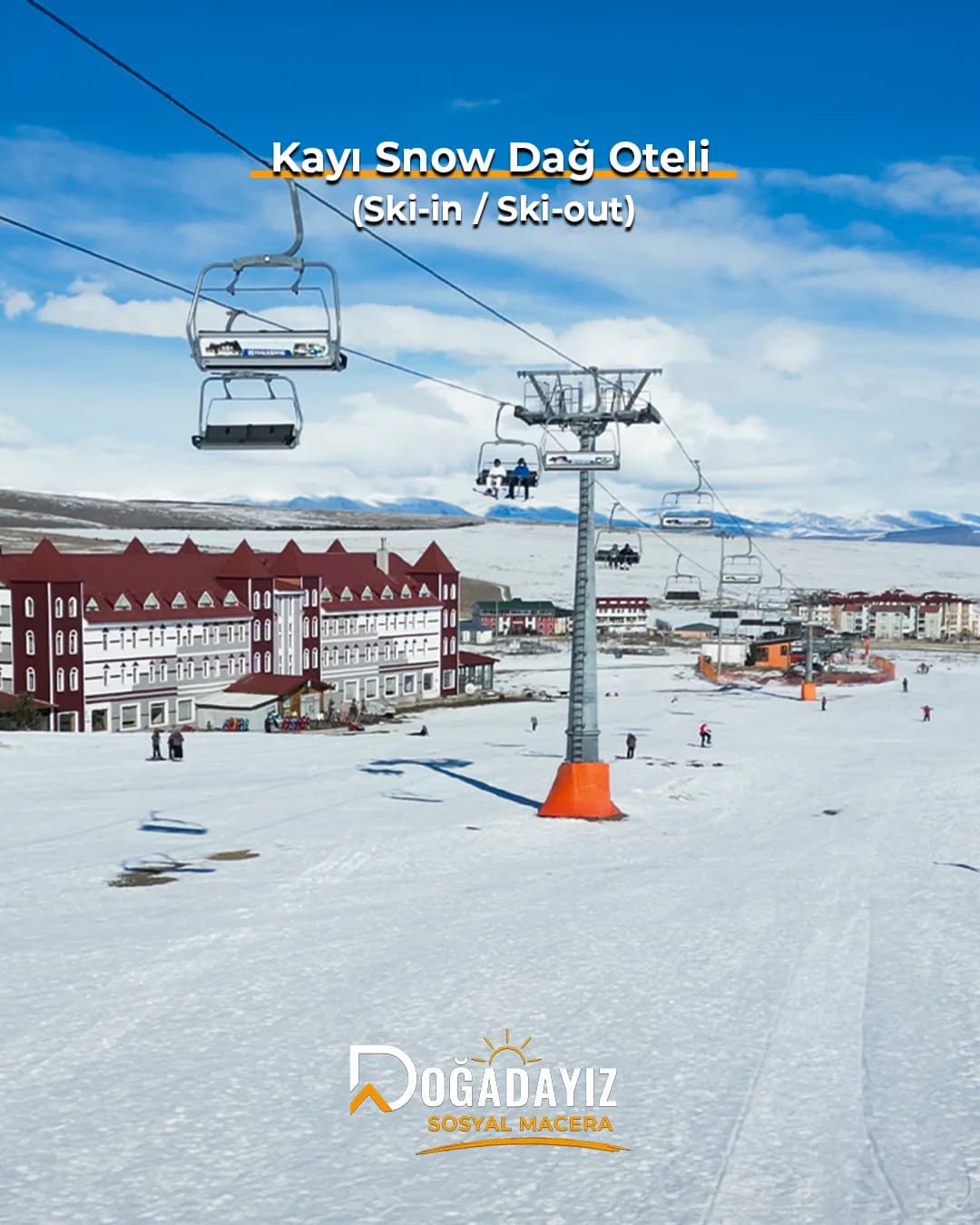
    Ski-in/ski-out means accommodation where you can ski out of the hotel to a run or a lift and ski back to the hotel at the end of the day; it is a term used by the tourism industry and is not found in dictionaries. Its biggest advantage is time and convenience: no transfers, long walks or carrying equipment. Utah's official ski tourism organisation says that ski-in/ski-out is everyone's first choice but is often more expensive. Do not confuse it with “close to the slopes”: with real ski-in/ski-out, you connect to the slopes without taking your skis off.

    Read the guide →
  • BeginnerHolidaysWinter Sports · KIS-136

    How to Compare Holiday Packages with Ski Lessons Included: A 10-Point Checklist

    Two packages that both say “lessons included” may not be the same thing. When comparing, check ten points: (1) how many hours a day and how many days of lessons, (2) group size, (3) the instructor's Turkish Ski Federation certificate, (4) whether the ski pass is unlimited or ride-based, (5) which equipment is included, (6) transfers between hotel and slopes, (7) the accommodation's distance from the slopes and meals, (8) insurance, (9) cancellation and date change terms, (10) a group leader and a social programme. Comparing these points in a single table shows what the price of a winter activity holiday really covers.

    Read the guide →
  • BeginnerLearningWinter Sports · KIS-140

    At What Age Can Children Start Learning to Ski?

    Children can usually start learning to ski at age 3–4, and snowboarding from age 4. France’s ski school ESF offers a play-based club for ages 3–5, and schools in Switzerland run group lessons from age 3; according to Burton, snowboard schools usually start at age 4. The operator’s children’s school in Bansko is for ages 4–7. At these ages, lessons progress through play and in short sessions. For safety, a helmet is essential: research shows that helmets reduce head, neck and face injuries in children under 13. In Erciyes, children cannot ride the lifts without an adult.

    Read the guide →
  • BeginnerLearningWinter Sports · KIS-142

    Teaching Children to Ski Through Play

    The key to teaching children to ski is play. France’s ski school ESF says that lessons at Club Piou-Piou, its club for ages 3–5, are taught through play, and that its children’s programmes are built on fun, freedom and play. The American instructors’ association PSIA-AASI uses the CAP model, which looks at the child together with their cognitive, affective and physical development: two children of the same age learn differently. In practice, this means short lessons with plenty of breaks, explained through stories and games. For safety, a helmet and a suitable beginner area are essential.

    Read the guide →
  • BeginnerLearningWinter Sports · KIS-143

    Do Adults Find It Hard to Learn to Ski? Starting to Ski After 30

    No, adults do not find it hard to learn to ski; they just learn differently. According to Doğadayız booking records, the average age of the 2,140 people who joined the basic course packages over the last four winter seasons is 31.6; 56% are over 30 and 14% over 40. Adults are more cautious than children and more wary of falling, so it is important to start in the right order, with an instructor and in a gently sloping beginner area. Physical preparation, rental equipment that is set up correctly and a two- or three-day winter activity holiday are the most effective start for an adult.

    Read the guide →
  • BeginnerLearningWinter Sports · KIS-145

    Group Ski Lessons or Private Lessons? Which Suits You?

    For someone who has never skied, group lessons are often enough and cheaper; the topics of the first days (balance, snowplough, stopping, first turns) are the same for everyone, and learning with people at the same level boosts motivation. Private lessons suit those who want to solve a specific problem, overcome fear or progress quickly in a short time. The price difference is large: at Snow Academia in Erciyes in the 2025–26 season, a one-to-one lesson cost 4,000 TL per hour, while in groups of 5 or more it was 2,250 TL per person. Group lessons also kick off the social side of a winter activity holiday.

    Read the guide →
  • BeginnerLearningWinter Sports · KIS-146

    How Do You Choose a Good Ski or Snowboard Instructor?

    The first step in choosing a good ski instructor is to ask about their licence: under the instructor regulations of the Turkish Ski Federation (TKF), paid lessons in Türkiye may only be given by holders of a TKF instructor licence, and the licence has to be renewed every year. There is a single instructor licence per discipline (alpine, Nordic, snowboard); “levels” apply to coaching (training racers). After the licence, look at teaching skill: an instructor who progresses at your level, explains, gives you choices and notices your fear. Abroad, look for national certificates such as ISIA, BASI, PSIA-AASI or France’s state diploma.

    Read the guide →
  • BeginnerLearningWinter Sports · KIS-147

    How Do You Manage Fear and Motivation When Learning to Ski?

    Being afraid while learning to ski is perfectly normal, and it directly affects learning: in a study of 337 students, beginners did better the lower their fear and the higher their self-efficacy (the belief that “I can do it”); self-efficacy predicted success. The way to manage fear is not to suppress it but to build confidence through small, successful steps: a gentle area, the right falling technique, an instructor who gives you choices and a group at the same level. In one study, teaching that gave learners choices (autonomy-supportive teaching) improved skill and self-confidence more without needing extra time.

    Read the guide →
  • IntermediateTechniqueSkiing · KIS-007

    Sideslipping and Edge Control in Skiing

    Sideslipping means sliding sideways down the slope under control with your skis parallel and at right angles to the fall line, releasing the edges little by little. To flatten your skis, you extend slightly from your ankles, knees and hips; to slow down or stop, you flex slightly and turn your knees towards the slope, increasing the edge angle. According to PSIA, sideslipping is an effective way to lose height safely on a slope you find a little too steep, and because it teaches you to release your edges, it is also the foundation of parallel turns and the hockey stop.

    Read the guide →
  • IntermediateTechniqueSkiing · KIS-008

    From Snowplough to Parallel Skiing: The Technique Step by Step

    The move to parallel skiing does not happen in one step but with an intermediate stage: snowplough → wedge christie → basic parallel turn. In a wedge christie you start the turn in a snowplough and, during the turn, finish parallel by bringing the inside ski alongside the outside ski. According to the American instructors' association PSIA, what makes matching easier is relaxing the inside leg and pressing on the outside ski; as you gain experience, the matching moves closer to the start of the turn. In a true parallel turn, your weight is transferred to the new outside ski before the turn begins, and this movement comes from the legs, beneath a calm upper body.

    Read the guide →
  • IntermediateTechniqueSkiing · KIS-011

    Edge Change and Pressure Management in Skiing

    Edge change is tilting the skis from one edge to the other as you move from the end of one turn to the start of the next. In this transition, your centre of mass and your skis swap places: as your body moves towards the inside of the new turn, the skis flatten and tip onto their new edges. Pressure management means directing pressure to the outside ski during this time, adjusting it fore and aft along the ski and regulating its size with flexion and extension. According to PSIA's fundamentals, the edge angle is controlled with inclination and angulation, and the turning of the skis with leg movements independent of the upper body.

    Read the guide →
  • IntermediateTechniqueSkiing · KIS-012

    Short, Medium and Long Turn Techniques in Skiing

    There is no official definition of turn size in metres; instructor associations usually describe it in relation to the width of the slope. According to PSIA-NW, short turns are about one piste basher width or narrower, and medium turns are between one and a half and three piste basher widths. In short turns, leg rotation, the pole plant and upper–lower body separation come to the fore; in long turns, a stable upper body, edging and pressure are decisive, and the turn shape comes largely from the ski's sidecut. Speed is controlled not by braking but by the shape and completion of the turn.

    Read the guide →
  • IntermediateTechniqueSkiing · KIS-019

    Skiing in Changing Snow Conditions: Ice, Wet Snow and Soft Snow

    As the snow changes, so does the technique. According to PSIA, the American ski instructors' association, skis offer very little resistance to turning on icy pistes, so over-rotating makes them skid; the answer is to increase the edge angle progressively and pressure the new outside ski early and decisively. In powder, the skis are kept more in the fall line, turns are made with strong, continuous and patient steering, and the skis stay relatively flat. In wet, sticky snow, as the New Zealand instructors' alliance (NZSIA) points out, the same turn takes more power; flowing, wide turns make it easier. In every condition the basic rule is the same: a centred stance and controlled speed.

    Read the guide →
  • IntermediateEquipmentWinter Sports · KIS-054

    How Do You Wax Skis and Snowboards?

    Wax helps ski and snowboard bases glide better on snow and protects the base from drying out. The longest-lasting method is hot waxing: the wax is melted into the base with an iron, left to cool, the excess is scraped off with a plexi scraper in the direction of travel and the base is brushed. According to Toko, the base starts absorbing wax from 70 °C; the iron temperature depends on the wax (Toko: yellow for warm snow 130 °C, red for general use 140 °C, blue for cold snow 150 °C), and you need to let it cool for at least 30 minutes before scraping. Wax is chosen according to snow temperature. FIS has banned fluorinated waxes in all races from the 2023/24 season onwards. With rental equipment, the rental shop does this maintenance; if you have your own equipment, it is time to wax when the base starts to look dry and whitish.

    Read the guide →
  • IntermediateTechniqueWinter Sports · KIS-080

    Video Analysis for Better Technique: How Do You Review Your Riding Mistakes?

    Video is the easiest way to see your own riding from the outside, and research shows it supports learning when used correctly: on a five-day ski course, the groups who watched video learned to turn and stop better. But video alone is not enough; its effect depends on watching it together with one or two concrete cues and using it at selected moments, not after every run. For a good video, keep the sun behind the camera, film the rider horizontally and steadily, and assess from the 4th–5th turn onwards rather than the first turns. Watch first at real speed, then slowed down, and ask for permission before filming others.

    Read the guide →
  • AdvancedTechniqueSkiing · KIS-013

    Carving Technique in Skiing: Clean Edge Tracks and Controlled Turns

    Carving is a turn in which the ski travels along its own edge without skidding sideways. According to the International Ski Federation's definition, in a pure carved turn the ski's tail follows exactly the track cut by its tip and there is no sideways skidding; two thin lines are left in the snow. The radius of the turn is determined by the ski's edge angle, its sidecut radius and the way the ski bends: the more the ski is tipped, the tighter the turn. In a skidded turn, by contrast, the ski pivots on the turning path and slides sideways. According to the American instructors' association PSIA, in a good turn the edges are changed before the skis turn into the fall line, and the edge angle increases and decreases gradually throughout the turn.

    Read the guide →
  • AdvancedTechniqueSkiing · KIS-014

    Dynamic Parallel Turns and Upper–Lower Body Coordination in Skiing

    The dynamic parallel turn is the last of PSIA's four milestone turns (wedge, wedge christie, basic parallel, dynamic parallel). What sets it apart from the basic parallel is that the turn happens with the legs turning beneath a quiet upper body, and that the edge angle comes not from tipping the whole body but from angulation that starts in the lower leg. In PSIA's description of a good dynamic turn, both skis stay on the snow, both lower legs have a similar forward angle, a slight counter relationship between the body and the skis is visible in the transition, and the legs flex and extend independently. The two most common mistakes are tipping the whole body (banking) and turning with the whole body.

    Read the guide →
  • AdvancedTechniqueSkiing · KIS-015

    Skiing Steep Slopes: Controlled Descents and Line Choice

    On a steep slope, speed is controlled not by braking but by the shape of the turn. According to the American instructors' association PSIA, steep slopes call for more completed, rounder turns so you do not exceed your speed: after crossing the fall line, the skis keep turning back up towards the hill and the speed drops. PSIA recommends shorter turns on steep and icy slopes, because the skier spends less time in the fall line; a quick, decisive edge set at the end of the turn creates a solid platform. The skis turn with the legs while the upper body stays quiet; the pole plant gives you rhythm. When things get difficult, getting down safely by sideslipping and traversing is always an option.

    Read the guide →
  • AdvancedTechniqueSkiing · KIS-016

    Slalom and Giant Slalom Technique: Line, Rhythm, Gate Clearing and Pressure

    In slalom and giant slalom, speed comes not from the shortest line but from losing as little energy as possible. According to a systematic review of studies on elite racers, the factors that improve performance are starting the turn earlier, applying force earlier and more smoothly, and carving rather than skidding. That is why coaches want the turn to start before the gate and finish around it. In slalom, turns are short and rhythmic; the hinged poles are pushed aside with the arms and shins on a line close to the body (cross-block). In giant slalom, turns are longer, forces are greater, and conserving energy in the steering phase of the turn is decisive.

    Read the guide →
  • AdvancedTechniqueSkiing · KIS-018

    Mogul (Bump) Skiing Technique: Absorption and Rhythm

    Moguls are bumps that form on a slope over time as skiers turn in the same places; freestyle skiing also has an Olympic discipline of the same name. The key to skiing bumps is absorption and extension: according to the International Ski Federation's definition of the technique, the skier absorbs the impact by bending the knees from the base of the bump to its crest, extends the legs just after the crest, and in this way keeps the pressure between ski and snow constant. The head stays steady and faces down the valley, the hands are in front of the body, and the pole plant is light. For a beginner, the easiest approach is to choose a round line that goes around the bumps; the direct line, which runs straight down between the bumps, requires strong leg movements.

    Read the guide →
  • AdvancedTechniqueWinter Sports · KIS-077

    The Basics of Powder Skiing and Snowboarding Technique

    The basic rule in powder is to change your piste habits a little. On skis, you spread your weight more evenly across both feet and steer both skis into the new turn together, actively and gradually; PSIA's study guide states that the resistance of deep snow requires this. On a snowboard, to keep the nose on the surface you shift your hips towards your back foot instead of leaning back with your shoulders, and keep your front knee bent; turns are kept slightly open to maintain speed. A few centimetres of fresh snow is ideal to start with. Powder also has a hidden danger: falling head first into the hollows at the base of trees or into deep snow can lead to snow immersion suffocation; that is why in powder you always ride with a partner who stays within sight.

    Read the guide →
  • AdvancedSafetyWinter Sports · KIS-079

    The Training and Safety Skills You Need to Move into Freeride

    Moving into freeride rests on three pillars: technique, knowledge and equipment. Technically, you should be able to ski under control in any snow and terrain, including steep sections. In terms of knowledge, you need an avalanche training course (for example the three-day AIARE 1 in the US, or the AST 1 of at least two days in Canada) and companion rescue practice. As for equipment, every member of the group should carry an avalanche transceiver, probe and shovel and be able to use them. The reason is time: in Swiss data, the chance of survival for someone completely buried drops from 91% at 18 minutes to 34% at 35 minutes; in other words, rescue is usually in the hands of the friends with you. An avalanche airbag lowers the death rate but is no guarantee. The safest way is to have your first off-piste experiences with a certified mountain guide.

    Read the guide →
  • AdvancedSafetyWinter Sports · KIS-091

    Avalanche Risks When Skiing Off-Piste: The Safety Basics

    Marked and open slopes are secured against avalanches; off-piste terrain is not, and skiing there is entirely at your own risk. Even in Türkiye, skiers who went off-piste have lost their lives in avalanches: at Erciyes in 2022 and at Palandöken in 2024. If you are thinking of going off-piste, there are three conditions: reading the avalanche bulletin (on the European scale of 1–5; about half of deaths happen at level 3), everyone in the group carrying a transceiver, probe and shovel, and having learned to use them through training. A buried person's chance of survival is above 90% in the first 10–18 minutes but drops sharply after that; the rescue is up to the friends you are with.

    Read the guide →
  • AdvancedSnow and mountain scienceWinter Sports · KIS-102

    How to Read an Avalanche Bulletin: Danger Levels and Limitations

    An avalanche bulletin is a daily forecast showing the avalanche danger in a region on a scale from 1 to 5, on which aspects and elevations it is expected and with which avalanche problem. In Europe the scale is set by the European Avalanche Warning Services (EAWS): 1 low, 2 moderate, 3 considerable, 4 high, 5 very high. The level is based on how unstable the snowpack is, on how many slopes this is found and the size of the largest expected avalanche. An important detail: according to data from the Swiss Institute for Snow and Avalanche Research (SLF) and the EAWS, about half of avalanche deaths occur at level 3 (considerable), because this level is issued often and people underestimate the danger. The bulletin is a regional forecast; it cannot tell you the situation on a single slope and does not replace an on-site assessment. In Türkiye, no daily regional avalanche bulletin with levels 1–5 is published; for Bansko, the Bulgarian Avalanche Association publishes a bulletin.

    Read the guide →
  • GeneralLearningSkiing · KIS-020

    Ski Skills Checklist: From Beginner to Advanced

    Progress in skiing follows a similar order all over the world: moving and stopping on flat ground, snowplough turns, moving to parallel, intermediate: different gradients and snow and advanced: carving and dynamic turns. PSIA, the American ski instructors' association, defines this with four milestone turns (wedge, wedge christie, basic parallel, dynamic parallel), the French ski school ESF with stars, and Canada's CSIA with Exploration, Adventure and Performance groups. The checklist below is compiled from these systems; if you can do every item comfortably, you are ready to move on to the next stage.

    Read the guide →
  • GeneralEquipmentWinter Sports · KIS-055

    Edge Sharpening, Base Repair and Equipment Storage

    A sharp edge means grip on hard and icy snow. Edge angles are written as base bevel / side bevel: the base bevel makes turning easier, the side bevel increases grip. On recreational skis the factory setting is mostly 1° base, 2–3° side; Burton ships its snowboards with 1° base, 1° side. When sharpening, you work the base edge first, then the side edge, remove the burr and wax the board. Small scratches in the base can be filled with P-Tex; a deep scratch down to the core, delamination or a torn-out edge is a job for a workshop. For summer storage, the gear is dried completely, a coat of storage wax is applied to the base without scraping it off, and it is kept somewhere that is neither hot nor damp.

    Read the guide →
  • GeneralEquipmentWinter Sports · KIS-056

    What to Wear Skiing and Snowboarding

    For skiing and snowboarding you wear three layers: a synthetic or wool base layer that wicks sweat away, a fleece mid-layer that holds in warmth, and a ski jacket and trousers that keep out wind and water. Add a single pair of thin ski socks, waterproof gloves, a neck gaiter, a helmet and goggles. Do not wear cotton: it gets soaked with sweat and makes you cold.

    Read the guide →
  • GeneralEquipmentWinter Sports · KIS-057

    How to Choose a Ski Jacket and Trousers: Waterproofing and Breathability

    A ski jacket and trousers have to do two jobs at once: keep snow and water out and let sweat escape. On labels, the first number shows waterproofing (mm) and the second shows breathability (g/m²/24 hours); according to Burton, 5K/5K for dry snow, 10K/5K for above-average snow and 20K/10K for heavy wet snow or rain are a good starting point. However, there is no official industry standard for these values, and results from different test methods cannot be compared with each other. Membrane fabrics are made as 2 layers (2L), 2.5 layers (2.5L) and 3 layers (3L). When the water-repellent surface coating (DWR) wears off, the fabric wets out and can no longer breathe; that is why caring for it matters. The most versatile choice for skiing is a shell jacket and trousers that you can layer underneath.

    Read the guide →
  • GeneralEquipmentWinter Sports · KIS-060

    Ski Gloves and Keeping Warm: Gloves or Mittens?

    On the slopes, your hands are the part of your body most exposed to both cold and wet. Mittens, where the fingers touch each other, generally keep you warmer than gloves with separate fingers; in a single-subject Antarctic test, the best results came from mittens with liner gloves and heated products. Gloves with fingers, on the other hand, make it easier to hold poles and use zips and buckles. Whichever you choose, get a waterproof model that covers your wrist, and add a thin liner glove underneath. The EN 511 code on a glove shows test results against cold and water but does not give a temperature rating. The first signs of frostbite are redness and pain, followed by white or grey-yellow, waxy and numb skin; if this happens, do not rub the skin, and warm it with lukewarm (not hot) water.

    Read the guide →
  • GeneralEquipmentWinter Sports · KIS-061

    How to Choose Ski Socks: Foot Comfort and Boot Fit

    The best choice for skiing and snowboarding is usually a single, thin or medium-thickness, cotton-free (wool, merino or synthetic blend) sock that comes up above the boot cuff. Ski boots are designed to fit snugly; as PSIA warns, a sock that wrinkles or is too thick inside the boot leads to pressure and rubbing, and a thick sock can also restrict circulation. Cotton holds moisture and stretches and wrinkles when wet; in a double-blind study, acrylic socks were associated with fewer blisters than cotton. Wearing two thick socks does not warm your feet; it usually does the opposite.

    Read the guide →
  • GeneralSafetyWinter Sports · KIS-064

    When Should You Wear Back, Wrist and Hip Protectors?

    Of all protectors, the one whose effect is best proven is the snowboard wrist guard. According to a systematic review, the risk of wrist injury in snowboarders who wear wrist guards falls to about a quarter (RR 0.23); in other words, one wrist injury is prevented for every 50 snowboarders who wear wrist guards. In a randomised controlled trial there were 8 wrist injuries in the group with guards and 29 in the group without. Wrist guards are especially recommended for beginners in their first few days and for people using rental equipment; these two groups get injured more often. For back protectors and hip/tailbone pads, on the other hand, there is no strong evidence that they reduce injuries; they can be chosen for comfort and confidence in the snowpark and on the first days, when you fall a lot. No protector replaces a helmet.

    Read the guide →
  • GeneralTechniqueWinter Sports · KIS-066

    Ski and Snowboard Riding Styles: Piste, All-Mountain, Freeride, Freestyle and Racing

    The main riding styles in skiing and snowboarding are piste (turning technique on groomed, marked runs), all-mountain (every condition, from the piste to soft snow and bumps), freeride (natural off-piste terrain and deep snow), freestyle (snowpark, jumps, rails and halfpipe), ski touring and splitboarding (climbing up the mountain without lifts) and racing (timed disciplines from slalom to downhill). The International Ski and Snowboard Federation (FIS) recognises dozens of competition events under alpine skiing, freestyle and snowboard, and in 2024 it added freeride to its official disciplines. For a beginner, the right start is piste skiing, followed by all-mountain.

    Read the guide →
  • GeneralTechniqueSkiing · KIS-073

    Alpine Ski Racing Disciplines: Slalom, Giant Slalom, Super-G and Downhill

    There are four core races in alpine skiing. Slalom is the shortest race with the most closely set gates; it is raced over two runs and calls for short, rhythmic turns. Giant slalom mixes long, medium and short turns through more widely spaced gates; it is also raced over two runs. Super-G is a single-run discipline that combines speed and technique. Downhill is the longest and fastest race; in World Cup measurements the median speed was about 92 km/h. Under the FIS 2026 rules, giant slalom skis must have a radius of at least 30 metres and downhill skis at least 50 metres; there is no minimum radius rule for slalom skis.

    Read the guide →
  • GeneralSafetyWinter Sports · KIS-081

    The FIS 10 Rules for Conduct on the Slopes

    The FIS 10 rules for conduct are the rules of behaviour set by the International Ski Federation for skiers and snowboarders: respect for others, control of speed, choice of route, overtaking, entering the piste, stopping, climbing and descending on foot, respecting signs, assistance and identification. They are not law; however, around the world they are used as a benchmark when assessing liability in skiing accidents.

    Read the guide →
  • GeneralSafetyWinter Sports · KIS-087

    Reducing the Risk of Falls and Collisions in Skiing and Snowboarding

    According to the literature cited by a study from Austria, about 80–90% of skiing accidents are falls and about 10% are collisions; but collisions more often result in head injuries and concussion. Research is clear on how to reduce the risk: actually measure your speed (even skiers who think they are slow average 39 km/h), slow down and look uphill at slope intersections, stop only where you are visible from above, wear a helmet (a meta-analysis found roughly a one-third reduction in the risk of head injury) and, if you have been drinking, be careful the next morning too.

    Read the guide →
  • GeneralSafetyWinter Sports · KIS-088

    What to Do If There Is an Accident on the Slopes: Calling for Help and Securing the Scene

    If there is an accident on the slopes, first secure the scene: plant your skis crossed about 10 metres above the injured person (lay a snowboard down with the bindings facing down) so that people coming from above can see you. Then call for help: in Türkiye, call 112 for all emergencies, or alert the nearest lift attendant and the ski patrol. If a serious injury is possible, do not move the injured person; keep them warm and stay with them. Under the rules of the International Ski Federation, everyone has a duty to help in an accident, and everyone involved in or witnessing an accident must exchange identification details.

    Read the guide →
  • GeneralSafetyWinter Sports · KIS-090

    Closed Pistes, Piste Boundaries and Prohibited Areas

    Ski resorts close slopes for avalanche control work, for grooming with piste bashers, at the end of the day or whenever safety cannot be ensured. Entering a closed slope is not just a breach of the rules but a real danger: the cables of the winch cats (winch-assisted piste bashers) that groom steep slopes are hundreds of metres long and under high tension, hard to see and almost invisible at night. That is why the Swiss guidelines require winch cats to operate only outside lift hours or on closed slopes. When the lifts close, the slopes close too, and the patrol checks only marked and open slopes. Entering a closed slope can lead to a fine of up to 150 euros in France and up to 1,000 dollars in the US state of Colorado.

    Read the guide →
  • GeneralSafetyWinter Sports · KIS-092

    Safety Rules for Skiing with Children

    Five rules stand out when skiing with children: a helmet (in studies including children under 13, the risk of head injury was roughly halved or more), professionally adjusted bindings set for the child's age and weight, sitting fully back on the chairlift and lowering the safety bar (in one study the average age of children who fell from a chairlift was under 7), sun protection against UV, which multiplies at altitude and on snow, and a meeting point agreed in advance in case you get separated. Add to these drinking water regularly and taking breaks before they get tired.

    Read the guide →
  • GeneralSnow and mountain scienceWinter Sports · KIS-093

    How Does Snow Form? The Science of Snow Crystals

    Snow is made of ice crystals that grow as water vapour turns directly into ice in clouds. Cloud droplets do not freeze straight away at 0 °C; they stay liquid in a supercooled state. According to Caltech physicist Kenneth Libbrecht, most droplets freeze at around −10 °C thanks to an ice nucleus such as a speck of dust in the air; below −40 °C no droplet can stay liquid. The frozen crystal grows by drawing the surrounding vapour onto itself. Temperature determines the crystal's shape, and humidity determines how complex it becomes: thin plates form between about 0 and −4 °C, columns and needles between −4 and −10 °C, and plates again between −10 and −22 °C; the classic six-armed star (dendrite) grows at around −15 °C in humid air. Once on the ground, snow keeps changing with temperature and wind; the snow you feel on the slope is the result of this transformation.

    Read the guide →
  • GeneralSnow and mountain scienceWinter Sports · KIS-094

    Powder, Wet, Icy and Artificial Snow: Snow Types and How They Differ on the Slopes

    The snow on the slope is not the same every day. According to the definitions of MeteoSwiss, the Swiss meteorological office, powder is fresh snow that has not yet been compacted; hard snow is snow compacted by melting and refreezing or by wind, and its most extreme form is crust; corn (spring) snow is moist snow whose surface thaws in the daytime sun, typical in spring. Artificial snow (machine-made snow, the name scientists prefer), according to the WSL Institute for Snow and Avalanche Research (SLF), is much denser than natural snow (fresh natural snow averages ~100 kg/m³, dry machine-made snow ~400 kg/m³) and consists of small, round grains of 0.1–1 mm. That is why machine-made snow creates a more durable but harder slope.

    Read the guide →
  • GeneralSnow and mountain scienceWinter Sports · KIS-096

    Why Does the Weather Change So Quickly in the Mountains?

    Mountains force air to rise: rising air cools, the moisture in it condenses, and cloud and precipitation can form very quickly. Temperature drops with altitude; on average by about 6.5 °C per 1,000 metres (by the UK Met Office's rule of thumb, about 2 °C per 300 metres). Wind strengthens with altitude and speeds up over ridges; on the far side of the mountain, warm and strong winds such as the föhn can blow. Cold air pooling in the valleys overnight (an inversion) can make the summit warmer than the valley in the morning. That is why the weather in the valley does not show what is happening at the summit. In Turkey, the Turkish State Meteorological Service (MGM) publishes separate 5-day forecasts and snow depths for ski resorts.

    Read the guide →
  • GeneralSnow and mountain scienceWinter Sports · KIS-097

    What Is Wind Chill? The Temperature You Feel on the Slopes

    Wind chill is when the temperature you feel is lower than the actual air temperature because the wind quickly carries heat away from exposed skin. According to an information card from Turkey's Ministry of Labour and Social Security, at −5 °C a 30 km/h wind feels like −13 °C. According to Environment and Climate Change Canada, when the wind chill is between −28 °C and −39 °C, exposed skin can freeze in 10–30 minutes; at lower values this drops to a few minutes. When skiing, you create part of the wind yourself: skin cools very quickly when you are coming down fast and especially when you are sitting facing into the wind on a chairlift.

    Read the guide →
  • GeneralSafetyWinter Sports · KIS-098

    Fog, Whiteout and Loss of Visibility: Making Safe Decisions in the Mountains

    A whiteout, as defined by the American Meteorological Society, is an optical phenomenon in which the observer appears to be engulfed in a uniformly white glow: over unbroken snow cover under a uniformly overcast sky, shadows, the horizon and clouds disappear, and the sense of depth and direction is lost. According to the UK Met Office, the risk increases when fog or mist combines with widespread snow cover. When skiing, this means not being able to see the gradient, the bumps or the edge of the slope. When visibility worsens, slow down, stay on the marked slope near the markers along its edge, and switch to a slope one level easier; if visibility is very poor, ski down to the nearest lift station and call it a day.

    Read the guide →
  • GeneralSnow and mountain scienceWinter Sports · KIS-099

    How Does High Altitude Affect the Body? An Altitude Guide for Skiers

    According to the US Centers for Disease Control and Prevention (CDC), altitude sickness (acute mountain sickness, AMS) mostly affects unacclimatised people sleeping above 2,450 metres; in Colorado it occurs in about 25% of visitors who sleep at that altitude. The symptoms are a headache together with loss of appetite, dizziness, fatigue or nausea, and they usually start within 2–12 hours. At ski resorts in Türkiye the ski area can go above 3,000 metres (Erciyes 3,346 m), but accommodation is usually much lower down, so going high during the day and sleeping lower down reduces the risk. The CDC recommends avoiding alcohol for the first 48 hours. Altitude also increases UV radiation: by about 10% for every 1,000 metres.

    Read the guide →
  • GeneralSafetyWinter Sports · KIS-100

    Snow Blindness and the Effects of UV Rays

    Snow blindness (photokeratitis) is when UV rays reflected off snow burn the front surface of the eye (the cornea); it is a kind of sunburn. According to the World Health Organization, fresh snow reflects up to 80% of UV radiation, and UV levels rise by about 10% for every 1,000 metres. According to the American Academy of Ophthalmology, the symptoms (pain, redness, a gritty feeling, watering, sensitivity to light, blurred vision) appear after the damage has been done, 30 minutes to 12 hours after exposure, and usually clear up within 1–2 days. The way to protect yourself is a pair of goggles that blocks at least 99% of UV rays — even on overcast days.

    Read the guide →
  • GeneralSnow and mountain scienceWinter Sports · KIS-101

    How Do Avalanches Form? Snow Layers, Weak Layers and Slope Angle

    An avalanche is snow on a slope suddenly sliding and flowing downhill. The great majority of fatal avalanches are slab avalanches: there is a weak layer inside the snowpack; the cohesive layer of snow above it (the slab) fractures on this layer under a load, and a wide area breaks away at once. According to the Swiss Institute for Snow and Avalanche Research (SLF), more than 90% of avalanche deaths are caused by slab avalanches. A dry slab avalanche generally needs a slope of at least 30°; the slope angle where human-triggered avalanches start averages around 38–39°. The main factors that increase the risk are new snow, wind-drifted snow, temperature changes and persistent weak layers in the snowpack (surface hoar, faceted grains, depth hoar). The European Avalanche Warning Services (EAWS) group these situations into five typical avalanche problems.

    Read the guide →
  • GeneralSnow and mountain scienceWinter Sports · KIS-103

    How Do Ski Resorts Make Artificial Snow?

    Artificial snowmaking means snow guns spraying water into very small droplets and freezing them in the air; no additives are used, only water and air. According to the slope preparation handbook of the Swiss Institute for Snow and Avalanche Research (SLF), the water is broken up at a pressure of about 12–60 bar into droplets of 0.1–1 mm; the droplets freeze in the air and bond together on the ground to form snow. Snowmaking depends more on humidity than on air temperature: according to the SLF, at a wet-bulb temperature between −2 and −4 °C snowmaking can only just begin. In practice, at most about 2.2 cubic metres of snow are obtained from one cubic metre of water. In Türkiye, Erciyes, for example, has 154 snow guns.

    Read the guide →
  • GeneralSnow and mountain scienceWinter Sports · KIS-104

    How Are Ski Slopes Prepared? Piste Grooming and Piste Bashers

    Ski slopes are prepared with tracked grooming machines known in the industry as piste bashers (in Turkish, ratrak). According to the handbook of the Swiss Institute for Snow and Avalanche Research (SLF), the blade at the front moves the snow and levels the surface, the tiller at the back compacts the snow and breaks up its grains to create a smooth, durable surface, and the winch (cable) makes it possible to prepare steep slopes. According to the SLF, the best time to groom is shortly after the slopes close: in the morning, a slope groomed in the evening is more than twice as durable as one groomed in the early hours. The slopes are closed while grooming is under way; according to the German Alpine Club, there is danger to life especially when a winch is in use.

    Read the guide →
  • GeneralLearningWinter Sports · KIS-106

    Which Muscles Do You Use Skiing and Snowboarding?

    Skiing works the front thigh muscles (quadriceps), back thigh muscles (hamstrings), glutes and inner thigh (adductor) muscles most. In a study measuring muscle activity (EMG), these muscles worked at more than half of their maximum force in snowplough, parallel and giant slalom turns alike, and activity increased from the snowplough to parallel turns and from there to racing turns. What sets skiing apart is eccentric work (braking while the muscle lengthens): according to one study, the braking phase in giant slalom lasts about twice as long as the push phase. In recreational skiing, too, the outside leg works much harder than the inside leg, and the load increases as the slope gets steeper. The research base for snowboarding is more limited.

    Read the guide →
  • GeneralLearningWinter Sports · KIS-108

    Balance and Proprioception Exercises for Skiing and Snowboarding

    Proprioception is the sense that lets you feel, without looking, where your body is and how it is moving, thanks to receptors in your joints, muscles, tendons and inner ear; it is the foundation of balance. In meta-analyses of team sports, programmes that included balance and proprioception training markedly reduced lower-limb injuries (for example, the risk of anterior cruciate ligament injury was roughly halved). The ski-specific evidence is weaker. The dose research points to for improving balance is training about 3 times a week for 11–15 minutes, spread over at least several weeks; standing on one leg is the most basic exercise.

    Read the guide →
  • GeneralLearningWinter Sports · KIS-110

    Recovery and Rest After Skiing and Snowboarding

    Skiing mostly works your leg muscles eccentrically (the muscle produces force while it lengthens); this type of work is more likely to cause delayed onset muscle soreness the next day. The basics of recovery are simple: at least 7 hours of sleep a night, carbohydrate and protein at the end of the day, replacing the fluids you have lost and limiting alcohol in the first few days, especially at high altitude. According to meta-analyses, massage, compression garments, active recovery and cold water immersion reduce muscle soreness to a small-to-moderate degree; the effect of stretching and foam rollers on soreness is very small. The evidence on whether sauna helps recovery is not yet clear.

    Read the guide →
  • GeneralSafetyWinter Sports · KIS-111

    Knee Injuries in Skiing: Risk Factors and Prevention

    The knee is the most commonly injured body part in skiing: according to a clinical review of skiing injuries, 27–41% of all injuries affect the knee. The most common knee injuries are sprains of the anterior cruciate ligament (ACL) and the medial collateral ligament (MCL); in an 18-season study in the US state of Vermont, the ACL was the single most common injury among skiers (17.2%). There are two typical mechanisms: phantom foot (falling backwards off balance so that your weight goes onto the tail of the downhill ski) and boot-induced injury (landing a jump with a straight leg). For prevention, the right binding setting, stopping when you are tired, not sitting back and not fighting a fall all matter; an awareness training programme given to ski staff reduced serious knee sprains by 62%.

    Read the guide →
  • GeneralSafetyWinter Sports · KIS-112

    Preventing Wrist, Shoulder and Head Injuries in Snowboarding

    The pattern of injuries in snowboarding is different from skiing: in skiing the knee comes first, in snowboarding the wrist. In an 18-season study in the US state of Vermont, wrist injuries made up 27.6% of all snowboarding injuries but only 2.8% of skiing injuries; shoulder and collarbone injuries and concussions were also more common among snowboarders. The good news is that the most common injury is also the easiest one to prevent: according to a systematic review pooling 6 studies, wrist guards cut the risk of wrist injury to roughly a quarter. Among helmet wearers, the likelihood of a head injury is about 35% lower. Because beginners are injured more often, wearing protection in the first days and learning how to fall properly matters.

    Read the guide →
  • GeneralSafetyWinter Sports · KIS-114

    How Does Fatigue Affect Technique in Skiing and Snowboarding?

    Research shows that fatigue changes your skiing technique early on: as their legs tire, skiers shift, before their muscle fibres have changed noticeably, to a technique that loads the outside leg more and is most likely less controlled. Over a day of skiing, fatigue in the thigh muscles increases, and a 45-minute lunch break does not reverse it. But the idea that “most injuries happen on the last run of the day” is not supported by the evidence: about 81% of skiers who suffered an anterior cruciate ligament (ACL) injury said they felt no fatigue, and 57% were injured in the first two days of their holiday. Notice your fatigue and slow down, but remember that the risk is also high in the first days and on icy slopes.

    Read the guide →
  • GeneralDestinationsWinter Sports · KIS-115

    Erciyes Ski Resort: Runs, Lifts and Training Areas

    Erciyes Ski Resort lies on the slopes of the 3,917-metre Mount Erciyes in Kayseri. You enter the resort through four gates: Hacılar, Hisarcık, Tekir and Develi. According to the official table of Erciyes A.Ş., there are 41 runs (18 easy, 17 intermediate, 6 difficult) and 19 lift installations: 14 lifts, 2 of them gondolas, and 5 magic carpets. The ski area lies between 2,088 and 3,346 metres. Beginners spend their first days in the beginner areas with magic carpets at the gates and in the training area at Hisarcık.

    Read the guide →
  • GeneralDestinationsWinter Sports · KIS-123

    Erciyes, Sarıkamış and Bansko Compared: Which Ski Resort Suits You?

    Each of the three appeals to a different kind of skier. Erciyes (Kayseri) has the largest slope network (41 runs) and the highest ski area (3,346 m); with its training areas and accommodation in Cappadocia, it is the best option for those who have never skied. Sarıkamış (Kars) is known for runs through Scots pine forest and dry, light snow; the Doğadayız programme there is an experience package at a ski-in/ski-out mountain hotel for those who can already ski. Bansko (Bulgaria) is a European resort reached by gondola, with a World Cup run; it is for those who can ski on their own and want a winter activity holiday abroad, and holders of a burgundy passport need a Schengen visa.

    Read the guide →
  • GeneralDestinationsWinter Sports · KIS-124

    Gudauri Ski Resort Guide: Visa-Free Skiing in Georgia

    Gudauri is the best-known ski resort in Georgia's Greater Caucasus mountains. According to the Georgian National Tourism Administration, the resort is 120 km from Tbilisi; the ski area rises from 1,989 metres to 3,276 metres, with 37 km of groomed runs, 20 runs in four colour categories and 18 lifts. The season runs from December to mid-April, and the snow depth reaches 1–2 metres. The resort's speciality is heliskiing; a gondola links Gudauri with the Kobi valley to the north. Turkish citizens can enter Georgia visa-free (for up to 1 year), but according to the Turkish Ministry of Foreign Affairs, from 1 January 2026 travel insurance with cover of at least 30,000 GEL is compulsory.

    Read the guide →
  • GeneralDestinationsWinter Sports · KIS-125

    Gabala Tufandağ Ski Resort Guide: Visa-Free Skiing in Azerbaijan

    Tufandağ is a mountain and ski resort in the Gabala (Qəbələ) region in northern Azerbaijan, in the foothills of the Greater Caucasus. According to the table on its official website, the resort has 10 runs (about 12.5 km in total) and 4 cable car lines rising from 956 metres to 1,920 metres; the longest run is about 2.7 km. There is night skiing on Saturday evenings. According to Azerbaijan's tourism website, Gabala is 260 km from Baku; visitors from Türkiye usually fly to Baku and continue by road. Turkish citizens can enter Azerbaijan visa-free for up to 90 days; when arriving from Türkiye on a direct flight, the new-style, chip-enabled ID card is also valid. If you are staying longer than 15 days, you need to register your address. Tufandağ is smaller and lower than Shahdag (Şahdağ), the country's large resort; it is well suited to a short skiing and nature holiday.

    Read the guide →
  • GeneralDestinationsWinter Sports · KIS-127

    Visa-Free Ski Holiday Destinations: A Guide for Turkish Citizens

    The main countries where you can take a visa-free ski holiday with a burgundy (ordinary, umuma mahsus) passport are Georgia (Gudauri, Bakuriani), Azerbaijan (Shahdag, Tufandağ), Bosnia and Herzegovina (Jahorina, Bjelašnica), Serbia (Kopaonik), Montenegro (Kolašin), North Macedonia (Mavrovo), Kazakhstan (Shymbulak), Uzbekistan (Amirsoy) and, as a long-haul destination, Japan (Niseko, Hakuba). According to the Turkish Ministry of Foreign Affairs, the visa-free stay in these countries ranges from 30 to 90 days. Note: from 2026 Georgia requires travel insurance, while Bulgaria (Bansko) and Andorra require a Schengen visa.

    Read the guide →
  • GeneralHolidaysWinter Sports · KIS-132

    What Makes Up the Price of a Ski Holiday? An Item-by-Item Budget Guide

    The price of a ski holiday is made up of nine items: travel, accommodation, food, ski pass, equipment rental, lessons, hotel–slope transfers, insurance and clothing. The biggest items are usually accommodation and travel; the ski pass and lessons are the items that vary most from resort to resort. In the 2025–26 season, for example, a day pass cost 1,300 TL in Palandöken and €59 in Bansko; in Erciyes the ski pass is ride-based (30 rides for 3,000 TL). A winter activity holiday package bundles most of these items into a single price; when comparing, you need to check what is included.

    Read the guide →
  • GeneralHolidaysWinter Sports · KIS-134

    Mountain Hotel or Town Hotel for a Ski Holiday?

    The choice depends on what you want from your holiday. A mountain hotel (especially a ski-in/ski-out hotel right by the slopes) saves time: you ski out of the hotel and ski back; but your evening options may be limited to the hotel. A ski town (e.g. Bansko) combines the slopes with a social life. Staying in a city or a nearby tourist area (e.g. Cappadocia for Erciyes) means a transfer every day, but offers far more options in the evenings and on bad-weather days. For someone who has never skied, a winter activity holiday with transfers and equipment organised makes the logistics easier wherever you stay.

    Read the guide →
  • GeneralSocial adventureWinter Sports · KIS-137

    Can You Go on a Ski Holiday on Your Own? A Guide for Solo Travellers

    Yes, you can go on a ski holiday on your own, and more and more people are doing so. According to Doğadayız booking records, the share of participants who joined the winter programmes on a solo booking rose from 26% in the 2022–23 season to 39% in 2025–26. For someone travelling alone, the easiest way is to join a group programme with groups by level, a group leader and a shared evening programme: you find a circle of people from day one, rooms are planned in advance and you are never on your own on the slopes. Programmes like this are designed as a social adventure holiday.

    Read the guide →
  • GeneralHolidaysWinter Sports · KIS-138

    Travel Insurance and Sports Cover for a Ski Holiday: What Should You Look Out For?

    Insurance is not a legal requirement for skiing in Turkey, but it matters: under its general terms, standard personal accident insurance keeps sports on snow and ice excluded unless otherwise agreed, so you need to have skiing or winter sports cover added to your policy. A ski pass does not always include insurance: the Erciyes ski pass offers no insurance cover, whereas in Bansko mountain insurance is included in the ski pass price. Abroad, a Schengen visa requires travel health insurance with cover of at least €30,000. If you are buying a winter activity holiday package, check separately which insurance policies are included.

    Read the guide →
  • GeneralHolidaysWinter Sports · KIS-139

    What Happens If the Weather Changes Your Ski Holiday Programme?

    At ski resorts, strong wind, fog, blizzards or heavy snowfall can close lifts and runs. In that case the ski pass is usually not refunded: in Erciyes, for example, there is no refund even if the lifts close because of weather or a fault, but unused rides can be used on another day in the same season. On package holidays, the programme is reordered or switched to an alternative programme: on Doğadayız Erciyes programmes, if the weather is bad on the mountain, there is a regional excursion in Cappadocia instead. If the weather turns bad before the holiday, the cancellation rules apply; buying your main travel tickets as flexible/changeable reduces the risk.

    Read the guide →
  • GeneralSocial adventureWinter Sports · KIS-148

    What Is a Social Ski Holiday? Lessons, Fun and New Friendships

    A social ski holiday is a winter social adventure holiday where you learn and enjoy skiing or snowboarding as a group, spending the day on the slopes and the evening with the same group. Three things set it apart from a classic ski holiday: groups formed by level, a group leader who is with you at all times and a shared social programme after the slopes (dinner, nightlife, après-ski). It is also an activity holiday: accommodation, ski pass and equipment are planned, so all you have to do is focus on the slopes and the group. It is especially well suited to people travelling solo.

    Read the guide →
  • GeneralSocial adventureWinter Sports · KIS-150

    Social Life After Skiing: What Is Après-Ski?

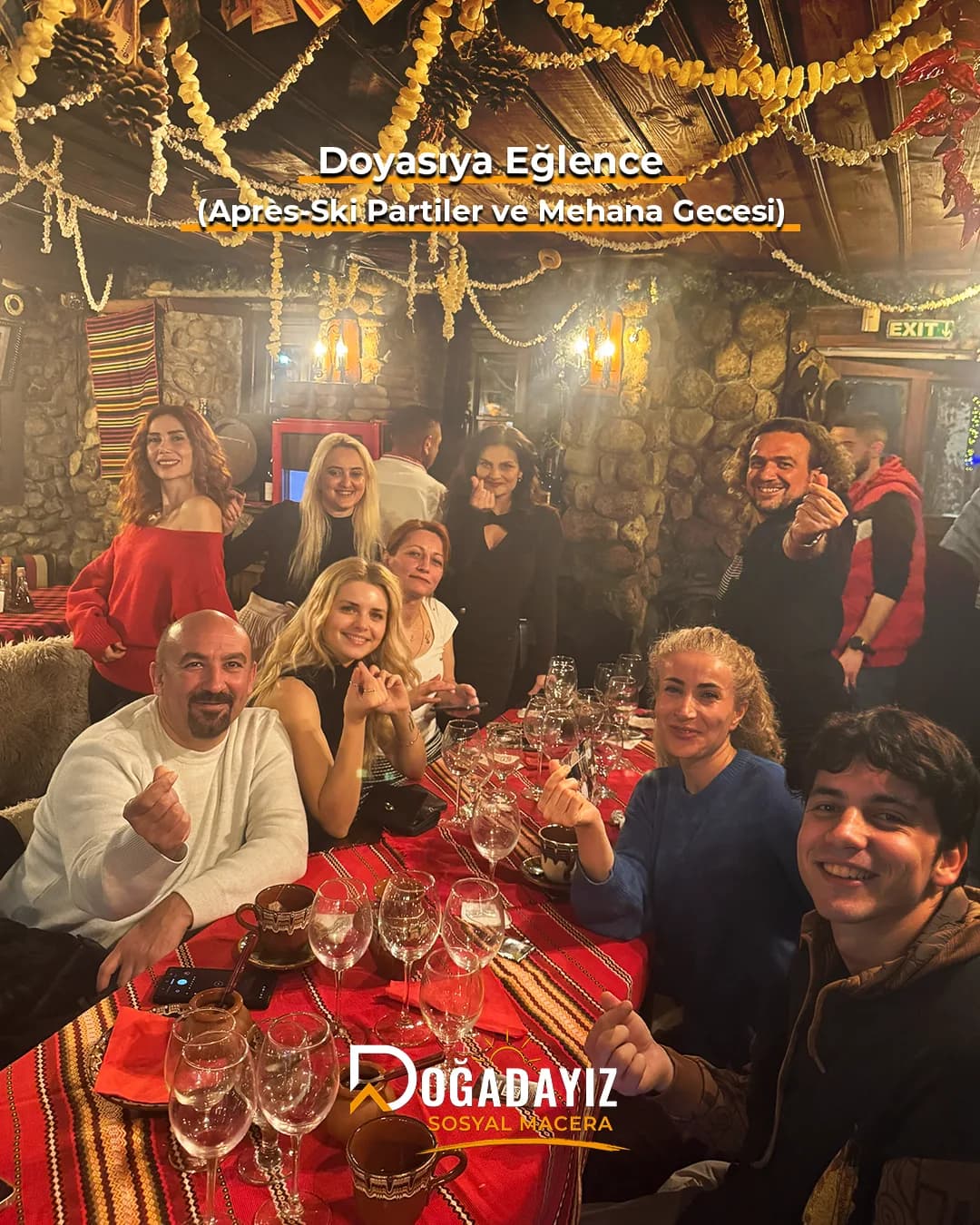
    Après-ski is French for “after skiing” and refers to the social activities and entertainment that take place in hotels, restaurants and venues after a day’s skiing. Its first use in English dates back to 1951; it is a long-established tradition in the Alps, especially in Austria. Après-ski is not just a drinking hour: a hot drink on the way back from the slopes, a shared meal, live music or an activity at the hotel are all après-ski too. On a winter social adventure holiday, this is often the most memorable part of the day. The only rule: the fun comes after the slopes; alcohol and skiing do not mix.

    Read the guide →
  • GeneralSocial adventureWinter Sports · KIS-151

    How Skiing and Snowboarding Contribute to Psychological Wellbeing

    Research shows that outdoor sports such as skiing are positively associated with mental health, but most of it is observational and does not prove causation. In a Swedish study that followed more than 395,000 people for up to 21 years, participants in a long-distance cross-country ski race had roughly half the risk of depression and a markedly lower risk of anxiety. A study of 19,806 people in England found that spending at least 120 minutes a week in nature is associated with better health and wellbeing. According to the World Health Organization, physical activity reduces symptoms of depression and anxiety. A winter social adventure holiday brings these three together: movement, nature and social ties.

    Read the guide →
  • GeneralSocial adventureWinter Sports · KIS-152

    A Ski Holiday with Friends of Different Levels: How Does Everyone Have Fun?

    For friends of different levels to have fun together, the day is split in two: on the slopes, everyone skis in a group at their own level, and lunch and the evening are spent together. Taking a beginner onto a difficult slope makes nobody happy, and neither does keeping an experienced skier waiting in the beginner area all day. A resort where the beginner area and easy slopes are in the same zone, meeting points agreed in advance and a group leader make this balance easier. That is why the most comfortable option for groups of friends with mixed levels is a winter social adventure holiday run with level groups.

    Read the guide →
  • GeneralSocial adventureWinter Sports · KIS-153

    Things to Do Besides Skiing on a Winter Holiday: Erciyes, Cappadocia, Sarıkamış and Bansko

    A winter holiday is about more than skiing. In Erciyes, night skiing, sledging areas and snowkiting; in Cappadocia, where you stay, hot-air balloons, ATV rides among the fairy chimneys, the UNESCO-listed Göreme valleys and the underground cities; in Sarıkamış, horse-drawn sleighs, cross-country skiing, traces of the Sarıkamış Operation and the Ani archaeological site in Kars; in Bansko, the historic old town and nearby hot springs fill the days away from skiing. A winter activity holiday that combines skiing with exploring the region never leaves the programme empty, even on bad-weather days.

    Read the guide →
  • GeneralSocial adventureWinter Sports · KIS-154

    Ski and Snowboard Culture: Terms, Traditions and Mountain Etiquette

    Skiing and snowboarding are not just a sport but a culture with its own language, etiquette and traditions. The backbone of this culture is slope etiquette: the International Ski Federation’s (FIS) 10 rules for conduct ask everyone to choose their speed according to their own level, give priority to the person ahead and help in an accident. On top of that, respecting the queue at the lift, not entering off-piste and closed areas, respecting wildlife protection zones and sharing the day through après-ski at the end of it are all part of this culture. A winter social adventure holiday is the easiest way to experience this culture with a group, from day one.

    Read the guide →
  • GeneralSocial adventureWinter Sports · KIS-155

    How Do You Choose a Winter Social Adventure Holiday? Balancing Lessons, Experience and Social Programme

    A winter social adventure holiday has three parts: lessons (tuition or practice that suits your level), experience (the resort, the slopes and the region) and social programme (the group, the group leader and the evenings). Choosing well means balancing these three according to your own priorities: if you have never skied, choose a programme focused on lessons; if you can ski, focus on the slopes and the resort experience; if meeting new people is your priority, choose a strong social programme. What they all share is the structure of an activity holiday, where transport, accommodation, ski pass and equipment are planned.

    Read the guide →

Glossary

A short, clear definition of every term used in the guides.

Doğadayız social adventure holiday

The easiest way to learn to ski: a winter activity holiday

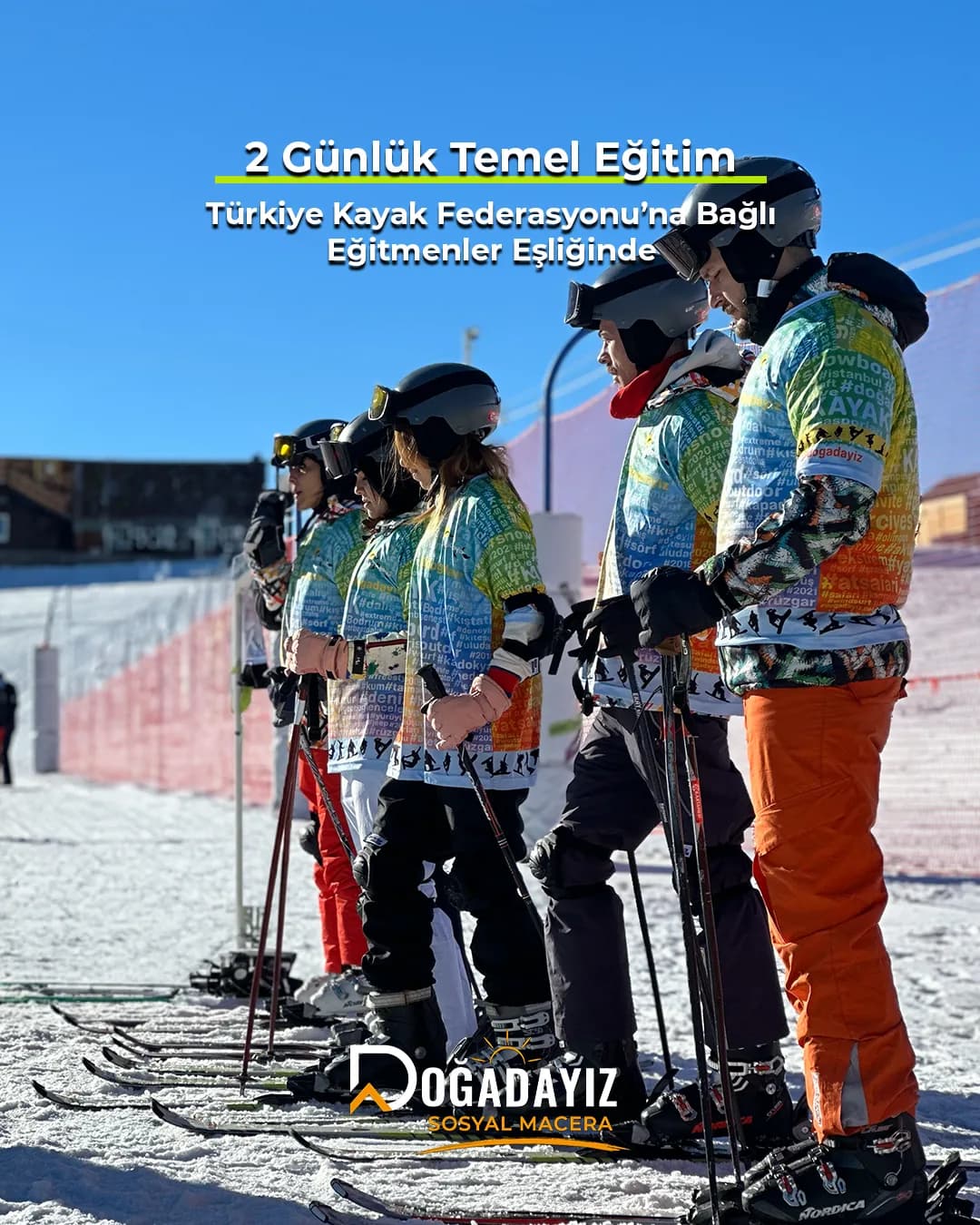
An activity holiday puts a sport at the heart of your trip: transport, accommodation and meals are planned, so you can focus on learning on the slopes. On Doğadayız winter activity holidays, accommodation, ski pass and ski or snowboard equipment are included in every package; course packages include basic lessons with instructors affiliated with the Turkish Ski Federation, while experience packages let you practise on the slopes at your own level.

What makes the programme different is the group: sharing the slopes with people at a similar level, dinners and nights out together, and a group leader by your side at all times. Solo travellers become part of this social adventure holiday from day one. That is why we describe our programmes as a social adventure holiday.