Using Ski Poles: The Right Grip, Length and Turn Rhythm
Ski poles are used for balance, rhythm and pushing on flat sections. According to the American instructors' association PSIA, your hands should be comfortably up and forward, with your elbows at least level with your breastbone and forward of it, “as if carrying a tray of glasses full of water”. The pole is planted together with the edge change, that is, at the least balanced moment of the turn, slightly in front of and to the side of your boots, with a small swing from the wrist. For pole length, the manufacturer LEKI recommends that your arm forms a 90° angle when the pole is held vertically on the ground, or about 70% of your body height. Letting go of your poles when you fall matters: falling with your pole in your hand can lead to “skier's thumb”, an injury to the ligament of the thumb.
Poles do three jobs: pushing on flat sections, providing rhythm and timing in turns, and helping your balance. Beginners are often not given poles in their first lessons; balance is built with the legs first. Once the snowplough and snowplough turns are solid, the poles come into play.
Pole length
According to LEKI:
When the pole is held vertically on the ground and you grip the handle, your upper arm and forearm should form an angle of about 90°.
A practical rule: about 70% of your body height (e.g. 175 cm → about 120–125 cm).
Tell the rental shop your height and check the pole using this method. A pole that does not suit your height disrupts the natural position of your hands and body.
Hand position
According to PSIA's description, your hands are comfortably up and forward, your elbows at least as far forward as your breastbone, and your hands slightly above waist height. PSIA's analogy: as if you were carrying a tray of glasses full of water. When your hands stay forward, your upper body stays calm and your weight stays forward; for the correct stance, see our guide The correct basic ski stance.
The pole plant: where and when?
Where? According to PSIA, the pole is planted slightly in front of and to the side of your boots, on the downhill side of the front third of the ski; there should be a comfortable distance between the pole tip and the ski. The swing comes from the wrist, not from the whole arm.
When? The pole is planted together with the edge change, because this is the least balanced moment of the turn. The pole is planted on the side you are turning towards.
Turn
When does the swing start? (PSIA)
Short turn
As soon as the turn begins; a late plant does nothing for balance
Medium turn
Slowly, as you enter the fall line; the plant coincides with the start of the next turn
In short turns, start the swing at the start of the turn
Safety: skier's thumb
Skier's thumb is an injury to the inner collateral ligament of the joint at the base of the thumb, and it often happens when the pole forces the thumb sideways during a fall. According to a review (Sports Medicine, 1995), strapless poles do not reduce how often this injury occurs; but the risk may fall if skiers learn to let go of their poles when they fall. Another review notes that this injury is common and, if missed, can lead to permanent laxity. Some manufacturers offer grip systems that can release the strap or glove from the pole in a fall.
Practical rules:
Let go of your poles when you fall; do not try to break your fall with your hands.
In deep snow and wooded areas, take the pole straps off your wrists, in line with ski resorts' safety advice.
If you have pain, swelling or a weak grip in your thumb, have it seen by a health professional.
Learning to use poles with an instructor
When pole rhythm is learnt together with parallel skiing, it makes linking turns easier. On an activity holiday, this stage comes under an instructor's supervision, on consecutive days: on Doğadayız programmes in Erciyes, after the basic course you clock up kilometres on different runs, and there are experience packages for those who can already ski. Progressing with people at the same level turns the programme into a social adventure holiday.
Doğadayız Packages
Doğadayız packages for your level
Winter activity holidays with accommodation, ski pass and equipment included, shared with a group.
The easiest way to learn to ski: a winter activity holiday
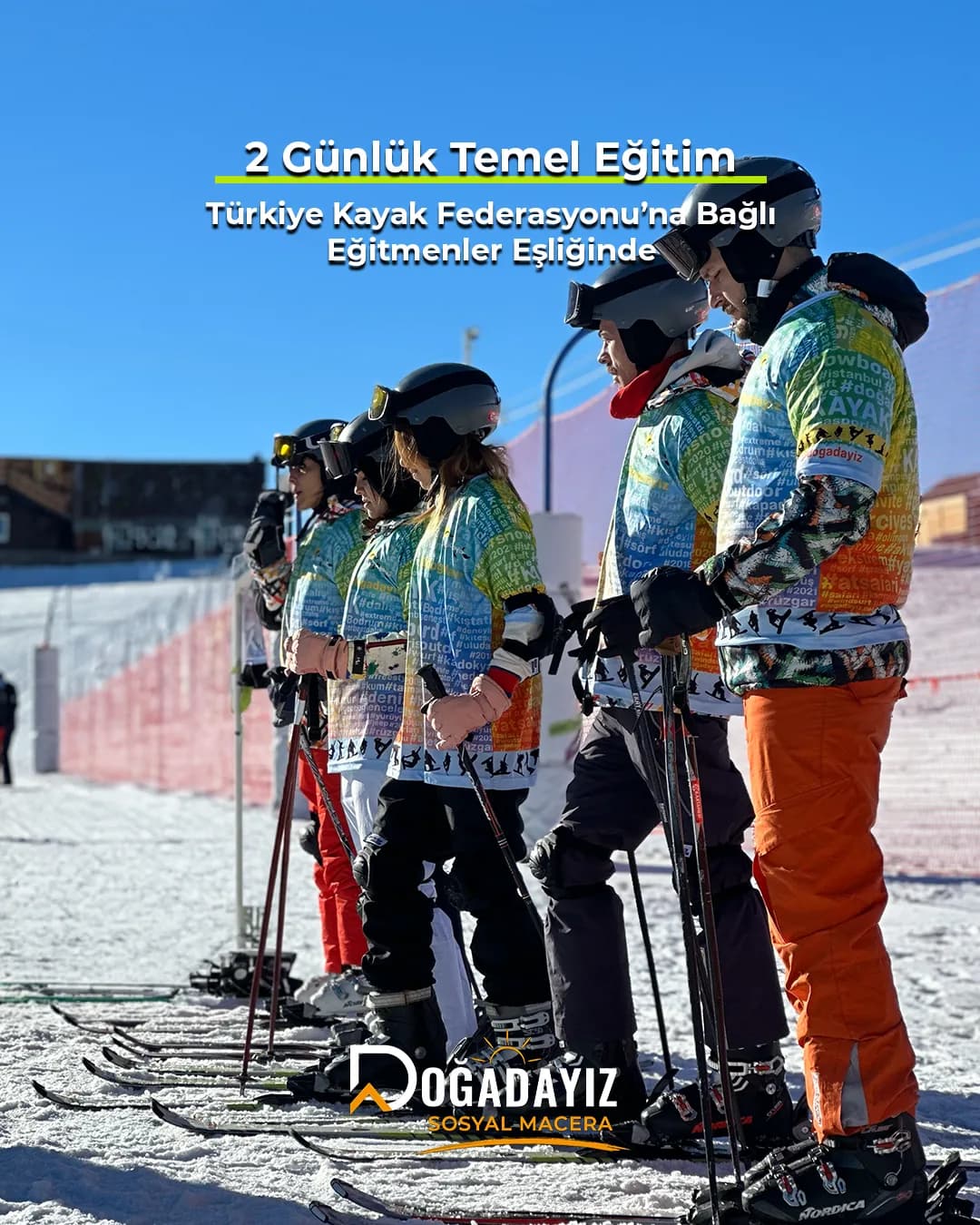
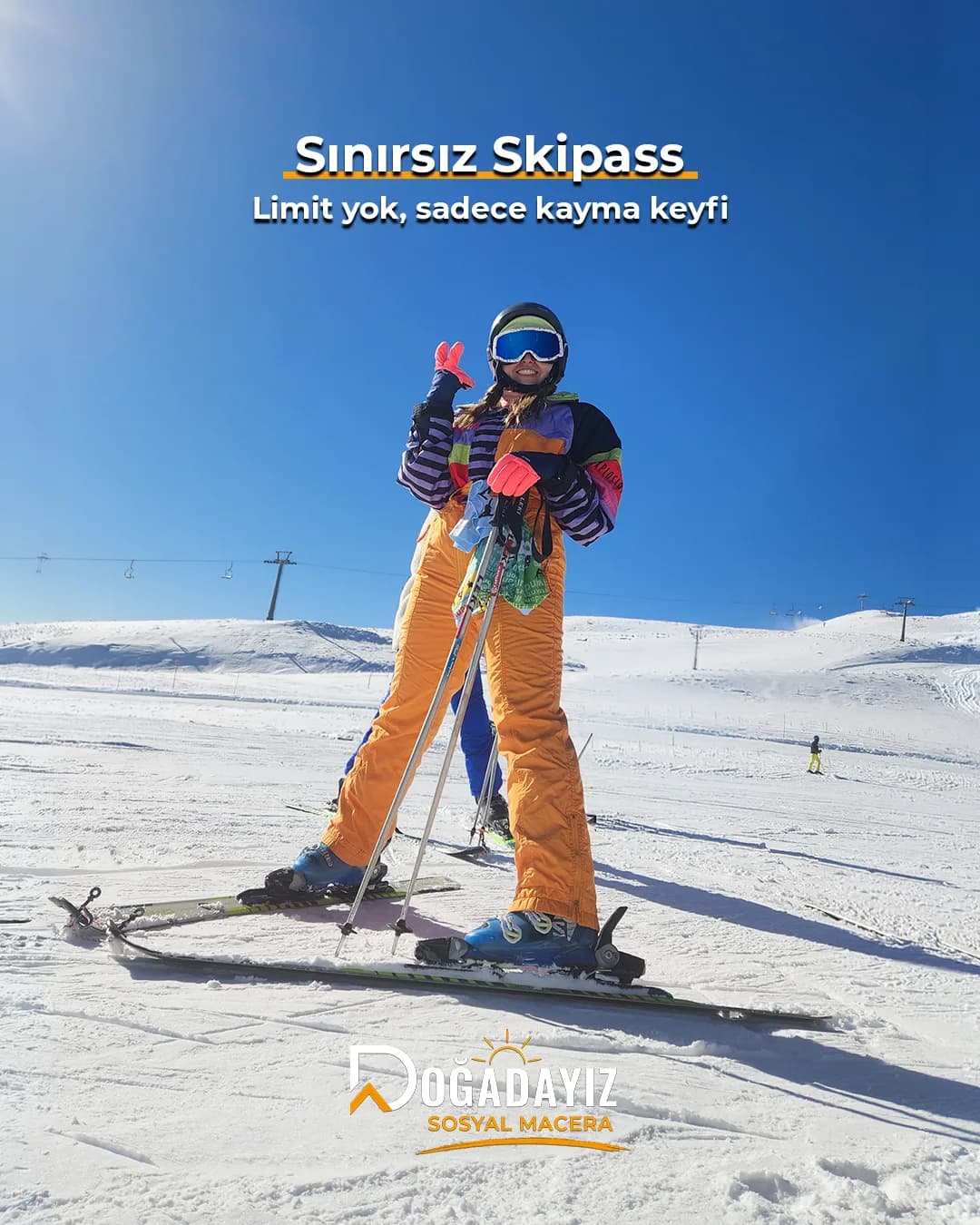
An activity holiday puts a sport at the heart of your trip: transport, accommodation and meals are planned, so you can focus on learning on the slopes. On Doğadayız winter activity holidays, accommodation, ski pass and ski or snowboard equipment are included in every package; course packages include basic lessons with instructors affiliated with the Turkish Ski Federation, while experience packages let you practise on the slopes at your own level.
What makes the programme different is the group: sharing the slopes with people at a similar level, dinners and nights out together, and a group leader by your side at all times. Solo travellers become part of this social adventure holiday from day one. That is why we describe our programmes as a social adventure holiday.
According to LEKI, when the pole is held vertically on the ground and you grip the handle, your upper arm and forearm should form an angle of about 90°; the practical rule is about 70% of your body height.
When do you plant your pole when skiing?
According to PSIA, together with the edge change, at the least balanced moment of the turn. In a short turn the swing starts as soon as the turn begins, in a medium turn as you enter the fall line; the pole is planted on the side you are turning towards.
What is skier's thumb?
It is an injury to the inner collateral ligament of the joint at the base of the thumb; it often happens when the pole forces the thumb sideways during a fall. Letting go of your poles when you fall may reduce the risk; if you have pain or a weak grip, you should see a doctor.
The correct basic ski stance is the position the American instructors' association PSIA calls the athletic stance: in a fairly tall stance your weight is spread evenly over both feet; your ankles, knees, hips and spine are slightly flexed forward; your upper body is upright but relaxed and your hands are comfortably forward, within your field of vision. Your hips and upper body are centred over your feet; your head and shoulders appear stacked over your hips and feet. According to PSIA, feeling your ankle flex into the tongue of the boot and your weight on the balls of your feet eliminates leaning back, the most common beginner mistake.
The move to parallel skiing does not happen in one step but with an intermediate stage: snowplough → wedge christie → basic parallel turn. In a wedge christie you start the turn in a snowplough and, during the turn, finish parallel by bringing the inside ski alongside the outside ski. According to the American instructors' association PSIA, what makes matching easier is relaxing the inside leg and pressing on the outside ski; as you gain experience, the matching moves closer to the start of the turn. In a true parallel turn, your weight is transferred to the new outside ski before the turn begins, and this movement comes from the legs, beneath a calm upper body.
Moguls are bumps that form on a slope over time as skiers turn in the same places; freestyle skiing also has an Olympic discipline of the same name. The key to skiing bumps is absorption and extension: according to the International Ski Federation's definition of the technique, the skier absorbs the impact by bending the knees from the base of the bump to its crest, extends the legs just after the crest, and in this way keeps the pressure between ski and snow constant. The head stays steady and faces down the valley, the hands are in front of the body, and the pole plant is light. For a beginner, the easiest approach is to choose a round line that goes around the bumps; the direct line, which runs straight down between the bumps, requires strong leg movements.