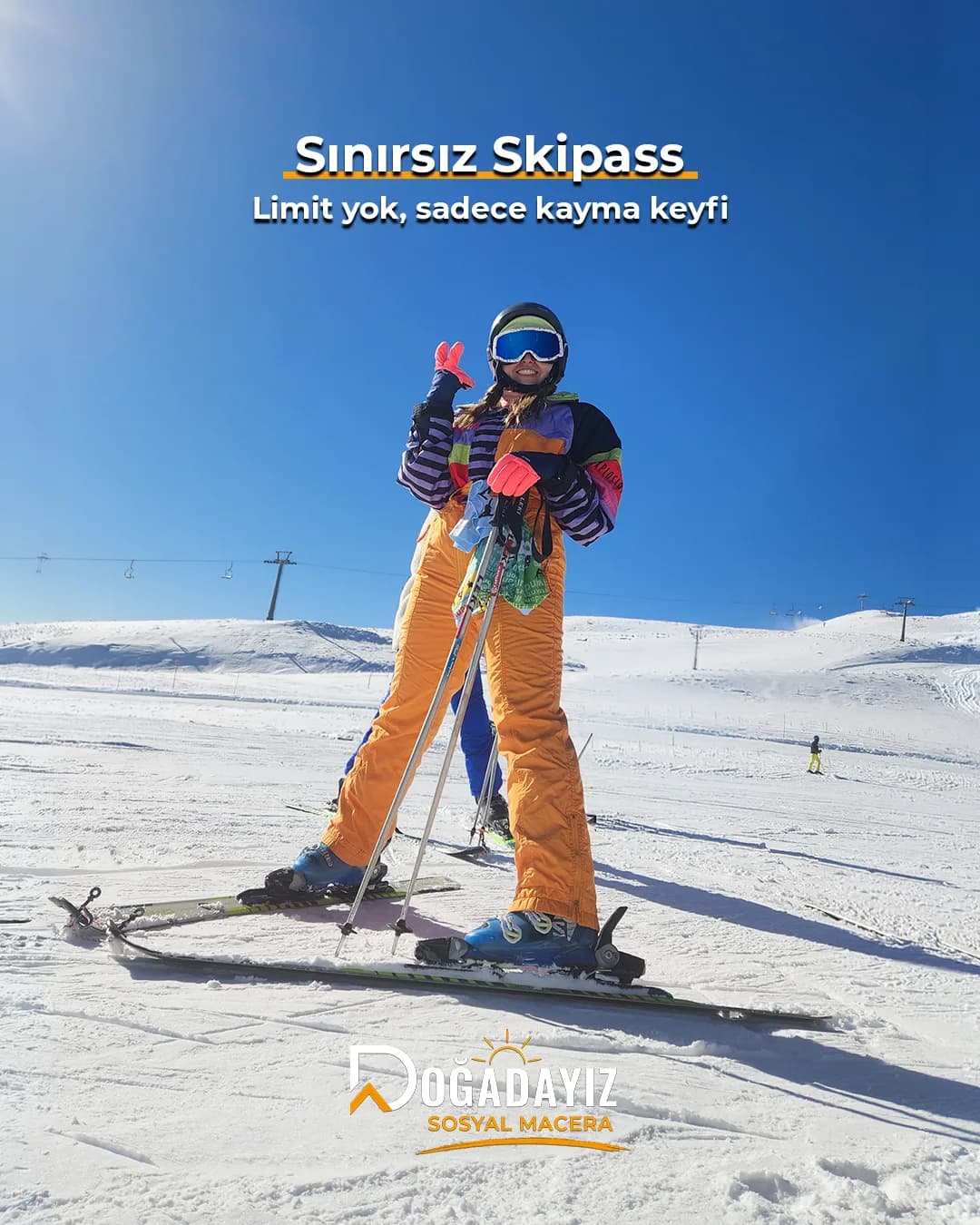
The Correct Basic Ski Stance: Balance, Centre of Mass and Body Position
The correct basic ski stance is the position the American instructors' association PSIA calls the athletic stance: in a fairly tall stance your weight is spread evenly over both feet; your ankles, knees, hips and spine are slightly flexed forward; your upper body is upright but relaxed and your hands are comfortably forward, within your field of vision. Your hips and upper body are centred over your feet; your head and shoulders appear stacked over your hips and feet. According to PSIA, feeling your ankle flex into the tongue of the boot and your weight on the balls of your feet eliminates leaning back, the most common beginner mistake.
Tall but flexible: A fairly tall stance, not a crouch.
Weight even on both feet: When gliding straight, press equally on both skis.
Four joints slightly flexed: Ankles, knees, hips and spine slightly flexed forward.
Shins on the boot tongue: Flex your ankles forward until you feel your shins touch the front tongue of the boot; your weight is between the ball and the middle of your foot.
Hands forward: Arms relaxed, hands forward and within your field of vision.
Stacked alignment: Seen from the side, your head and shoulders are over your hips, and your hips over your feet.
PSIA's current fundamentals express the same idea: the skier directs pressure along the length of the ski by controlling their centre of mass over their feet.
The most common mistake: leaning back
Out of fear of the slope and of speed, most beginners push their hips back and end up in a position as if they were "sitting on a chair". In this position:
The tips of the skis do not press into the snow enough, and the skis struggle to turn.
The thigh muscles tire very quickly.
Control decreases and the risk of falling rises; being off balance to the rear is also one of the dangerous knee positions in skiing (for details see Knee injuries in skiing).
PSIA's correction is simple: flex your ankle into the tongue of the boot and feel your weight move onto the balls of your feet. Bending too much at the hips and crouching is also a mistake; the correction again starts at the ankle.
Stance drills
Drill
How?
Aim
Hopping on flat ground
With skis on, hop lightly on flat ground and land softly in the same stance
Finding a centred, flexible stance
Shin pressure
Standing still, press both shins into the boot tongues, then release
Feeling the ankle flex
Carrying a tray
While gliding, hold your hands forward as if carrying a tray full of water
A calm upper body and hands
Knee touch
While gliding, bring your hands to your knees, then forward again
The snowplough, snowplough turns and parallel skiing are all built on this stance. Moving on to the next step before your stance is solid means repeating the same mistake at every step. For the next step, see our guide Snowplough technique. For the role of the poles in your stance, see our guide Using ski poles.
Getting your stance right with an instructor
It is hard to see your own stance; a few minutes of observation by an instructor on day one prevents a mistake that could last for weeks. On an activity holiday, your first lessons take place in the beginner area with an instructor: on Doğadayız basic course packages in Erciyes, instructors affiliated with the Turkish Ski Federation (TKF) get your stance and balance right on day one. Learning with people at the same level turns the programme into a social adventure holiday; for programmes, see our winter activity holidays page.
Doğadayız Packages
Doğadayız packages for your level
Winter activity holidays with accommodation, ski pass and equipment included, shared with a group.
The easiest way to learn to ski: a winter activity holiday
An activity holiday puts a sport at the heart of your trip: transport, accommodation and meals are planned, so you can focus on learning on the slopes. On Doğadayız winter activity holidays, accommodation, ski pass and ski or snowboard equipment are included in every package; course packages include basic lessons with instructors affiliated with the Turkish Ski Federation, while experience packages let you practise on the slopes at your own level.
What makes the programme different is the group: sharing the slopes with people at a similar level, dinners and nights out together, and a group leader by your side at all times. Solo travellers become part of this social adventure holiday from day one. That is why we describe our programmes as a social adventure holiday.
PSIA's athletic stance: in a fairly tall stance, weight even on both feet; ankles, knees, hips and spine slightly flexed forward; upper body upright but relaxed, hands forward. Your head and shoulders should be aligned over your hips and feet.
Why do I keep falling backwards when skiing?
Usually because fear makes you push your hips back and lean back. According to PSIA, flexing your ankle into the tongue of the boot and putting your weight on the balls of your feet corrects this mistake.
Where on my feet should my weight be when skiing?
Between the ball and the middle of your foot. Feeling your shin touch the front tongue of the boot shows that your weight is in the right place; leaning on your heels leads to leaning back.
You start skiing with a beginner lesson with an instructor, rental equipment and easy (beginner) slopes. On day one you put on your skis, glide on flat ground, learn to stop with the snowplough and ride the magic carpet; on day two you come down an easy slope under control with snowplough turns. For an adult who has never skied, this stage usually takes 2 days.
The snowplough (pizza) is the V position made by bringing the tips of your skis together and pushing the tails apart, and it is how a beginner controls speed and stops. The American instructors' association PSIA distinguishes two types: the braking snowplough, which is wider and presses on the edges and is used to cut speed and stop; and the gliding snowplough, which is narrower with little friction and is used to learn turns. According to PSIA, in a good snowplough turn speed is controlled by the shape of the turn, not by the width of the snowplough; a big braking snowplough, on the other hand, makes your hips drop back.
Ski poles are used for balance, rhythm and pushing on flat sections. According to the American instructors' association PSIA, your hands should be comfortably up and forward, with your elbows at least level with your breastbone and forward of it, “as if carrying a tray of glasses full of water”. The pole is planted together with the edge change, that is, at the least balanced moment of the turn, slightly in front of and to the side of your boots, with a small swing from the wrist. For pole length, the manufacturer LEKI recommends that your arm forms a 90° angle when the pole is held vertically on the ground, or about 70% of your body height. Letting go of your poles when you fall matters: falling with your pole in your hand can lead to “skier's thumb”, an injury to the ligament of the thumb.