Gudauri Ski Resort Guide: Visa-Free Skiing in Georgia
Gudauri is the best-known ski resort in Georgia's Greater Caucasus mountains. According to the Georgian National Tourism Administration, the resort is 120 km from Tbilisi; the ski area rises from 1,989 metres to 3,276 metres, with 37 km of groomed runs, 20 runs in four colour categories and 18 lifts. The season runs from December to mid-April, and the snow depth reaches 1–2 metres. The resort's speciality is heliskiing; a gondola links Gudauri with the Kobi valley to the north. Turkish citizens can enter Georgia visa-free (for up to 1 year), but according to the Turkish Ministry of Foreign Affairs, from 1 January 2026 travel insurance with cover of at least 30,000 GEL is compulsory.
20 runs in four colour categories; 37 km of groomed runs
Lifts
18 operating lifts; a gondola linking Gudauri with Kobi
Snow
Snow depth of 1–2 m
Season
December to mid-April
Highlights
Heliskiing; continuous ski patrol since 2016
Nearby
Stepantsminda (Kazbegi), 32 km
Some guide websites give different figures, such as 70 km of runs and 15 lifts; this page is based on the data of the official tourism administration.
Getting there
Gudauri is reached by road from Tbilisi; the tourism administration gives the journey time as roughly two to two and a half hours. The road follows the historic route across the Caucasus; in winter it can be closed because of snow and weather, so it is important to keep your programme flexible and allow some leeway for the return journey.
Visa and insurance (for Turkish citizens)
Visa: According to the Turkish Ministry of Foreign Affairs, Turkish citizens can enter Georgia visa-free for up to 1 year; entry with the new-style ID card is also possible.
Compulsory insurance:From 1 January 2026, health and accident insurance with cover of at least 30,000 GEL, valid for the entire stay, is compulsory for visitors arriving visa-free or on a tourist visa.
Winter sports cover: Check your policy to see whether the compulsory insurance covers skiing accidents; for details, see our guide Travel Insurance for a Ski Holiday.
Those who can ski: The large, high ski area, long descents and the link to the Kobi valley are attractive for intermediate and advanced skiers.
Freeride and heliskiing: According to the tourism administration, heliskiing is the resort's standout feature; in 2026 a 2-star Freeride World Tour qualifier was held in the Kobi valley. Off-piste skiing carries avalanche risk and requires equipment, training and a guide; for details, see our guide Avalanche Risks When Skiing Off-Piste.
Beginners: The resort has runs in four colour categories; first-timers need to start with lessons with an instructor and easy runs. For someone who has never skied, starting at a resort in Türkiye with a large training area may be more practical; to help you decide, see our guide How to Choose a Destination for Your First Ski Holiday.
Ski pass
According to the tourism administration, a card called the “Multicard” is valid at the Gudauri, Bakuriani, Goderdzi and Svaneti resorts. As we could not find an official ski pass price list for the 2025–26 season, we do not give prices; check the resort's current prices before you go. For the types of ski pass, see our guide What Is a Ski Pass?.
Altitude
The ski area rises to 3,276 metres, while accommodation is usually in the base area (about 2,000 m). According to the US Centers for Disease Control and Prevention, the risk of altitude sickness increases for people sleeping above 2,450 metres; it is recommended to keep your pace low on the first day and avoid alcohol for the first 48 hours. For details, see our guide How Does High Altitude Affect the Body?.
Skiing abroad with a group
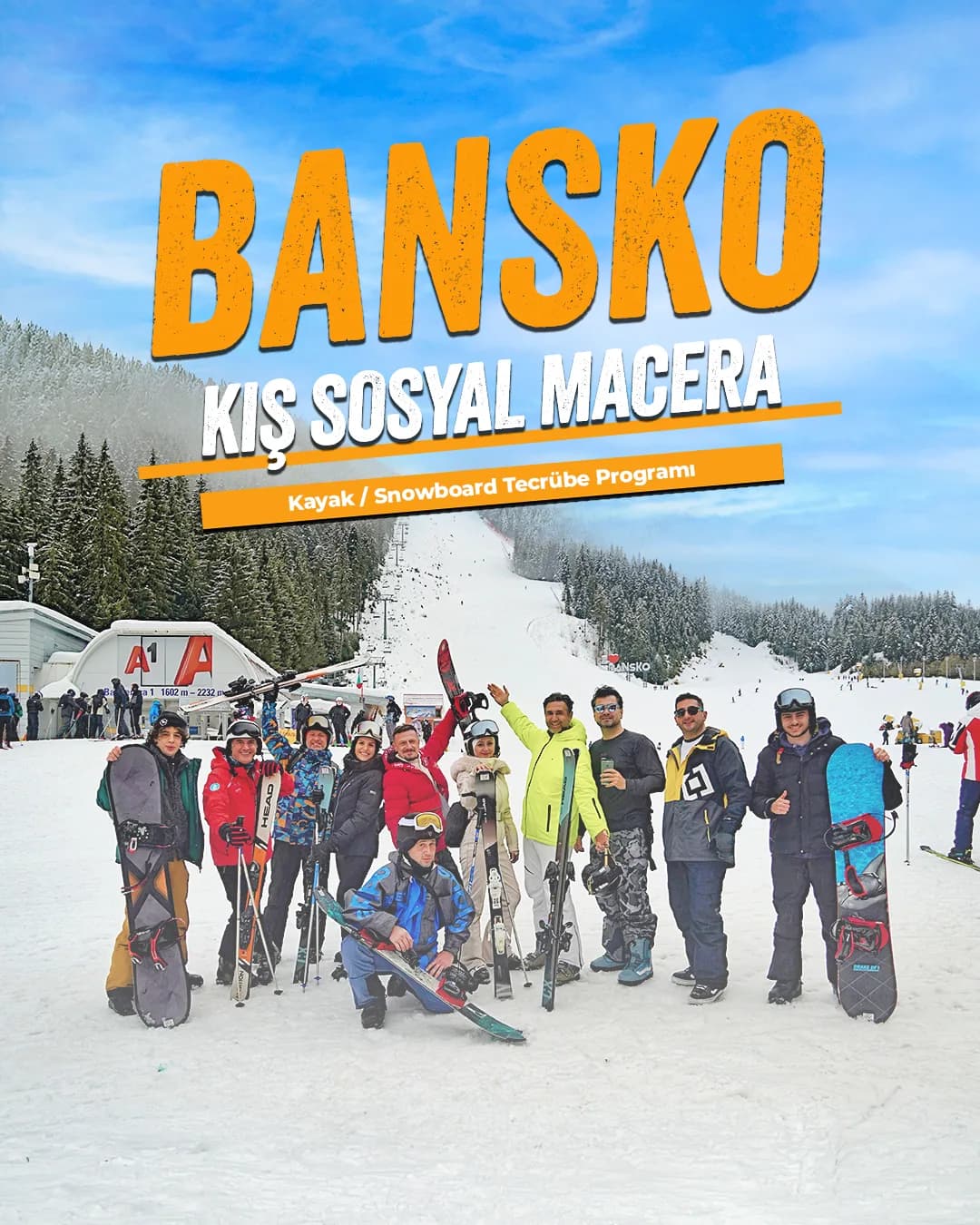
At a resort abroad such as Gudauri, there are more things to plan, such as transport, insurance, currency and language; that is why going with a group on an organised trip makes your first experience abroad easier. The Doğadayız winter programme abroad is currently in Bansko; for our programmes in Türkiye, see our winter activity holidays page. Every winter holiday spent with a group, the way Doğadayız designs it, is a social adventure holiday.
Doğadayız Packages
Doğadayız packages for your level
Winter activity holidays with accommodation, ski pass and equipment included, shared with a group.
The easiest way to learn to ski: a winter activity holiday
An activity holiday puts a sport at the heart of your trip: transport, accommodation and meals are planned, so you can focus on learning on the slopes. On Doğadayız winter activity holidays, accommodation, ski pass and ski or snowboard equipment are included in every package; course packages include basic lessons with instructors affiliated with the Turkish Ski Federation, while experience packages let you practise on the slopes at your own level.
What makes the programme different is the group: sharing the slopes with people at a similar level, dinners and nights out together, and a group leader by your side at all times. Solo travellers become part of this social adventure holiday from day one. That is why we describe our programmes as a social adventure holiday.
It is in Georgia's Greater Caucasus mountains; according to the Georgian National Tourism Administration, it is 120 km from Tbilisi, and the drive takes roughly two to two and a half hours.
How many runs does Gudauri have?
According to the Georgian National Tourism Administration, there are 20 runs in four colour categories, 37 km of groomed runs in total and 18 operating lifts. The ski area rises from 1,989 metres to 3,276 metres.
Do I need a visa to ski in Georgia?
No. Turkish citizens can enter Georgia visa-free for up to 1 year. However, from 1 January 2026, health and accident insurance with cover of at least 30,000 GEL for the length of the stay is compulsory.
When is the season in Gudauri?
According to the Georgian National Tourism Administration, the season starts in December and lasts until mid-April; the snow depth reaches 1–2 metres.
The main countries where you can take a visa-free ski holiday with a burgundy (ordinary, umuma mahsus) passport are Georgia (Gudauri, Bakuriani), Azerbaijan (Shahdag, Tufandağ), Bosnia and Herzegovina (Jahorina, Bjelašnica), Serbia (Kopaonik), Montenegro (Kolašin), North Macedonia (Mavrovo), Kazakhstan (Shymbulak), Uzbekistan (Amirsoy) and, as a long-haul destination, Japan (Niseko, Hakuba). According to the Turkish Ministry of Foreign Affairs, the visa-free stay in these countries ranges from 30 to 90 days. Note: from 2026 Georgia requires travel insurance, while Bulgaria (Bansko) and Andorra require a Schengen visa.
Insurance is not a legal requirement for skiing in Turkey, but it matters: under its general terms, standard personal accident insurance keeps sports on snow and ice excluded unless otherwise agreed, so you need to have skiing or winter sports cover added to your policy. A ski pass does not always include insurance: the Erciyes ski pass offers no insurance cover, whereas in Bansko mountain insurance is included in the ski pass price. Abroad, a Schengen visa requires travel health insurance with cover of at least €30,000. If you are buying a winter activity holiday package, check separately which insurance policies are included.
Marked and open slopes are secured against avalanches; off-piste terrain is not, and skiing there is entirely at your own risk. Even in Türkiye, skiers who went off-piste have lost their lives in avalanches: at Erciyes in 2022 and at Palandöken in 2024. If you are thinking of going off-piste, there are three conditions: reading the avalanche bulletin (on the European scale of 1–5; about half of deaths happen at level 3), everyone in the group carrying a transceiver, probe and shovel, and having learned to use them through training. A buried person's chance of survival is above 90% in the first 10–18 minutes but drops sharply after that; the rescue is up to the friends you are with.