How Many Days Should a Ski Holiday Be? The Ideal Length for Your Level
For someone who has never skied, a ski holiday should include at least 2–3 full days on the slopes; with travel days this usually means a holiday of between 2 nights/3 days and 4 nights/5 days. A common benchmark at ski schools is that a beginner can get down an easy run after three days of lessons. If you can already ski on your own, 3–4 days on the slopes is enough to get to know different runs. What matters is not the total number of nights but the number of full days you spend on the slopes; count travel days separately.
The most common mistake when working out how long a ski holiday should be is confusing the number of nights with the number of days on the slopes. On a 3-night, 4-day holiday, the first and last days are often spent travelling and checking in and out of the hotel; the number of full days on the slopes may be 2 or 2.5. Always build your plan around one question: How many full days will I be on the slopes?
Recommendations by level
Level
Recommended time on the slopes
Why?
I have never skied
At least 2–3 full days
Day 1 balance and stopping, day 2 turning, day 3 consolidating on an easy run
I have tried but I am not confident
2–3 days
The basic technique settles in again and you gain confidence on easy runs
I am comfortable on easy and intermediate runs
3–4 days
Getting to know different runs and improving your technique
Advanced
4 days or more
Long runs, different snow conditions, exploring the whole resort
Why 2–3 days for a beginner?
Learning settles in between days. On day one you learn to stop with the snowplough and to balance; on day two you move on to changing direction and your first turns; on day three you put them together on an easy run. The beginner progression of the American instructors' association PSIA-AASI follows the same order: walking and gliding before skiing, then the snowplough for speed control, weight transfer and finally linked turns in the fall line. The association gives no number of days for this; everyone progresses at a different pace.
The common benchmark at ski schools is three days of lessons: Vail Resorts, for example, gives first-timers a fourth lesson free if they cannot get down an easy run by the end of their third lesson. This is a marketing guarantee, not a scientific norm; even so, it shows how long the industry considers realistic for a beginner.
For snowboarding there is no official number of days. Burton's beginner guide gives no timeframe; it recommends taking lessons and continuing with the same instructor, and says that riding 15 or more days a season speeds up progress. In practice, the first two days of snowboarding are mostly about falling and getting up; linked turns usually come on the second or third day.
Fatigue: longer is not always better
The more days you spend on the slopes, the more tired your legs get and the more your technique breaks down. In a study of 753 injuries at a ski resort in China (BMJ Open, 2020), 36.7% of injuries happened in the last hours of the day. A study over three seasons in Scotland found that first-day skiers were 2.2 times more common among the injured than expected.
That is why a good programme splits the day: lessons in the morning, practice in the afternoon, and finishing at the end of the day without pushing yourself. On a long holiday, adding a rest day or a sightseeing day in between both rests your legs and helps what you have learned to sink in.
3 days (the first one a half day); 2 days of coach travel
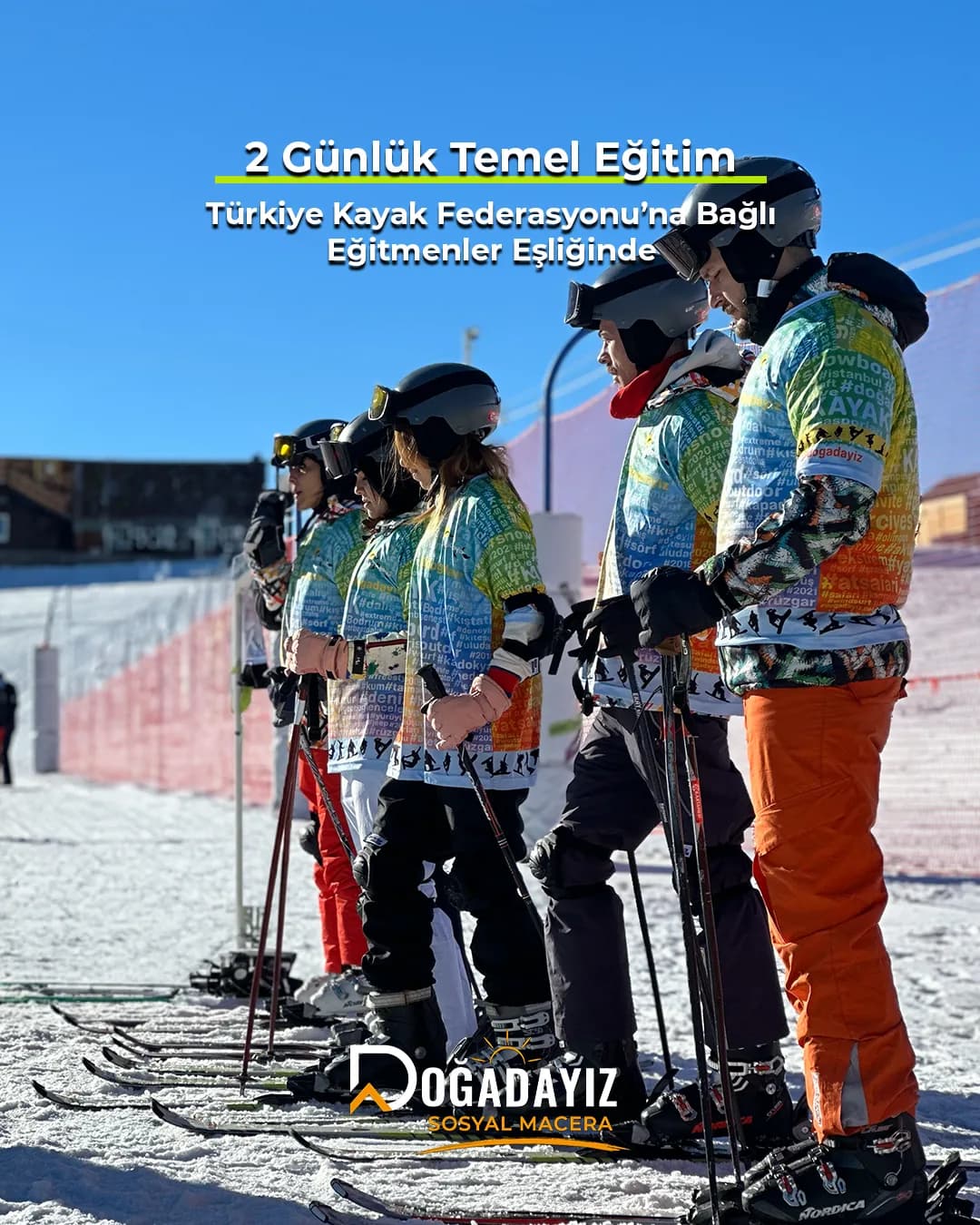
On basic course packages, lesson time is not limited by the hour: on day one there is a basic lesson with an instructor until noon, then in the afternoon you practise in groups re-formed by level; on day two you clock up kilometres on different runs.
Weekend or weekday?
Weekend programmes are popular because you can go without using up days off; on weekdays, the slopes and lifts are quieter. The Turkish mid-year school holiday (25 January – 5 February 2027 in 2026–27) is the busiest time. On your first holiday, a quiet slope makes learning easier.
Planning the length as an activity holiday
On a short ski holiday of two or three days, what wastes the most time is logistics: queuing for rentals, hotel–slope transfers, buying a ski pass. A winter activity holiday sorts these pieces out in advance, so every day you set aside is really spent on the slopes. Learning with a group at the same level turns even a short holiday into a social adventure holiday. To plan your first holiday step by step, see our guide How to Plan Your First Ski Holiday.
Doğadayız Packages
Doğadayız packages for your level
Winter activity holidays with accommodation, ski pass and equipment included, shared with a group.
The easiest way to learn to ski: a winter activity holiday
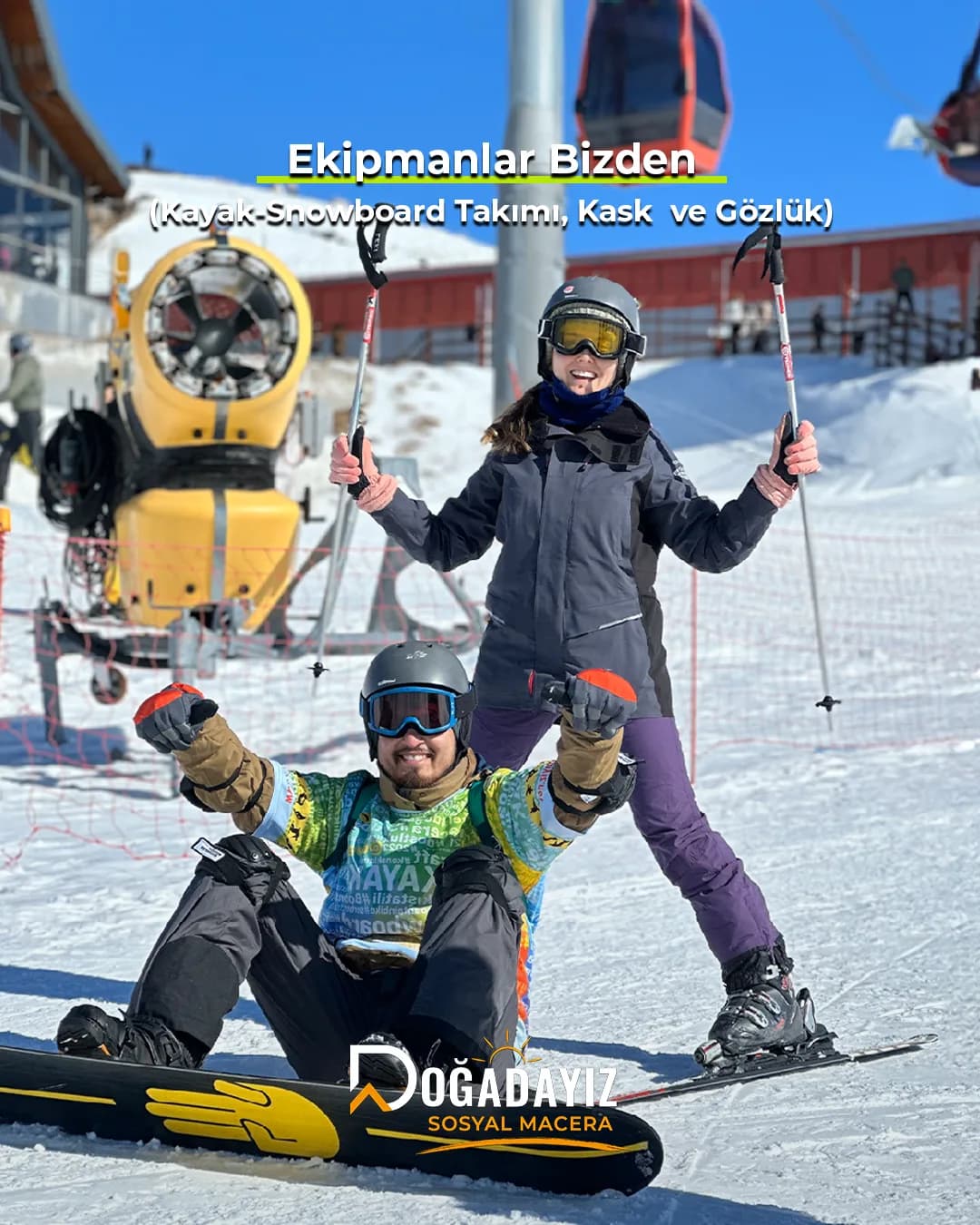
An activity holiday puts a sport at the heart of your trip: transport, accommodation and meals are planned, so you can focus on learning on the slopes. On Doğadayız winter activity holidays, accommodation, ski pass and ski or snowboard equipment are included in every package; course packages include basic lessons with instructors affiliated with the Turkish Ski Federation, while experience packages let you practise on the slopes at your own level.
What makes the programme different is the group: sharing the slopes with people at a similar level, dinners and nights out together, and a group leader by your side at all times. Solo travellers become part of this social adventure holiday from day one. That is why we describe our programmes as a social adventure holiday.
Everyone progresses at a different pace, but the common benchmark at ski schools is that a beginner can get down an easy run after three days of lessons. Stopping under control and turning in a snowplough usually settle in over the first two days; parallel skiing takes a few extra days of practice.
Is a 2-night, 3-day ski holiday enough?
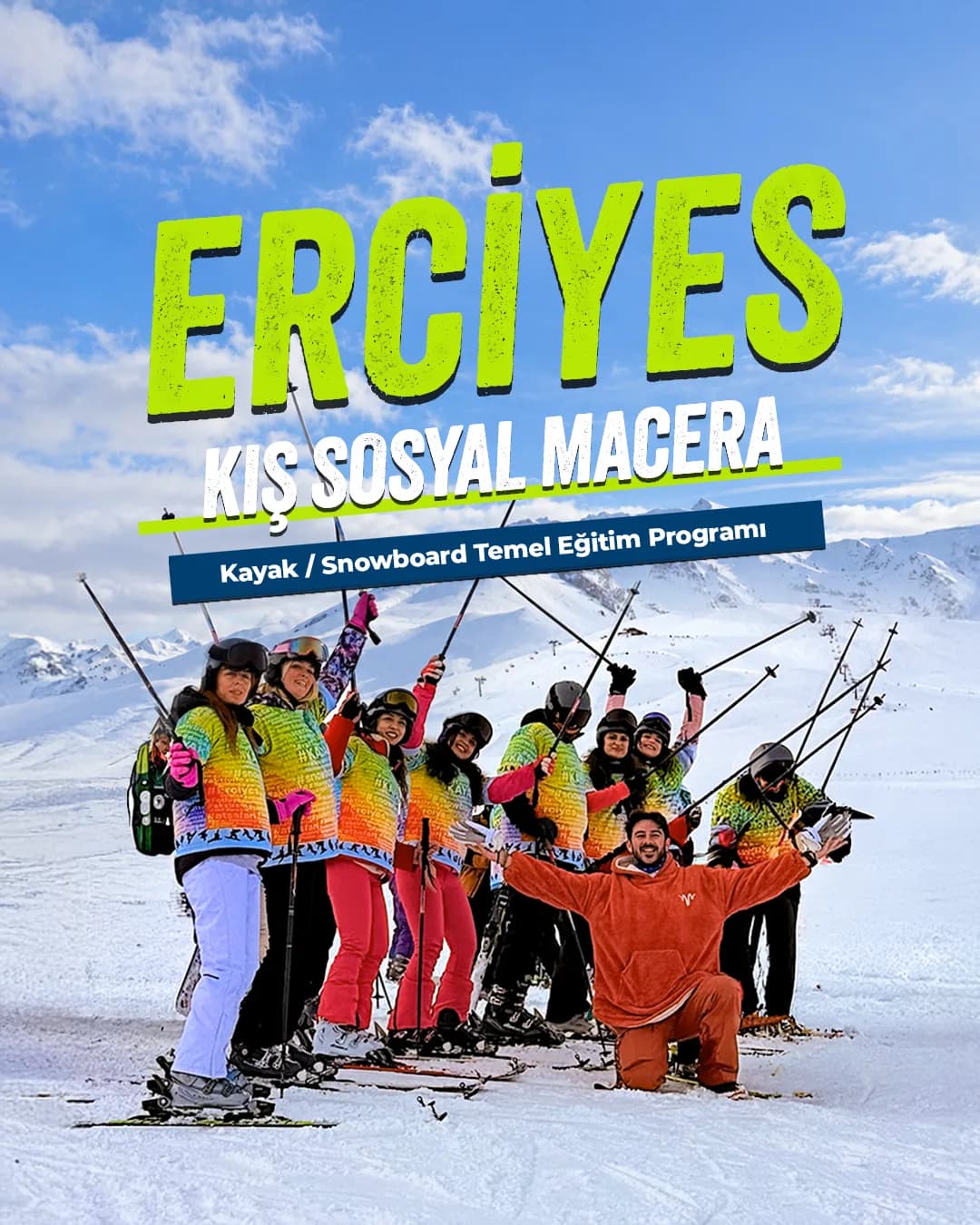
If you spend two full days on the slopes, a beginner can learn to ski under control at a basic level. Doğadayız's Erciyes basic course package is 2 nights, 3 days, with two full days on the slopes. If you want more practice, choose a programme with 3–4 days on the slopes.
How many days does it take to learn to snowboard?
There is no official number of days for snowboarding. In practice, the first two days are spent falling, getting up and learning edge control, and linked turns usually come on the second or third day. Riding with an instructor and on consecutive days speeds up progress.
Should I ski full days every day on a ski holiday?
There is no need. A significant share of injuries happen in the last hours of the day, as fatigue sets in. Lessons in the morning, practice in the afternoon and stopping when you get tired is safer and more productive.
The easiest way to plan your first ski holiday is to get the order right: assess your level → choose the resort → allow at least 2–3 days on the slopes → pick dates with the mid-year school holiday crowds in mind → plan lessons, equipment, ski pass and accommodation together → get your clothing ready → check safety and insurance. For someone who has never skied, a resort with a large training area (e.g. Erciyes) and lessons with an instructor are essential. A winter activity holiday that brings all these pieces together in one package is the way to make the fewest mistakes on your first trip.
Two packages that both say “lessons included” may not be the same thing. When comparing, check ten points: (1) how many hours a day and how many days of lessons, (2) group size, (3) the instructor's Turkish Ski Federation certificate, (4) whether the ski pass is unlimited or ride-based, (5) which equipment is included, (6) transfers between hotel and slopes, (7) the accommodation's distance from the slopes and meals, (8) insurance, (9) cancellation and date change terms, (10) a group leader and a social programme. Comparing these points in a single table shows what the price of a winter activity holiday really covers.
You start skiing with a beginner lesson with an instructor, rental equipment and easy (beginner) slopes. On day one you put on your skis, glide on flat ground, learn to stop with the snowplough and ride the magic carpet; on day two you come down an easy slope under control with snowplough turns. For an adult who has never skied, this stage usually takes 2 days.