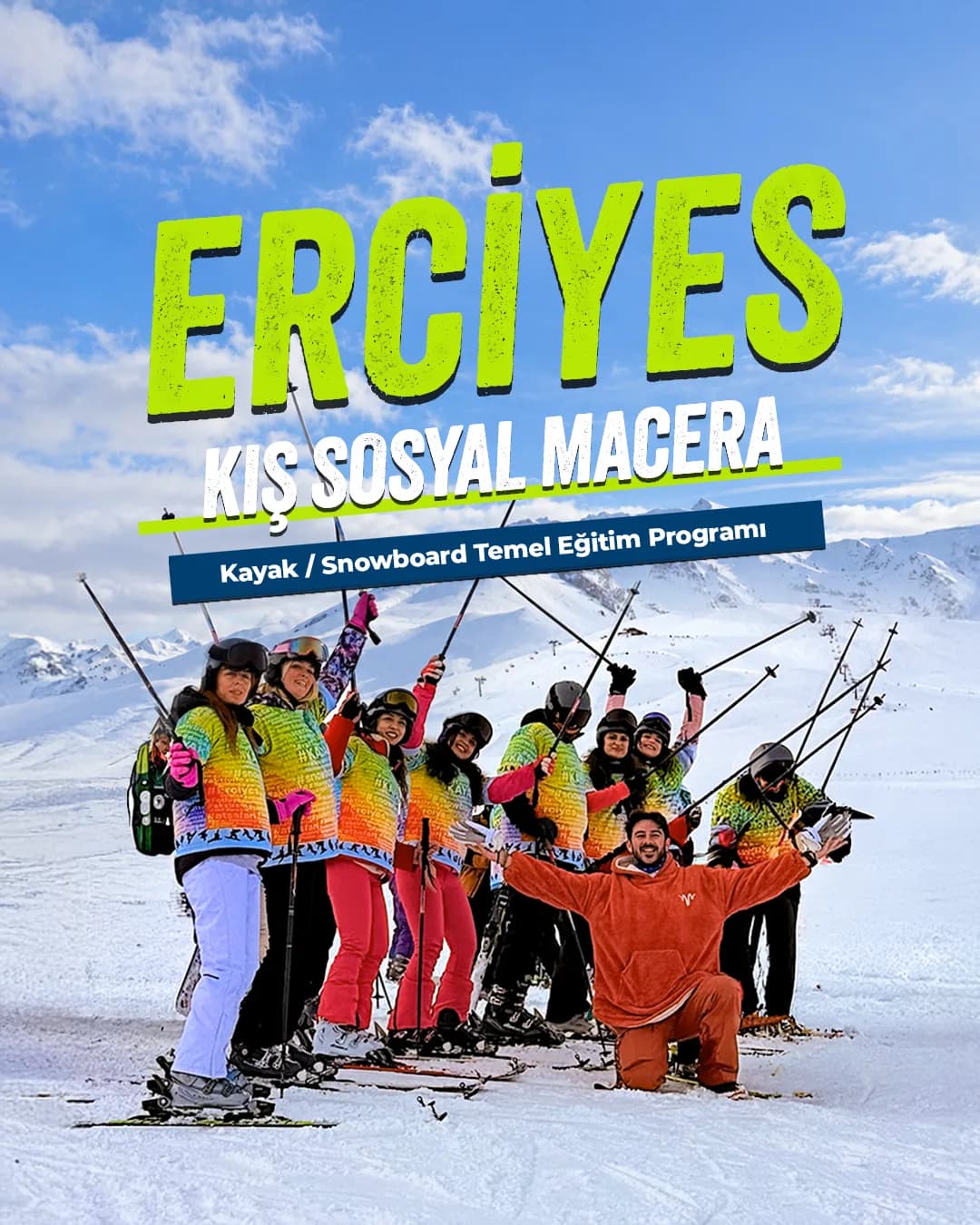
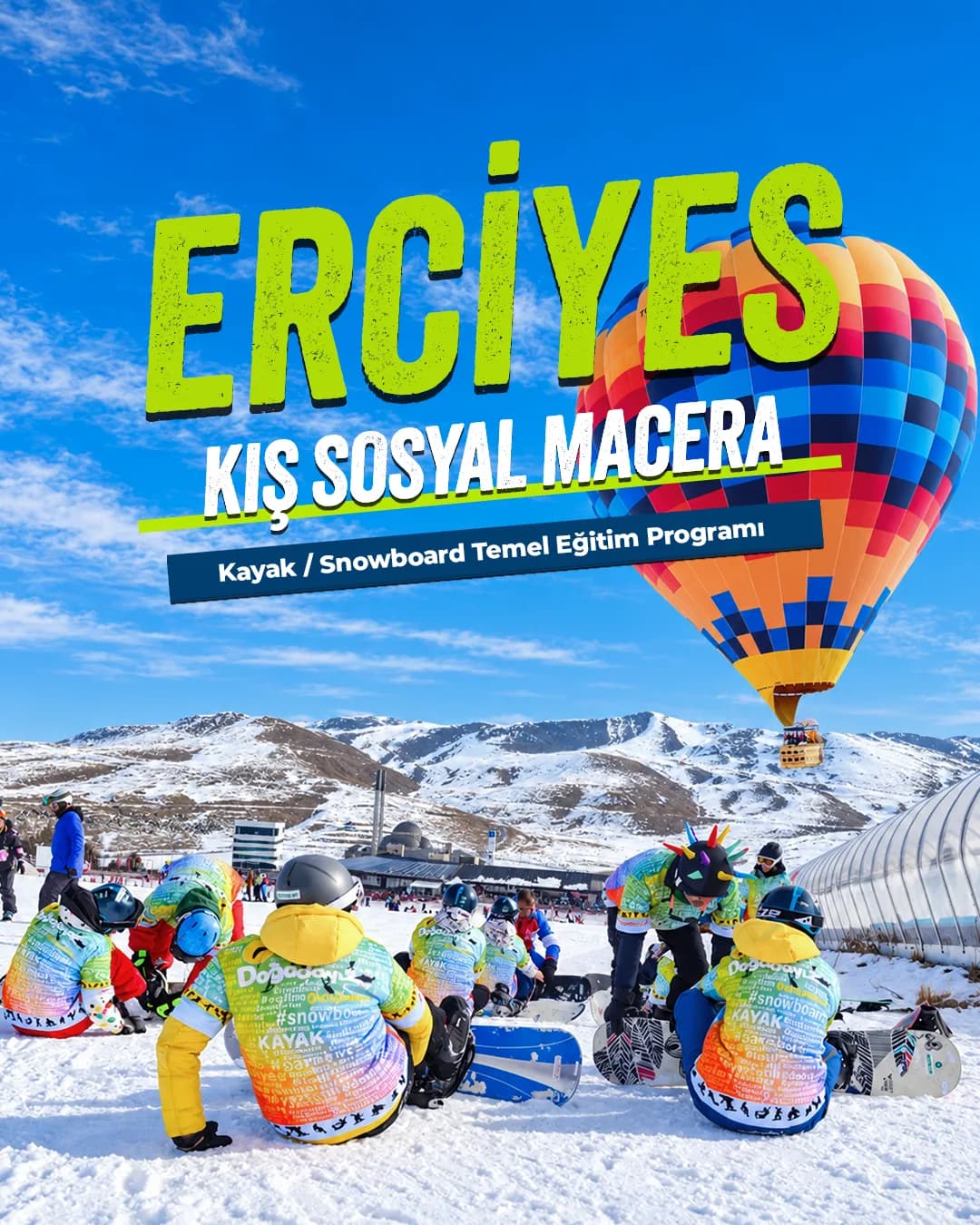
You start skiing with a beginner lesson with an instructor, rental equipment and easy (beginner) slopes. On day one you put on your skis, glide on flat ground, learn to stop with the snowplough and ride the magic carpet; on day two you come down an easy slope under control with snowplough turns. For an adult who has never skied, this stage usually takes 2 days.
Walking in boots and skis, gliding on flat ground, falling and getting up
Flat area
Day 1, afternoon
Controlling speed and stopping with the snowplough, the magic carpet
Nursery slope
Day 2
Snowplough turns, the fall line, traversing, drag lift or chairlift
Easy (blue/green) slope
The following days
Moving from the snowplough to parallel skiing
Easy and intermediate slopes
This is the order followed with adults who have never skied on Doğadayız basic course packages. Not everyone progresses at the same pace; what matters is not moving on to the next step until the previous one feels solid.
Before you start: three right decisions
Start with an instructor
Trying to learn from a friend or from videos is the most common mistake, and the one that makes most people give up. The habits you pick up in your first lesson, right or wrong, stay with you for a long time. An instructor teaches you the correct stance and how to stop safely, and picks slopes that suit your level. Group lessons are cheaper, and learning with people at the same level keeps you motivated.
Choose the right resort and the right time
For beginners, the number of slopes matters less than a wide, gently sloping beginner area, a magic carpet and easy access to gentle runs. The middle of the season (usually January–March), when the snow is deep enough, is the most comfortable time to learn. Doğadayız winter programmes take place in Erciyes, Sarıkamış and Bansko. The easiest way to start skiing is a winter activity holiday: accommodation, ski pass and equipment are planned, so all you have to do is focus on learning. Learning with a group at a similar level turns the programme into a social adventure holiday; first-day nerves fade quickly when you are with the group.
Rent your equipment
There is no need to buy equipment in your first season. The rental shop gives you ski boots, skis and poles; you should always wear a helmet and goggles as well. On Doğadayız basic course packages, the ski or snowboard set, helmet and goggles are included.
Your boots should fit snugly: your toes can touch the front without being squashed, and your heel should not lift. Wear a single pair of thin, long ski socks. We explain what to wear in detail in our guide What to Wear Skiing and Snowboarding.
Day one, step by step
Walk in your boots and skis. First walk in your boots alone, then put on one ski and push with the other foot to move around on flat ground. The aim is to get used to the feeling of the ski gliding.
Glide on flat ground. With both skis on, stand with your knees slightly bent, weight evenly on both feet and arms forward. Your skis should be parallel and hip-width apart.
Learn to fall and get up. When you lose control, fall to the side and backwards, onto your hip. Before getting up, bring your skis side by side across the slope; push yourself up on the uphill side, using your poles for support.
Set up the snowplough. Bring the tips of your skis closer together and push the tails apart: you make a V (pizza slice) in the snow. The wider the V, the slower you go; open it wide enough and you stop.
Ride the magic carpet. The magic carpet in the beginner area carries you uphill without taking your skis off. On the carpet, keep your skis parallel and look ahead.
Go straight down in a snowplough and stop. Slide down a short, gentle section in a snowplough and stop at the point your instructor shows you. Once you can repeat this under control, you have reached the goal of day one.
Day two: learning to turn
The snowplough turn
In the snowplough position, you put your weight on the ski opposite to the direction you want to turn: press on the left ski to turn right, and on the right ski to turn left. Link the turns one after another and you get a controlled descent that snakes down the slope.
Get to know the fall line
The fall line is the steepest direction, the way a ball would roll on its own. A skier who turns towards the fall line speeds up; one who turns away from it slows down. The secret of speed control is to finish every turn and move far enough away from the fall line.
Your first drag lift or chairlift ride
To get up to the easy slopes you use a drag lift or a chairlift. You do not sit on a drag lift; you place the bar behind your hips, keep your knees slightly bent and your skis parallel. On a chairlift, the safety bar stays down for the whole ride; at the top, you lift your ski tips and glide away down the ramp.
Next step: parallel skiing
Once the snowplough turn is solid, you bring the inside ski parallel to the outside ski in the middle of the turn; over time you ski the whole turn in parallel. This transition usually takes a few days of practice. Doğadayız experience packages focus on this stage.
Physical preparation
You do not need to be an athlete to ski, but your leg and core muscles work hard in the first few days. Regular walking, stairs, squats and balance exercises started a few weeks before the season make those first days noticeably easier. Warming up every morning, drinking water during the day and stretching lightly in the evening reduce muscle soreness.
5 common beginner mistakes
Mistake
Result
What to do instead
Leaning back
The skis run away and you lose control
Knees bent, weight over the middle of your feet, hands forward
Looking at your ski tips
You lose balance and notice obstacles too late
Look 4–5 metres ahead, in the direction you are going
Keeping the V too narrow
Not enough braking, speed builds up
Widen the V as you speed up
Going on slopes above your level
Fear, a stiff stance, falls
First get your turns solid on easy slopes
Skiing without breaks
Fatigue lowers your attention and muscle control
Frequent short breaks; water and snacks
Rules on the slopes
Everyone on the slopes follows the same rules: the skier ahead of you has priority, you stop in visible and wide parts of the slope, and you look uphill before joining a run. We recommend reading the FIS 10 rules for conduct on the slopes before your first lesson.
Doğadayız Packages
Doğadayız packages for your level
Winter activity holidays with accommodation, ski pass and equipment included, shared with a group.
The easiest way to learn to ski: a winter activity holiday
An activity holiday puts a sport at the heart of your trip: transport, accommodation and meals are planned, so you can focus on learning on the slopes. On Doğadayız winter activity holidays, accommodation, ski pass and ski or snowboard equipment are included in every package; course packages include basic lessons with instructors affiliated with the Turkish Ski Federation, while experience packages let you practise on the slopes at your own level.
What makes the programme different is the group: sharing the slopes with people at a similar level, dinners and nights out together, and a group leader by your side at all times. Solo travellers become part of this social adventure holiday from day one. That is why we describe our programmes as a social adventure holiday.
An adult who has never skied can usually turn and stop under control in a snowplough and come down an easy slope after two days with an instructor. Moving on to parallel skiing takes a few more days of practice.
Is there an age limit for learning to ski?
There is no upper age limit for adults; what matters is your general health and fitness. Children can usually join children's lessons from pre-school age. If you have a health condition, talk to your doctor before you start.
Which is easier, skiing or snowboarding?
The first days usually go faster on skis; snowboarding is harder on day one, but progress speeds up once the basic turn clicks. If you want to start snowboarding, see our guide How to Start Snowboarding.
Do I need to buy equipment?
Rental equipment is the right choice for your first season. On Doğadayız basic course packages, the ski or snowboard set, helmet and goggles are included.
For skiing and snowboarding you wear three layers: a synthetic or wool base layer that wicks sweat away, a fleece mid-layer that holds in warmth, and a ski jacket and trousers that keep out wind and water. Add a single pair of thin ski socks, waterproof gloves, a neck gaiter, a helmet and goggles. Do not wear cotton: it gets soaked with sweat and makes you cold.
You start snowboarding by finding your stance (regular or goofy), with a beginner lesson with an instructor and with rental equipment. On day one you learn to push with one foot and to side-slip on your heel edge (heelside) and your toe edge (toeside); then you change direction with the falling leaf, and usually on day 2–3 you make your first linked turns.