Ski and Snowboard Culture: Terms, Traditions and Mountain Etiquette
Skiing and snowboarding are not just a sport but a culture with its own language, etiquette and traditions. The backbone of this culture is slope etiquette: the International Ski Federation’s (FIS) 10 rules for conduct ask everyone to choose their speed according to their own level, give priority to the person ahead and help in an accident. On top of that, respecting the queue at the lift, not entering off-piste and closed areas, respecting wildlife protection zones and sharing the day through après-ski at the end of it are all part of this culture. A winter social adventure holiday is the easiest way to experience this culture with a group, from day one.
For all the terms, see the Outdoor Sports Glossary: around 70 skiing and snowboarding terms, with definitions and related guides.
Slope etiquette: the 10 FIS rules
The International Ski Federation’s rules for conduct are like the shared “constitution” of ski culture: respect for others, speed control, choice of route, overtaking, entering the slope, stopping, walking, observing signs, assistance and identification. For the full rules and explanations, see our guide The FIS 10 rules for conduct on the slopes.
7 unwritten rules
The lift queue: don’t push in; if you are on your own and the resort has one, use the “single” queue to fill empty seats.
Don’t stop in the middle of the slope: stop at the side of the slope in a spot that is visible from above; when gathering as a group, don’t block the slope.
The person ahead has priority: the skier below you cannot see you; leave them enough room when overtaking.
Help out: if someone who has fallen has left equipment further up, pass it down to them; helping in an accident is a rule.
A closed run is closed: according to the Swiss guidelines, the ski patrol only checks marked and open runs; outside lift hours the slopes are closed. In Erciyes, too, off-piste areas and closed runs are entirely at your own risk.
Wear a helmet: helmets are compulsory in Erciyes; at most resorts they are now the norm.
Peace between skiers and snowboarders: because snowboarders ride sideways, they cannot see the side their back is turned to; skiers take this into account when overtaking them, and snowboarders don’t block the middle of the slope when sitting down.
Respect for the mountain and nature
Ski resorts are often in the middle of forests and wildlife habitats. Switzerland’s piste guidelines require resort boards to show forest and wildlife protection zones; staying out of these areas is both a legal and an ethical rule. Not leaving litter on the slopes, telling a member of staff when you drop something from a lift and keeping the noise down are also part of mountain etiquette.
Traditions: après-ski and the culture of sharing
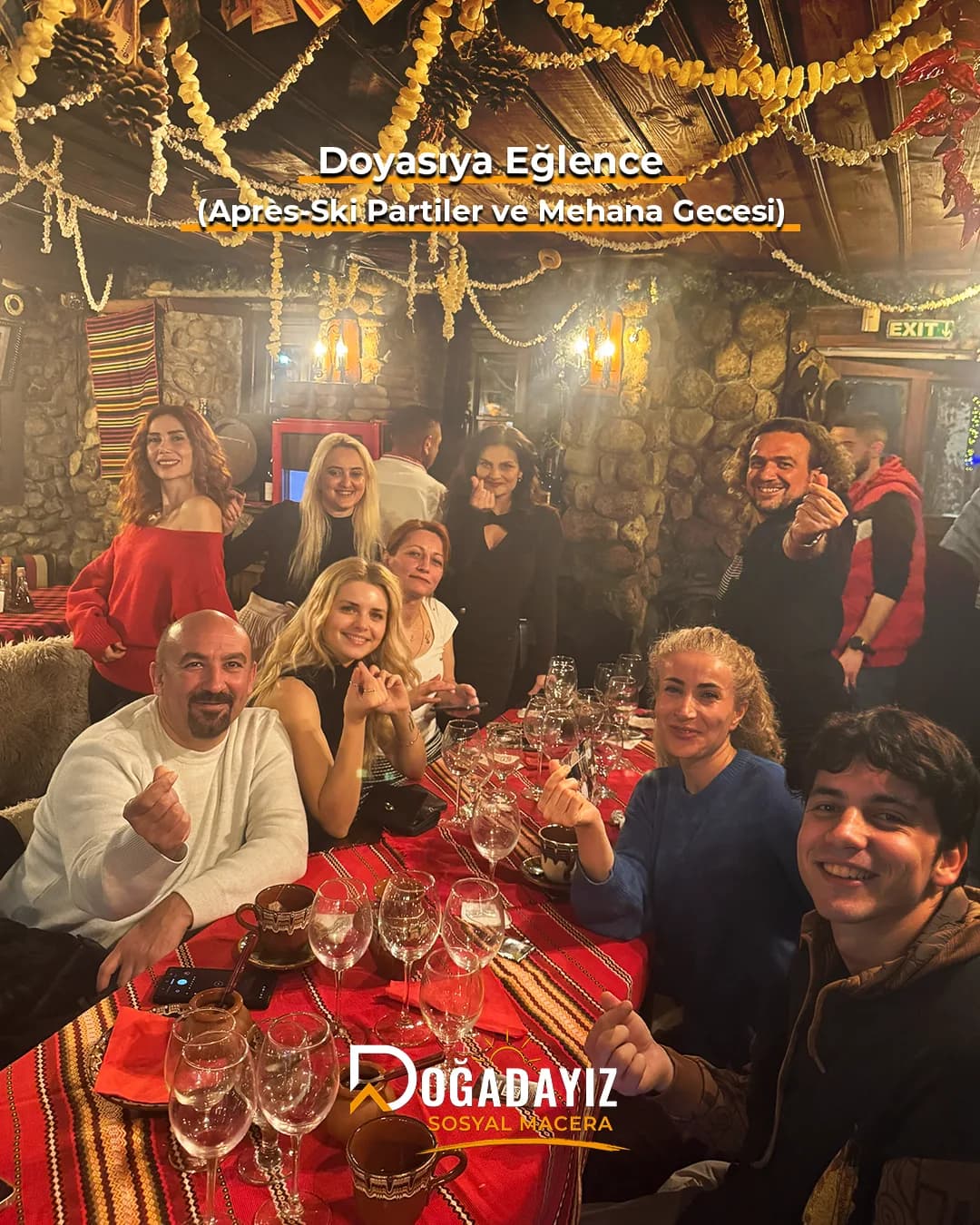
The best-loved tradition of ski culture is après-ski: coming back from the slopes at the end of the day and meeting the same people around a table. The Oxford dictionary defines it as “social activities that take place in hotels and restaurants after a day’s skiing”. Although the tradition is associated with alcohol, its essence is sharing the day; alcohol and the slopes do not mix. For details, see our guide What is après-ski?.
Another tradition is sharing the experience: experienced skiers giving beginners tips, waiting for each other on the slopes, skiing down the easiest run together at the end of the day.
Learning the culture as a group
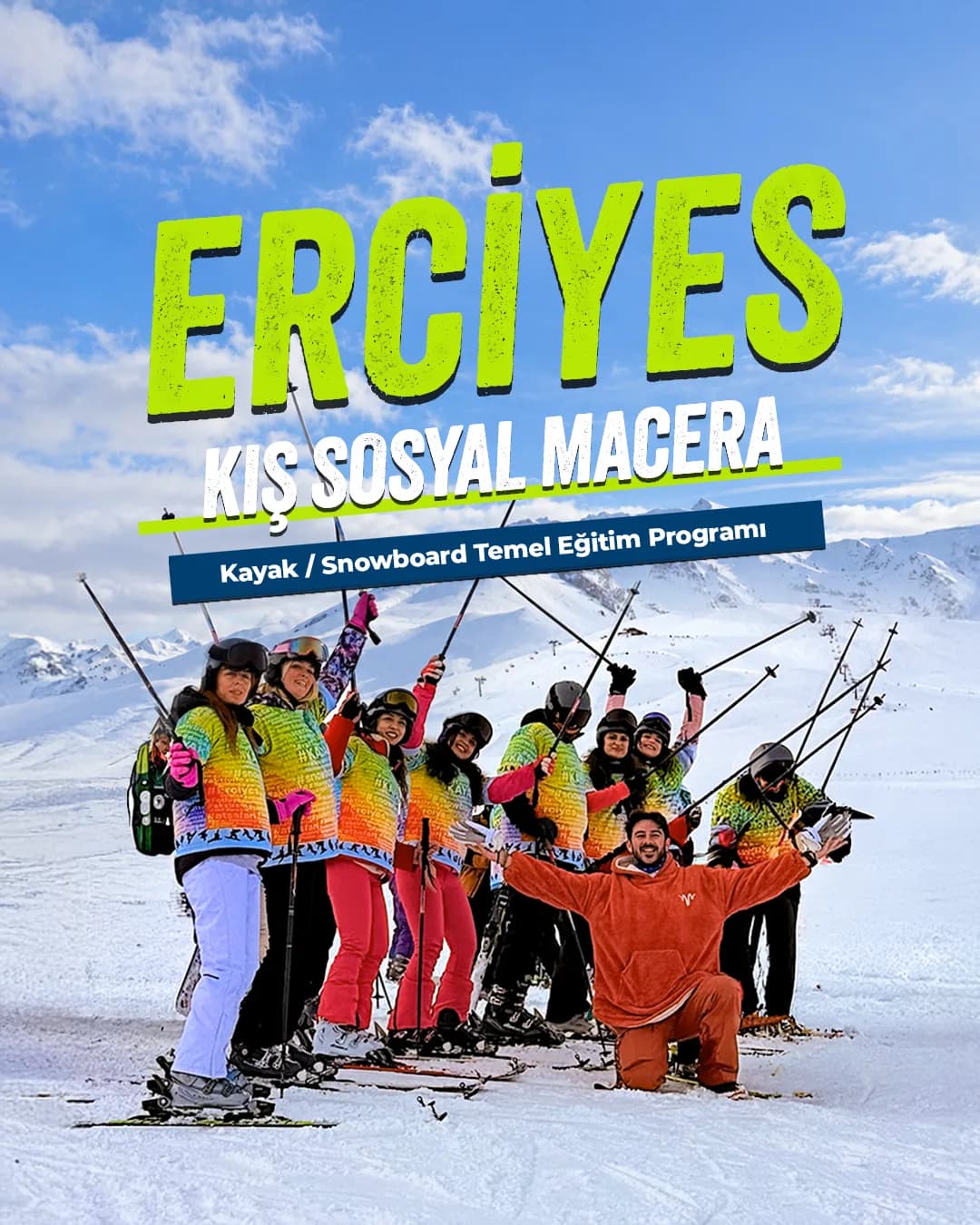
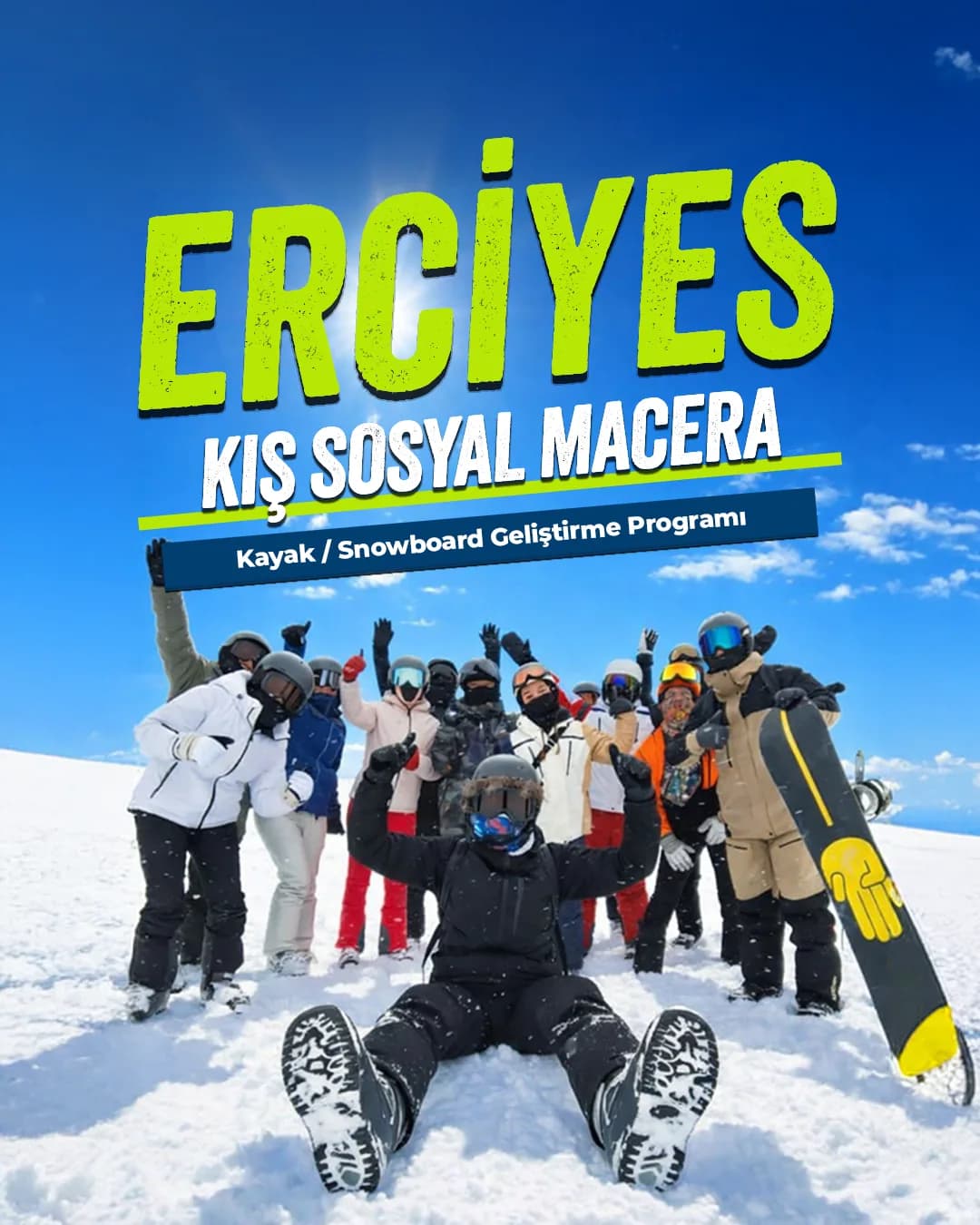
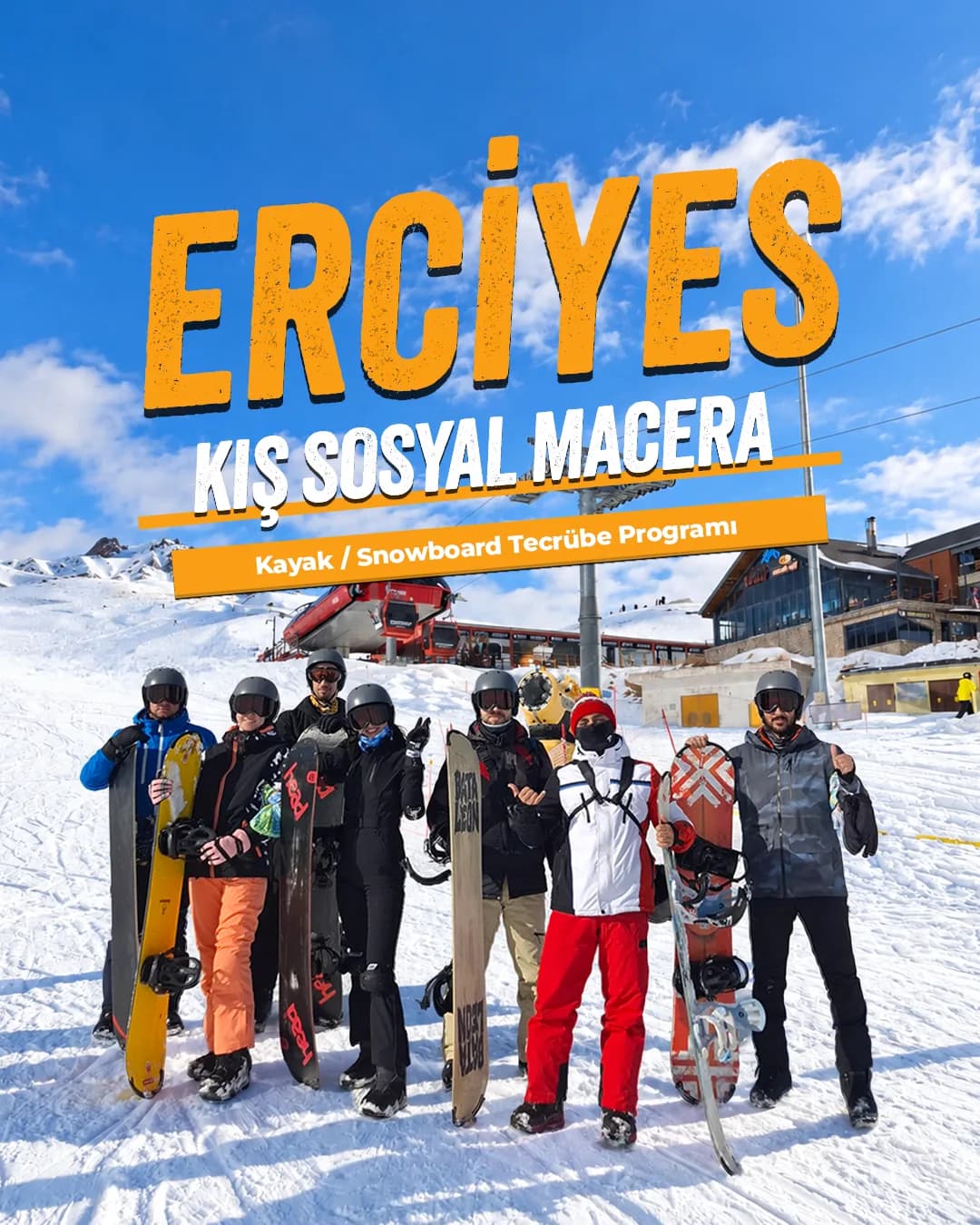
The easiest way to learn this culture is to be part of a group that lives it from day one. On an activity holiday, the instructor and group leader show slope etiquette in practice; in the evenings, après-ski comes naturally. That is also why Doğadayız winter programmes are designed as a social adventure holiday: to experience skiing not just as a sport, but as a culture and a community. For all programmes, see the winter activity holidays page.
Doğadayız Packages
Doğadayız packages for your level
Winter activity holidays with accommodation, ski pass and equipment included, shared with a group.
The easiest way to learn to ski: a winter activity holiday
An activity holiday puts a sport at the heart of your trip: transport, accommodation and meals are planned, so you can focus on learning on the slopes. On Doğadayız winter activity holidays, accommodation, ski pass and ski or snowboard equipment are included in every package; course packages include basic lessons with instructors affiliated with the Turkish Ski Federation, while experience packages let you practise on the slopes at your own level.
What makes the programme different is the group: sharing the slopes with people at a similar level, dinners and nights out together, and a group leader by your side at all times. Solo travellers become part of this social adventure holiday from day one. That is why we describe our programmes as a social adventure holiday.
The first FIS rule: respect for others. Everyone must behave in a way that does not endanger others and adjust their speed to their own ability, the slope conditions and how busy it is.
Where should you stop on the slopes?
At the side of the slope, in a spot that is visible from above. Stopping in narrow passages, in places with limited visibility and in the middle of the slope is dangerous; the slope should not be blocked when gathering as a group either.
Is it forbidden to go onto a closed run?
Closed runs are not checked by the ski patrol and are dangerous. In Erciyes, off-piste areas and closed runs are entirely at your own risk; you should not go onto a run marked as closed.
Sources
FIS Rules for Conduct · International Ski Federation (FIS), copy hosted by Kitzsteinhorn
The FIS 10 rules for conduct are the rules of behaviour set by the International Ski Federation for skiers and snowboarders: respect for others, control of speed, choice of route, overtaking, entering the piste, stopping, climbing and descending on foot, respecting signs, assistance and identification. They are not law; however, around the world they are used as a benchmark when assessing liability in skiing accidents.
Après-ski is French for “after skiing” and refers to the social activities and entertainment that take place in hotels, restaurants and venues after a day’s skiing. Its first use in English dates back to 1951; it is a long-established tradition in the Alps, especially in Austria. Après-ski is not just a drinking hour: a hot drink on the way back from the slopes, a shared meal, live music or an activity at the hotel are all après-ski too. On a winter social adventure holiday, this is often the most memorable part of the day. The only rule: the fun comes after the slopes; alcohol and skiing do not mix.
A social ski holiday is a winter social adventure holiday where you learn and enjoy skiing or snowboarding as a group, spending the day on the slopes and the evening with the same group. Three things set it apart from a classic ski holiday: groups formed by level, a group leader who is with you at all times and a shared social programme after the slopes (dinner, nightlife, après-ski). It is also an activity holiday: accommodation, ski pass and equipment are planned, so all you have to do is focus on the slopes and the group. It is especially well suited to people travelling solo.