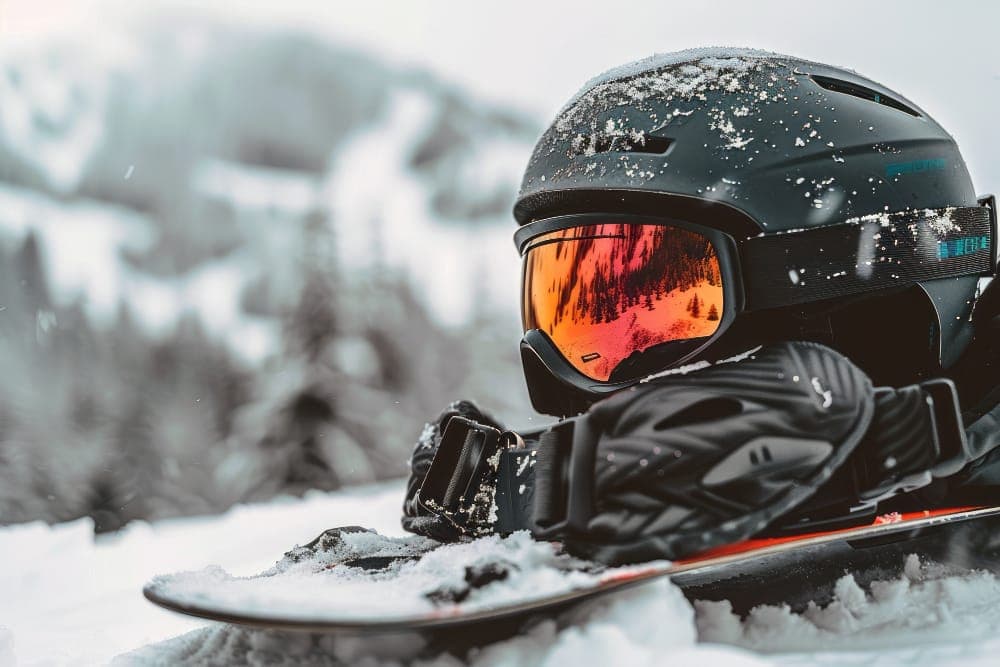
Snow blindness (photokeratitis) is when UV rays reflected off snow burn the front surface of the eye (the cornea); it is a kind of sunburn. According to the World Health Organization, fresh snow reflects up to 80% of UV radiation, and UV levels rise by about 10% for every 1,000 metres. According to the American Academy of Ophthalmology, the symptoms (pain, redness, a gritty feeling, watering, sensitivity to light, blurred vision) appear after the damage has been done, 30 minutes to 12 hours after exposure, and usually clear up within 1–2 days. The way to protect yourself is a pair of goggles that blocks at least 99% of UV rays — even on overcast days.
The sun's UV rays can damage the cornea, the outermost layer of the eye. Normally your eyebrows and eyelids protect your eyes from most of the light coming from above; but snow also reflects light from below. According to the World Health Organization (WHO):
Fresh snow can reflect up to 80% of incoming UV radiation, almost doubling a person's UV exposure.
UV levels rise by about 10% for every 1,000 metres of altitude.
Snow blindness particularly affects skiers and mountaineers.
That is why a few hours without goggles on a snow-covered slope at 2,000–3,000 metres put a serious strain on your eyes.
Symptoms
According to the American Academy of Ophthalmology (AAO), the symptoms of snow blindness are:
Pain and a gritty feeling in the eye (as if there were sand in it)
Redness and watering
Sensitivity to light
Blurred vision, seeing halos around lights
Rarely, temporary loss of vision
Important: The symptoms are noticed long after the damage has been done. According to the AAO's encyclopedia, symptoms start 30 minutes to 12 hours after exposure; so after skiing without goggles during the day, the complaints may appear in the evening or at night.
What should you do? (AAO)
If you wear contact lenses, take them out.
Rest in a dark room; stay away from bright light.
Place a cool, damp cloth over your closed eyes.
You can use artificial tears.
Do not rub your eyes.
Symptoms usually clear up within 1–2 days; the cornea heals in 24–72 hours. If the symptoms are severe, if you lose vision or if things do not improve within two days, see an eye doctor.
Protection
Goggles: The AAO recommends eyewear that blocks at least 99% of UV rays. The international standard for ski goggles is ISO 18527-1; for lens categories and how to choose, see our guide Choosing Ski Goggles.
Wear them on overcast days too: UV reaches the ground in cloudy weather as well; a grey day is no reason to ski without goggles.
Protect your eyes during breaks: When you take off your goggles to sunbathe on a terrace beside the slopes, your eyes are still exposed; wear sunglasses.
Protect your skin too: Use high-factor sunscreen and lip protection; light reflected off the snow also burns the lower part of your face, under your nose and your ears.
A risk that rises with altitude
At the high resorts in Türkiye, the ski areas go above 3,000 metres (Erciyes 3,346 m, Palandöken 3,140 m). For the other effects of altitude on the body, see our guide How Does High Altitude Affect the Body?
Goggles and your activity holiday
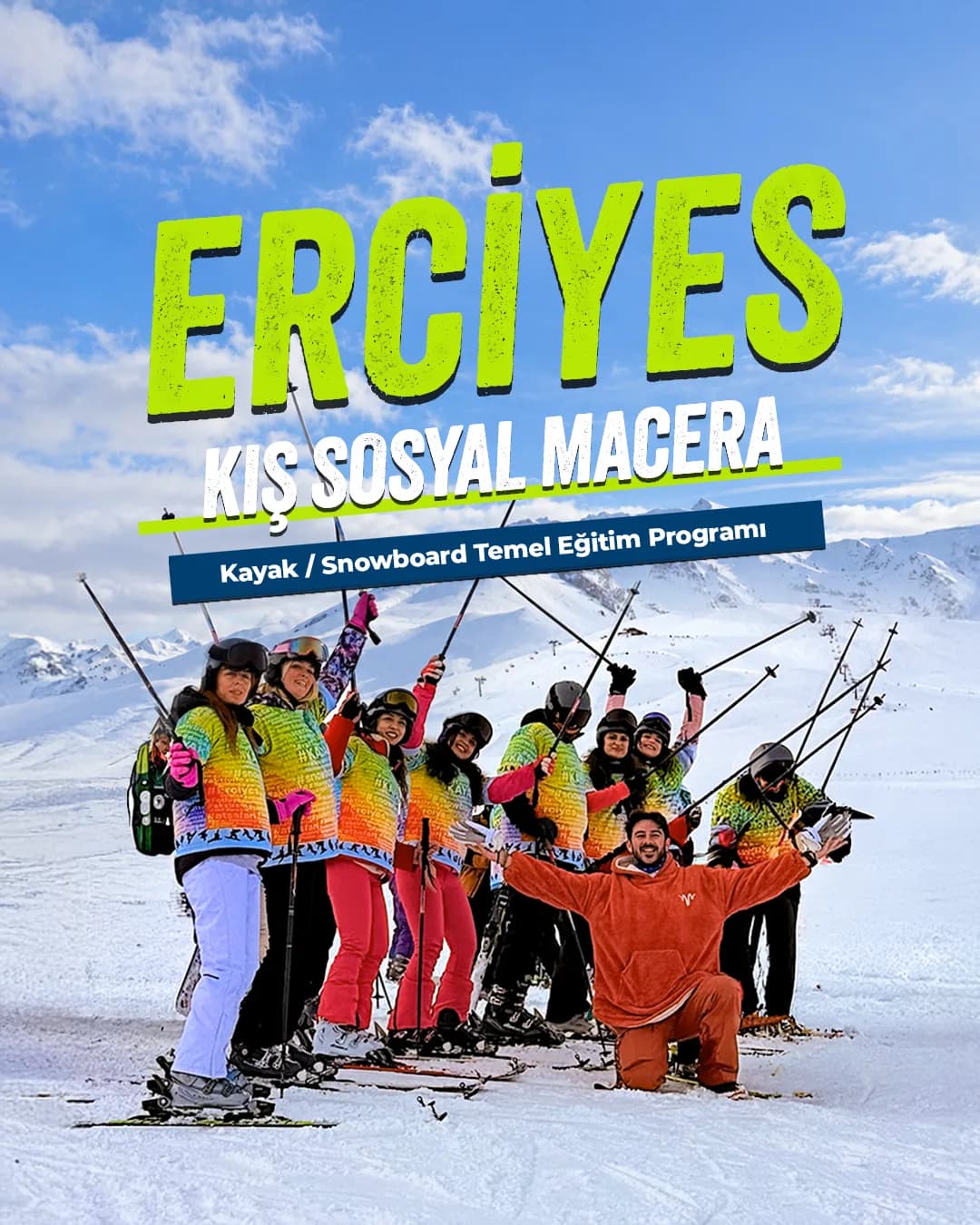
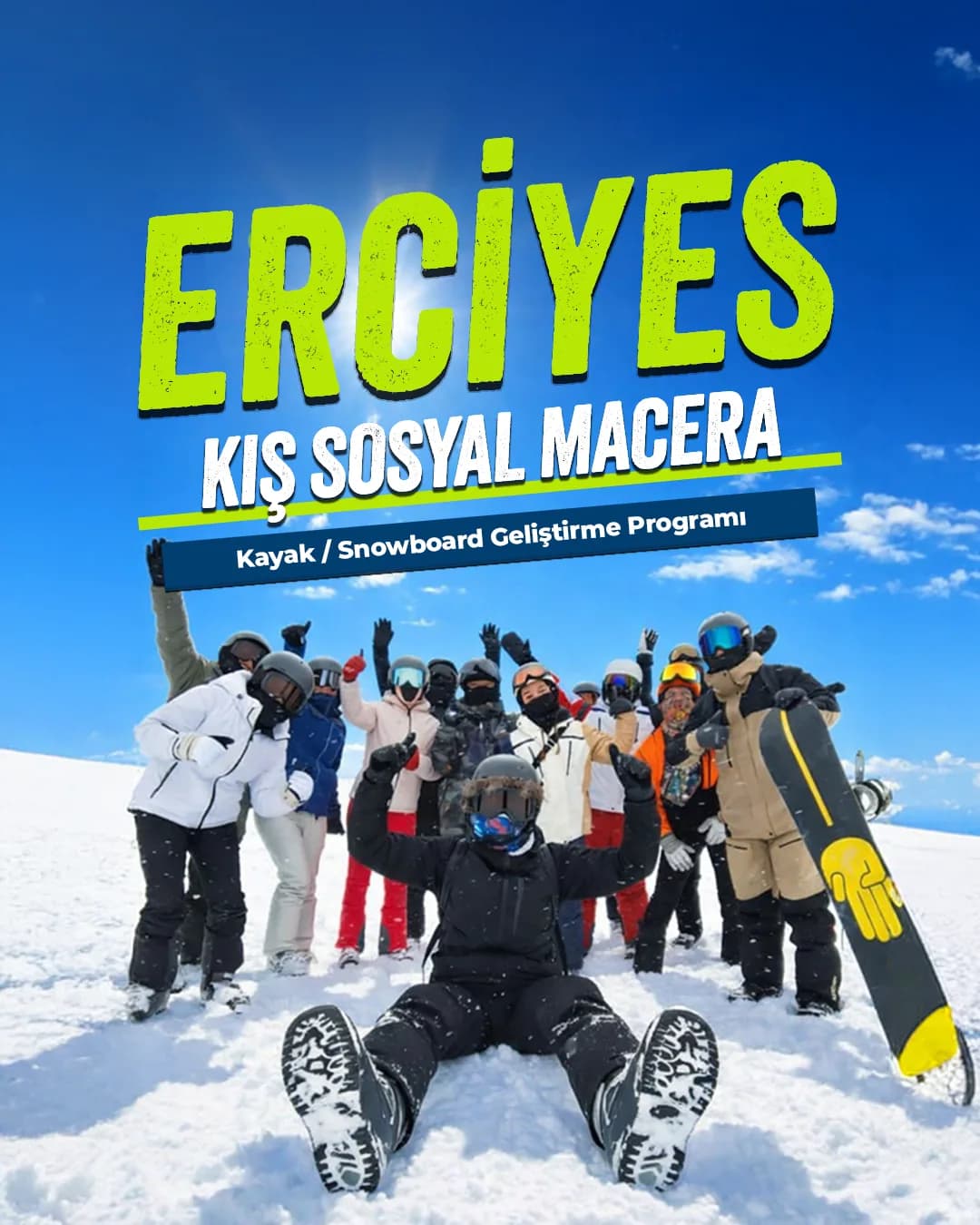
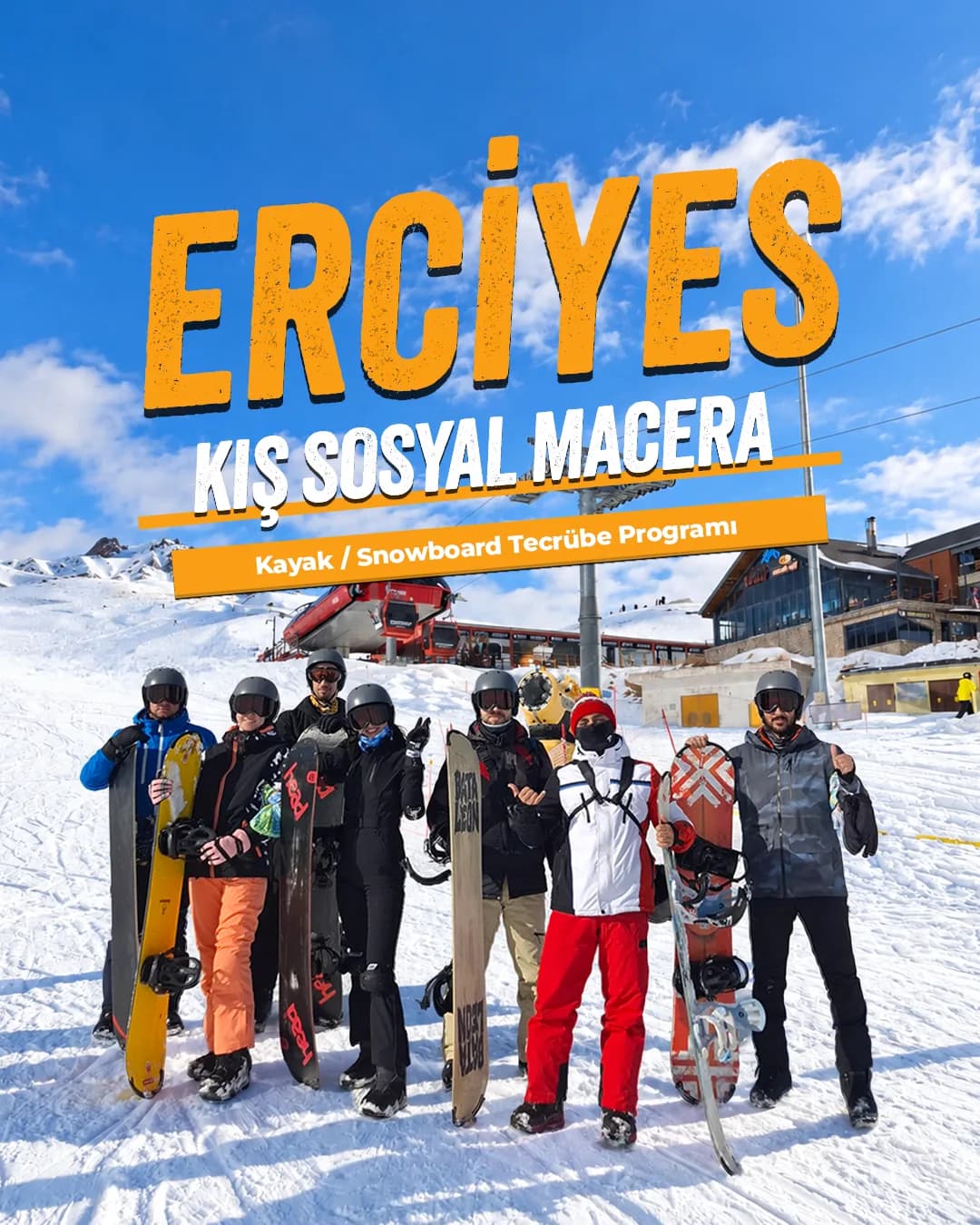
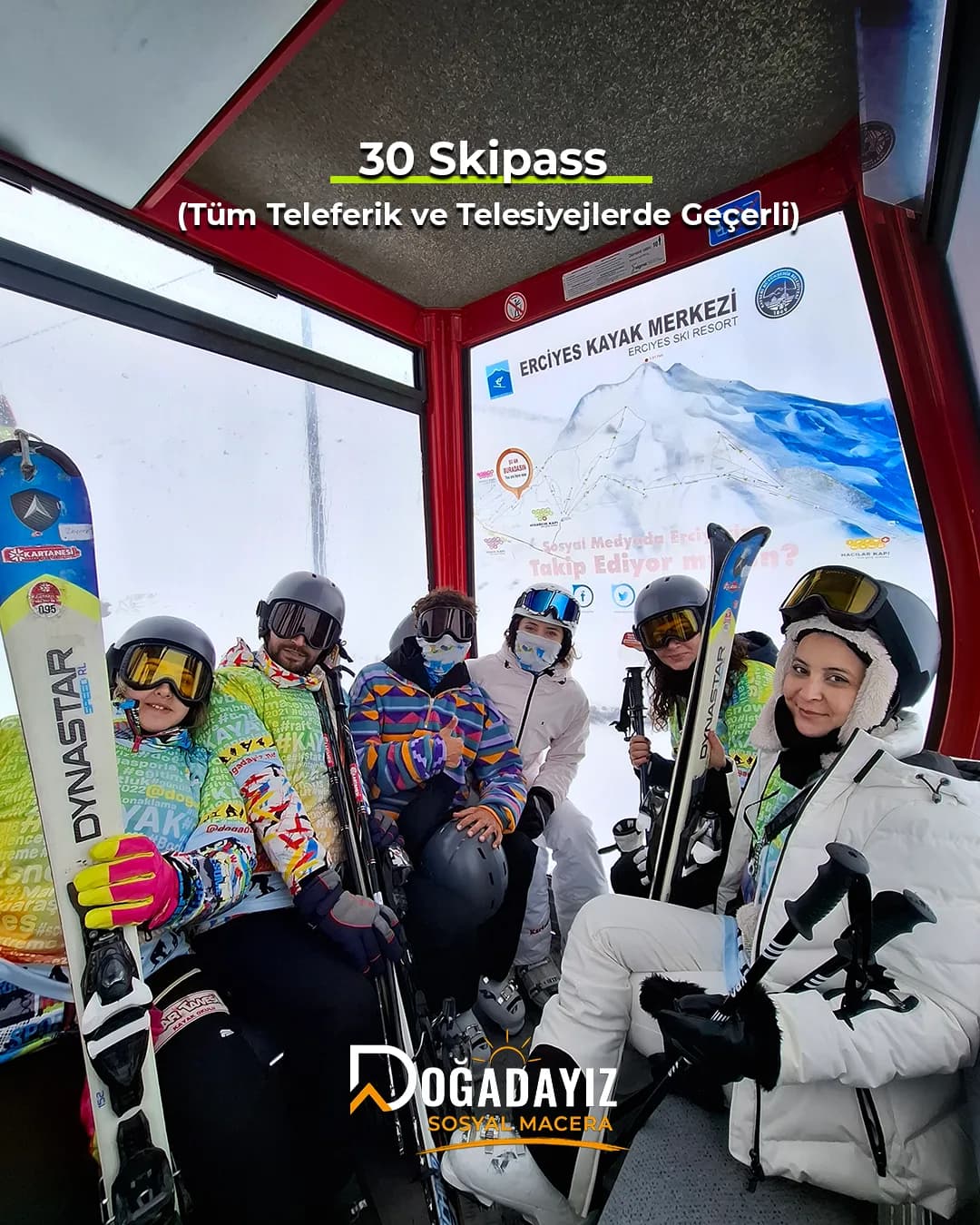
On Doğadayız Erciyes (basic course and experience) and Sarıkamış packages, goggles and a helmet are included; on the Bansko programme they are rented separately. On an activity holiday, equipment and safety details are planned in advance; the days spent with the group turn the programme into a social adventure holiday. For programmes, see our winter activity holidays page.
Doğadayız Packages
Doğadayız packages for your level
Winter activity holidays with accommodation, ski pass and equipment included, shared with a group.
The easiest way to learn to ski: a winter activity holiday
An activity holiday puts a sport at the heart of your trip: transport, accommodation and meals are planned, so you can focus on learning on the slopes. On Doğadayız winter activity holidays, accommodation, ski pass and ski or snowboard equipment are included in every package; course packages include basic lessons with instructors affiliated with the Turkish Ski Federation, while experience packages let you practise on the slopes at your own level.
What makes the programme different is the group: sharing the slopes with people at a similar level, dinners and nights out together, and a group leader by your side at all times. Solo travellers become part of this social adventure holiday from day one. That is why we describe our programmes as a social adventure holiday.
It is when UV rays reflected off snow burn the front surface of the eye (the cornea); its medical name is photokeratitis. It is a kind of sunburn and particularly affects skiers and mountaineers.
When do the symptoms of snow blindness start?
According to the American Academy of Ophthalmology, 30 minutes to 12 hours after exposure. The symptoms are pain, a gritty feeling, redness, watering, sensitivity to light and blurred vision; they usually clear up within 1–2 days.
What should you do if you get snow blindness?
Take out your contact lenses, rest in a dark room, place a cool cloth over your closed eyes, use artificial tears and do not rub your eyes. If the symptoms are severe or do not clear up within two days, see an eye doctor.
Do you need to wear goggles on overcast days?
Yes. UV rays reach the ground in cloudy weather too, and snow reflects them. Goggles that block at least 99% of UV should be worn in all weather.
Ski goggles protect your eyes from wind, snow and reflected sunlight. According to the World Health Organization, fresh snow reflects up to 80% of UV radiation, and the UV level rises by about 10% with every 1,000 metres; so if you do not protect your eyes in the mountains, there is a risk of snow blindness. When choosing a lens, look at the filter category: categories 0–1 (clear lens) are for overcast and foggy weather, category 2 for changeable weather and category 3 for sunny weather; category 4 is for very intense light and is not suitable for driving. Goggles should fit your helmet without leaving a gap. The international standard for ski and snowboard goggles is ISO 18527-1.
According to the US Centers for Disease Control and Prevention (CDC), altitude sickness (acute mountain sickness, AMS) mostly affects unacclimatised people sleeping above 2,450 metres; in Colorado it occurs in about 25% of visitors who sleep at that altitude. The symptoms are a headache together with loss of appetite, dizziness, fatigue or nausea, and they usually start within 2–12 hours. At ski resorts in Türkiye the ski area can go above 3,000 metres (Erciyes 3,346 m), but accommodation is usually much lower down, so going high during the day and sleeping lower down reduces the risk. The CDC recommends avoiding alcohol for the first 48 hours. Altitude also increases UV radiation: by about 10% for every 1,000 metres.
For skiing and snowboarding you wear three layers: a synthetic or wool base layer that wicks sweat away, a fleece mid-layer that holds in warmth, and a ski jacket and trousers that keep out wind and water. Add a single pair of thin ski socks, waterproof gloves, a neck gaiter, a helmet and goggles. Do not wear cotton: it gets soaked with sweat and makes you cold.