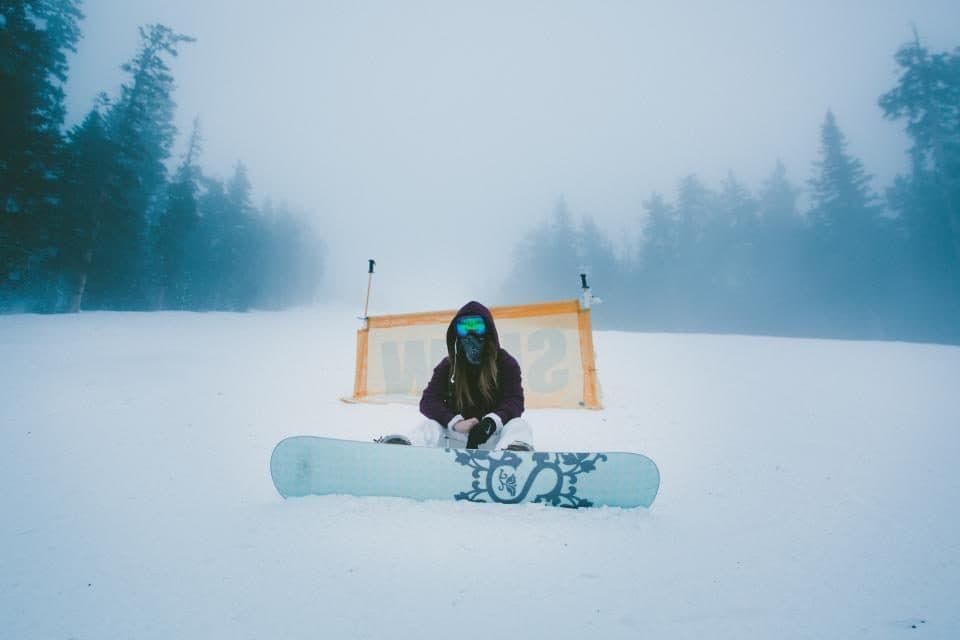
For skiing and snowboarding you wear three layers: a synthetic or wool base layer that wicks sweat away, a fleece mid-layer that holds in warmth, and a ski jacket and trousers that keep out wind and water. Add a single pair of thin ski socks, waterproof gloves, a neck gaiter, a helmet and goggles. Do not wear cotton: it gets soaked with sweat and makes you cold.
In winter sports you wear three thin layers instead of a single thick jacket. That way you stay warm and can also regulate your temperature during the day by adding or removing layers as the weather and your effort change.
Layer
Job
What to wear
What not to wear
Base layer
Moving sweat away from the skin
Synthetic or merino wool base layer, long bottoms and top
Cotton T-shirt, cotton leggings
Mid-layer
Holding in warmth
Fleece, thin wool jumper, thin puffer gilet
Thick, non-breathable jumper
Outer layer
Stopping wind and snow
Waterproof, breathable ski jacket and trousers
Raincoat that is waterproof but not breathable
Base layer: staying dry
A base layer should fit close to the skin without being tight. Synthetic base layers dry quickly and are affordable; merino wool keeps you warmer and does not smell. Do not wear a cotton T-shirt under your base layer; the base layer should be in direct contact with your skin.
Mid-layer: regulating warmth
Fleece is the most practical mid-layer for winter sports: light, warm and breathable. On very cold days you can add a thin puffer gilet. On a sunny, mild day it is also possible to take off the mid-layer and ski in just your base layer and jacket.
Outer layer: ski jacket and trousers
The outer layer has two key properties:
Waterproofing: Shows how well the fabric resists water, usually expressed in millimetres (mm). For holiday skiing, around 10,000 mm is enough on most days; for wet snow and the first days when you fall a lot, higher values add comfort.
Breathability: The ability to let sweat escape as vapour; the higher the value, the less you sweat inside.
Useful details: a powder skirt at the waist (stops snow getting in when you fall), ventilation zips under the arms, a ski pass pocket on the sleeve and a helmet-compatible hood. The trouser legs should have inner gaiters that go over your boots.
Socks: single, thin and long
Inside your boots you wear a single pair of thin, knee-length ski socks. Thick or double socks do not keep your feet warm; on the contrary, they squeeze the boot, restrict circulation and make your feet cold. Make sure the sock does not wrinkle inside the boot; a wrinkle quickly causes pressure pain. Do not tuck trousers or leggings into the boot over the sock.
Gloves
Waterproof, insulated ski gloves are essential. Gloves with fingers give you dexterity; mittens keep your hands warmer. In snowboarding your hands touch the snow often, so models with durable palms are preferred. For very cold resorts, adding thin liner gloves is a practical solution.
Head, neck and face
Helmet: Always worn for skiing and snowboarding. You can wear a thin beanie or a balaclava underneath; a thick hat stops the helmet from fitting properly.
Neck gaiter (buff): Protects your face and neck on windy chairlift rides.
Goggles: Protect your eyes from wind, snow and reflected sunlight. There should be no gap between your goggles and your helmet.
Do not underestimate the sun
Snow reflects most of the sunlight back, and the sun's effect gets stronger as altitude increases. Even on cloudy days, use high-factor sunscreen and lip balm; do not stay on the snow for long without sunglasses or goggles.
Rent or buy?
In your first season, skis or a snowboard, boots, a helmet and goggles can be rented; personal items such as base layers, fleeces, socks and gloves are bought. Renting is also possible for jackets and trousers, but if you plan to ski for a few seasons, a good outer layer will last a long time. On Doğadayız basic course packages, the ski or snowboard set, helmet and goggles are included.
Packing list
When you set off on a winter activity holiday, pack for two settings: the slopes all day, and the hotel and social programme with the group in the evening. Doğadayız packages include the ski or snowboard set; your snow jacket, trousers and gloves, however, are personal equipment, so pack them. For the time spent out with the group in the evening (the best-loved part of a social adventure holiday), a warm outdoor jacket and boots with non-slip soles also come in handy.
On the slopes
At the hotel and in the evening
2 sets of synthetic or wool base layers
Comfortable clothes and thick socks
1–2 fleeces
Winter boots with non-slip soles
Ski jacket and trousers
Puffer jacket (for walking outdoors)
3–4 pairs of thin, long ski socks
Swimwear (if the hotel has a pool or spa)
Waterproof gloves (+ thin liner gloves)
Charger and power bank
Thin beanie or balaclava, neck gaiter
Personal medication
Sunscreen and lip balm
ID card / passport
Doğadayız Packages
Doğadayız packages for your level
Winter activity holidays with accommodation, ski pass and equipment included, shared with a group.
The easiest way to learn to ski: a winter activity holiday
An activity holiday puts a sport at the heart of your trip: transport, accommodation and meals are planned, so you can focus on learning on the slopes. On Doğadayız winter activity holidays, accommodation, ski pass and ski or snowboard equipment are included in every package; course packages include basic lessons with instructors affiliated with the Turkish Ski Federation, while experience packages let you practise on the slopes at your own level.
What makes the programme different is the group: sharing the slopes with people at a similar level, dinners and nights out together, and a group leader by your side at all times. Solo travellers become part of this social adventure holiday from day one. That is why we describe our programmes as a social adventure holiday.
No. Jeans get heavy when wet, do not dry and make you cold; they also restrict movement. You should wear waterproof ski or snowboard trousers.
How many pairs of socks should you wear skiing?
One. A thin, knee-length ski sock is enough; two pairs squeeze the boot, restrict circulation and make your feet colder.
Can you rent ski clothing?
At many ski resorts you can also rent jackets and trousers. Personal items such as base layers, fleeces, socks and gloves, however, you need to bring with you.
Is equipment included in Doğadayız packages?
On Doğadayız basic course packages, the ski or snowboard set, helmet and goggles are included; clothing is personal.
You start skiing with a beginner lesson with an instructor, rental equipment and easy (beginner) slopes. On day one you put on your skis, glide on flat ground, learn to stop with the snowplough and ride the magic carpet; on day two you come down an easy slope under control with snowplough turns. For an adult who has never skied, this stage usually takes 2 days.
You start snowboarding by finding your stance (regular or goofy), with a beginner lesson with an instructor and with rental equipment. On day one you learn to push with one foot and to side-slip on your heel edge (heelside) and your toe edge (toeside); then you change direction with the falling leaf, and usually on day 2–3 you make your first linked turns.
The FIS 10 rules for conduct are the rules of behaviour set by the International Ski Federation for skiers and snowboarders: respect for others, control of speed, choice of route, overtaking, entering the piste, stopping, climbing and descending on foot, respecting signs, assistance and identification. They are not law; however, around the world they are used as a benchmark when assessing liability in skiing accidents.