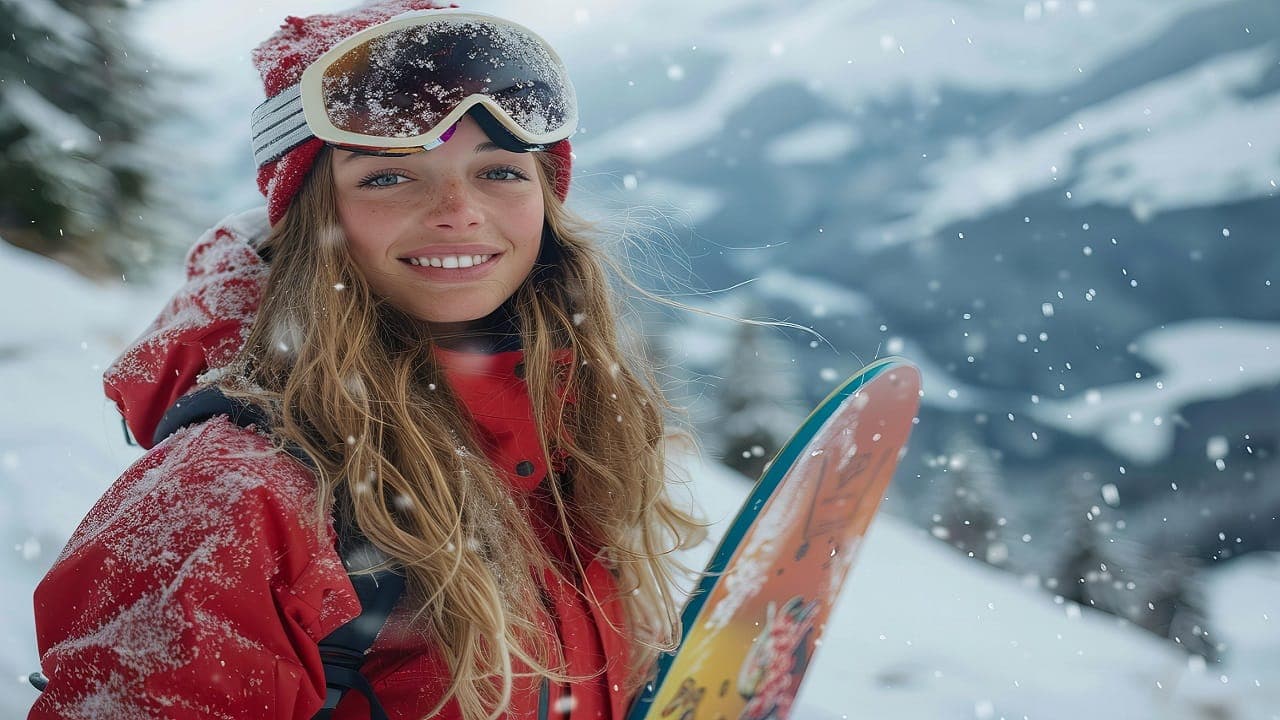
You start snowboarding by finding your stance (regular or goofy), with a beginner lesson with an instructor and with rental equipment. On day one you learn to push with one foot and to side-slip on your heel edge (heelside) and your toe edge (toeside); then you change direction with the falling leaf, and usually on day 2–3 you make your first linked turns.
Finding your stance, strapping into the bindings, pushing with one foot, falling and getting up
Flat area
Day 1, afternoon
Heelside and toeside side-slipping, controlling speed and stopping with the edge
Nursery slope
Day 2
The falling leaf, preparing to change edges, drag lift or chairlift
Easy slope
Days 2–3
Your first linked turns (S-turns)
Easy slope
The first day on a snowboard is harder than on skis; most people fall a lot on day one. Once the basic turn clicks, though, progress speeds up. That is why the goal of day one is not to ride but to get to know the edge.
Find your stance: regular or goofy?
On a snowboard, both feet are strapped across the board, one behind the other. If your left foot is in front, that is a regular stance; if your right foot is in front, it is goofy; both are correct. Practical ways to find out which one suits you:
The foot you step forward with to keep your balance when someone gives you a gentle push from behind is usually your front foot.
The foot you put forward when sliding on a slippery floor or riding a skateboard is also a clue.
If you are not sure, try both stances on your first few runs; your instructor will test it with you.
Starting with the wrong stance slows your progress noticeably. Regular and goofy stance is also explained in the glossary.
Equipment: it starts with the boots
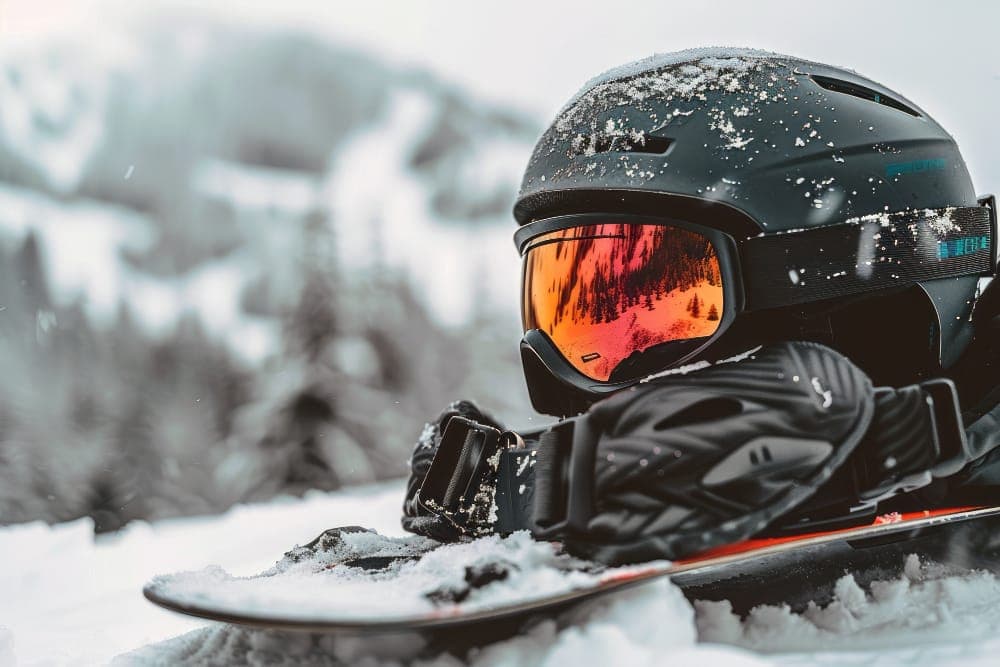
The most important piece of snowboard equipment is the boot: it should fit snugly, your heel should not lift, and your toes can lightly touch the front. At the rental shop, the board is usually chosen according to your weight, with a length that reaches between your chin and nose when you stand it up. For beginners, soft boards that reduce edge catches (rocker or hybrid) are more forgiving.
Binding angles matter too: for beginners, a set-up with the front foot turned slightly forward and the back foot straight or slightly angled backwards is common. The rental shop or your instructor will set this up.
The most effective way to start snowboarding is to spend several days in a row on the slopes: that is the only way to get past the fall-and-get-up cycle of the first days quickly. That is why winter activity holidays are a good start for your first experience; instructor, equipment, ski pass and accommodation come together in one plan, and learning with people at the same level turns the trip into a social adventure holiday.
Day one, step by step
Strap in your front foot and push with one foot. With your back foot out of the binding, you push yourself along flat ground like on a skateboard. You will use this movement every day when approaching the magic carpet and the drag lift.
Learn to fall. If you fall forwards, roll onto your knees and forearms; if you fall backwards, onto your bottom and upper back. Don't put your hands out; make fists and tuck your chin to your chest.
Side-slip on your heel edge. Board across the slope, facing downhill; press on your heels to dig the back edge of the board into the snow. Release the pressure and you slide slowly; increase it and you stop. This is the topic of our heelside guide.
Side-slip on your toe edge. Your back faces the slope, your weight is on your toes, and your knees are slightly bent towards the snow. Use the same logic: adjust the pressure to slide and stop.
Try the falling leaf. While side-slipping, shift your weight to your front foot, then your back foot, to zigzag left and right across the slope. It teaches you to change direction without turning and is the bridge to your first turn.
Days two and three: your first linked turn
A linked turn means moving from the heel edge to the toe edge and back to the heel edge without stopping. You start the turn by putting your weight on your front foot and turning your shoulders and gaze in the direction you want to go. The board changes edges as it passes through the fall line.
Catching an edge: the cause of the hardest falls
Catching an edge means the downhill edge of the board unintentionally digging into the snow. Beginners' hardest falls come from this. The solution is simple but takes attention: while riding, always stay on the uphill edge, and don't let the board run flat on the snow.
If you already ski
Skiing experience is an advantage in terms of balance, sense of speed and slope etiquette; but the logic of movement in snowboarding is different. You ride without poles, both feet are on the same board, and you brake with the edge. Even so, starting with a basic course is the fastest way.
5 common beginner mistakes
Mistake
Result
What to do instead
Putting your weight on your back foot
The board gets out of control, the turn doesn't start
Most of your weight on your front foot
Letting the board run flat
Catching an edge, a hard fall
Always stay on the uphill edge
Looking at your feet
You lose balance and direction
Look where you want to go
Putting your hands down when you fall
Wrist injury
Fists closed, fall onto your knees or bottom
Locking your legs
Every bump jolts you
Soft knees and ankles
Doğadayız Packages
Doğadayız packages for your level
Winter activity holidays with accommodation, ski pass and equipment included, shared with a group.
The easiest way to learn to ski: a winter activity holiday
An activity holiday puts a sport at the heart of your trip: transport, accommodation and meals are planned, so you can focus on learning on the slopes. On Doğadayız winter activity holidays, accommodation, ski pass and ski or snowboard equipment are included in every package; course packages include basic lessons with instructors affiliated with the Turkish Ski Federation, while experience packages let you practise on the slopes at your own level.
What makes the programme different is the group: sharing the slopes with people at a similar level, dinners and nights out together, and a group leader by your side at all times. Solo travellers become part of this social adventure holiday from day one. That is why we describe our programmes as a social adventure holiday.
An adult who has never ridden usually moves from the falling leaf to their first linked turns in 2–3 days with an instructor. Riding fluidly takes a few more days of practice.
Is snowboarding harder than skiing?
The first day is usually harder, because using the edges and having both feet on the same board require a new kind of balance. Once the basic turn clicks, progress speeds up for most people.
Am I regular or goofy, and how can I tell?
The foot you put forward when sliding on a slippery floor or when someone gives you a gentle push from behind is usually your front foot: left in front means regular, right in front means goofy. Your instructor will test it with you on day one.
Do I need to buy snowboard equipment?
Not at the start. On Doğadayız basic course packages, the snowboard set, helmet, goggles and protective gear are included.
For skiing and snowboarding you wear three layers: a synthetic or wool base layer that wicks sweat away, a fleece mid-layer that holds in warmth, and a ski jacket and trousers that keep out wind and water. Add a single pair of thin ski socks, waterproof gloves, a neck gaiter, a helmet and goggles. Do not wear cotton: it gets soaked with sweat and makes you cold.
The FIS 10 rules for conduct are the rules of behaviour set by the International Ski Federation for skiers and snowboarders: respect for others, control of speed, choice of route, overtaking, entering the piste, stopping, climbing and descending on foot, respecting signs, assistance and identification. They are not law; however, around the world they are used as a benchmark when assessing liability in skiing accidents.
You start skiing with a beginner lesson with an instructor, rental equipment and easy (beginner) slopes. On day one you put on your skis, glide on flat ground, learn to stop with the snowplough and ride the magic carpet; on day two you come down an easy slope under control with snowplough turns. For an adult who has never skied, this stage usually takes 2 days.