Ollies, Nollies and Basic Freestyle Skills on a Snowboard
An ollie is a controlled jump powered by the tail of the snowboard: you shift your weight onto your back foot, flex the tail, pull your front foot and knees up as the board springs back, and land on both feet at the same time with the base flat. A nollie is the same move done from the nose. According to NZSIA, the progression starts on flat ground: first pressing the tail to lift the nose (wheelie), then jumping with both feet, then combining the two. The next steps in freestyle are presses, the 50-50 on a low box and small jumps. Before going into a terrain park, learn the Park SMART rules of the US ski areas association NSAA: start small, make a plan, always look, respect, take it easy. Research shows that the risk of head, neck and back injuries is higher in the park, which is why a helmet and gradual progression are essential.
NZSIA's manual defines the ollie as a controlled jump that takes off from the tail and lands with the base flat. Ollies and nollies are pressure moves: there is no edging or steering; a sudden, large amount of pressure is applied to the tail (ollie) or the nose (nollie), the board flexes, and when that pressure is quickly released the board springs back.
This article is for riders who can comfortably ride linked S-turns and have started riding switch.
The ollie step by step
NZSIA's progression starts on flat, quiet ground:
Wheelie: Shift your weight onto your back foot, press the tail and lift the nose off the snow. Try to stay balanced.
Jumping with both feet: Bend your knees, jump with both feet together and land with the base flat.
Combine them: Press the tail and flex the board; as the board springs back, pull up your front foot first, then your back foot. In Burton's words, knees to your chest, and land on both feet at the same time.
According to the manual, the tail flexing and springing back increases the height of the jump.
The nollie is the mirror image of the same move: weight on the front foot, pressure on the nose. Most riders get the ollie solid first and try the nollie later.
Presses and butters
A press means pressing on the nose or tail of the board, lifting the other end and riding like that for a while; a butter means spinning the board on the snow while doing so. Burton counts these among the first moves to learn: they need no speed and teach you balance and how to feel the board flex. Practise at the side of a flat blue run, at low speed.
The 50-50 on a box
A 50-50 means sliding along a box with the board parallel to it and the base flat. NZSIA's two rules:
Keep the base flat. If you put pressure on an edge, the board slips and you fall off the box.
Your first box should be low, wide and short.
Approach the box in a straight line, keep your knees slightly bent and your body centred on the box, and carry on with the base flat right to the end of the box.
Your first small jump
According to NZSIA, on your first jump the distance from the take-off ramp to the ideal spot in the landing area should be about 2–3 metres. Set your speed in advance as you approach, keep the board flat on the ramp, and pop like an ollie the moment your nose passes the lip of the ramp. On landing, bend your knees to absorb the impact.
Terrain park rules: Park SMART
NSAA's Park SMART programme (formerly known as Smart Style) was developed together with Burton, PSIA-AASI and the US National Ski Patrol:
Rule
What does it mean?
Start small
Start with the smallest feature and progress gradually
Make a plan
Plan your speed and your move before approaching each feature
Always look
Inspect the feature before riding it; make sure the landing area is clear
Respect
Wait your turn; do not ride closed features
Take it easy
Ride under control, without pushing the limits of your ability
NSAA's slogan: “Don't go if you don't know.” NZSIA also advises knowing the zones of a feature (approach, take-off, manoeuvre, landing), making your turn clear before you start and keeping the landing area clear. Arm signals: “0” means the landing is clear, “X” means it is closed.
Size markings in parks such as S, M and L are relative to that resort; the “S” features at different resorts are not the same.
Park injuries: what does the research say?
Russell et al. 2014 (case–control study): The injury rate among snowboarders is 0.75 per 1,000 runs. On jumps and in the halfpipe the rate is 2.56, on rails 0.43.
Brooks et al. 2010: In park injuries, the likelihood of head and back injuries is higher than in injuries on regular slopes.
Audet et al. 2019 (systematic review): Parks are a risk factor for head, neck, back and serious injuries. However, there is not yet any study testing which prevention method works in the park.
That is why wearing a helmet and progressing gradually are the basic rules in the park. For choosing a helmet, see our guide to choosing a ski helmet, and for wrist and back protection, our guide to protective gear.
The board for freestyle
In freestyle, twin boards with a symmetrical nose and tail are generally preferred; they make riding switch and landings easier. Details are in our guide to snowboard types.
From the slopes to the park
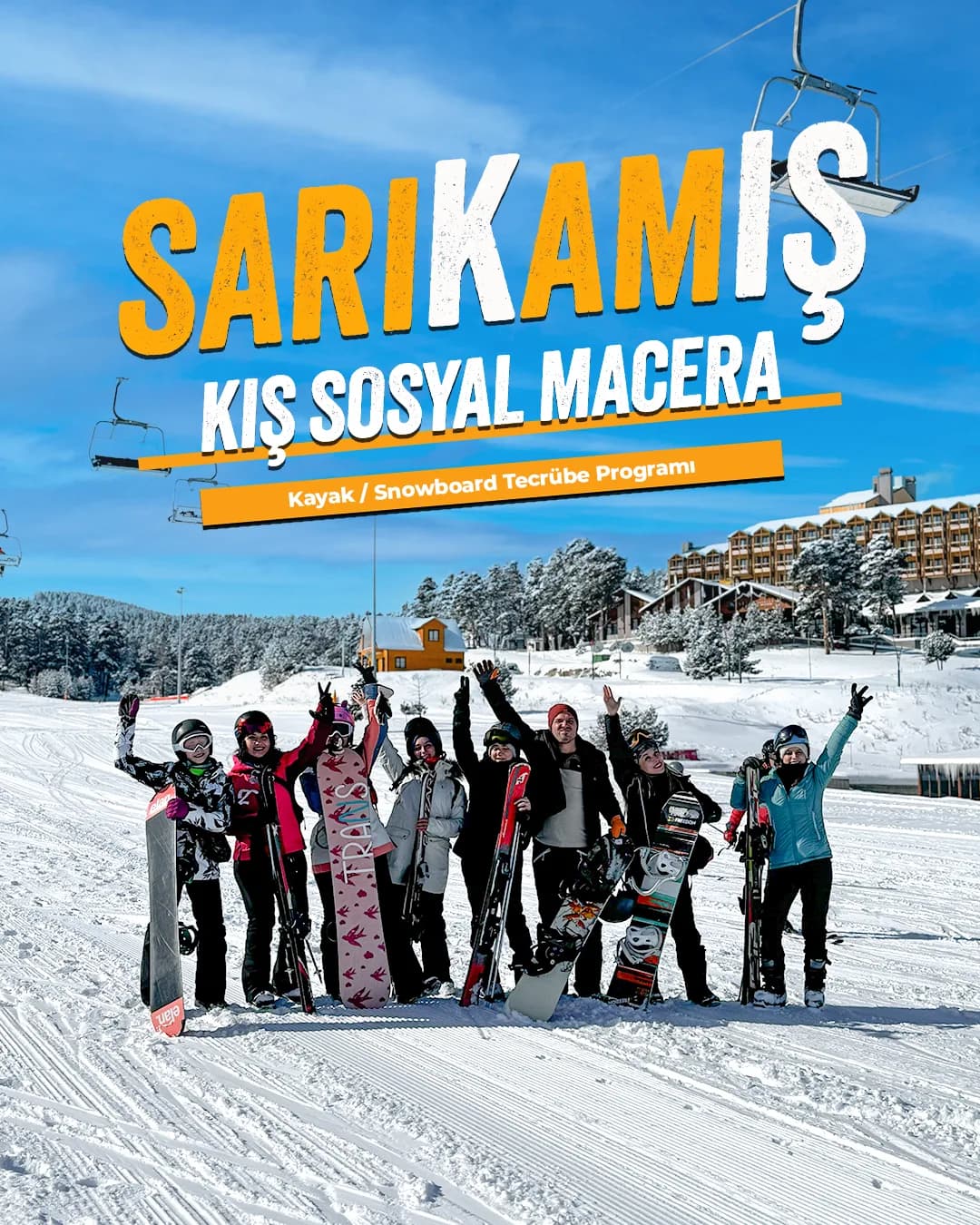
Most skills such as ollies and presses are learned at the side of the slope, at low speed; an activity holiday with several days on the slopes gives you time to repeat these basic skills. Doğadayız winter packages include accommodation, ski pass and equipment. Filming each other's first ollie in the same group and watching it in the evening is also part of the fun of a social adventure holiday. For programmes, see our winter activity holidays page.
Doğadayız Packages
Doğadayız packages for your level
Winter activity holidays with accommodation, ski pass and equipment included, shared with a group.
The easiest way to learn to ski: a winter activity holiday
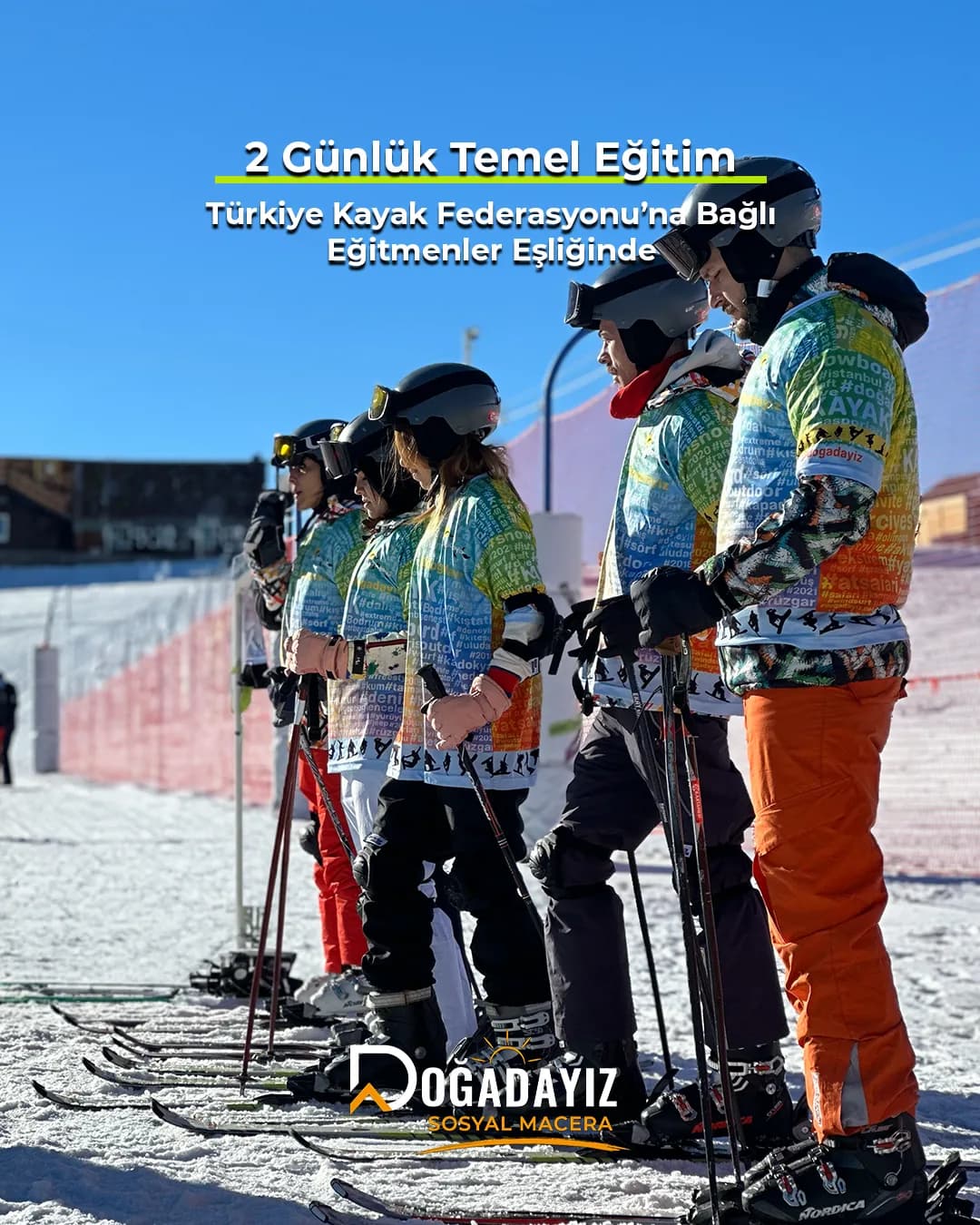
An activity holiday puts a sport at the heart of your trip: transport, accommodation and meals are planned, so you can focus on learning on the slopes. On Doğadayız winter activity holidays, accommodation, ski pass and ski or snowboard equipment are included in every package; course packages include basic lessons with instructors affiliated with the Turkish Ski Federation, while experience packages let you practise on the slopes at your own level.
What makes the programme different is the group: sharing the slopes with people at a similar level, dinners and nights out together, and a group leader by your side at all times. Solo travellers become part of this social adventure holiday from day one. That is why we describe our programmes as a social adventure holiday.
Shift your weight onto your back foot, press the tail and flex the board; as the board springs back, pull up your front foot first, then your back foot, bring your knees towards your chest and land on both feet at the same time with the base flat. According to NZSIA, you practise the wheelie first, then jumping with both feet, and then combine the two.
What is the difference between an ollie and a nollie?
An ollie is done from the tail, a nollie from the nose. Both are pressure moves: a large amount of pressure is applied to one end of the board, and when it is quickly released the board springs back.
Are terrain parks dangerous?
Research shows that the risk of head, neck and back injuries is higher in the park than on the slopes; according to Russell et al. 2014, the injury rate on jumps and in the halfpipe is clearly higher than on rails. A helmet, starting with small features and NSAA's Park SMART rules are the basic precautions.
Riding switch means riding with your usual stance reversed, i.e. with your other foot forward: a regular rider rides goofy, and a goofy rider rides regular. According to the New Zealand instructors' association (NZSIA), switch is essential for many freestyle moves and also makes you a more versatile rider in freeride. The learning sequence is similar to basic training: on a flatter green run, start with a switch traverse, then the garland, C-turns and finally linked switch turns. Setting up your bindings duck (front foot angled towards the nose, back foot towards the tail, e.g. +15/−15 or +8/−8) evens out both directions. In NZSIA's comparison, learning switch is like learning to write with your other hand: it feels clumsy at first and improves with patience.
Snowboards fall into four main types depending on the terrain they are made for. All-mountain boards, in Burton's definition, are designed for good performance on any terrain, including groomed runs, the park and powder; most beginner boards are in this category too. Freestyle (park) boards usually have a twin shape, meaning the nose and tail are identical, which makes riding and landing switch easier. Freeride boards are usually directional and stiffer, for off-piste riding and speed. Powder boards have a wide nose, a tail that narrows (taper) and bindings set back towards the tail (setback), so they float in deep snow. For a beginner, the right choice is often a soft, all-mountain board.
Of all protectors, the one whose effect is best proven is the snowboard wrist guard. According to a systematic review, the risk of wrist injury in snowboarders who wear wrist guards falls to about a quarter (RR 0.23); in other words, one wrist injury is prevented for every 50 snowboarders who wear wrist guards. In a randomised controlled trial there were 8 wrist injuries in the group with guards and 29 in the group without. Wrist guards are especially recommended for beginners in their first few days and for people using rental equipment; these two groups get injured more often. For back protectors and hip/tailbone pads, on the other hand, there is no strong evidence that they reduce injuries; they can be chosen for comfort and confidence in the snowpark and on the first days, when you fall a lot. No protector replaces a helmet.