Do Adults Find It Hard to Learn to Ski? Starting to Ski After 30
No, adults do not find it hard to learn to ski; they just learn differently. According to Doğadayız booking records, the average age of the 2,140 people who joined the basic course packages over the last four winter seasons is 31.6; 56% are over 30 and 14% over 40. Adults are more cautious than children and more wary of falling, so it is important to start in the right order, with an instructor and in a gently sloping beginner area. Physical preparation, rental equipment that is set up correctly and a two- or three-day winter activity holiday are the most effective start for an adult.
Of the 2,909 people who joined all Doğadayız winter programmes in the same period, 74% were on basic course packages, meaning they were trying skiing or snowboarding for the first time. Starting to ski is not something only for childhood; most of the beginners who join our winter programmes are in their thirties.
Adults learn differently
Children usually try things without thinking, fall and get back up. Adults, on the other hand, want to understand first and are more wary of falling. This is not a disadvantage; it just calls for a different approach:
Understanding the why: Adults put a movement into practice more easily once they understand why it is done that way. A good instructor explains why the snowplough reduces speed and why your weight goes onto the outside ski.
Progressing under control: The beginner progression of PSIA-AASI, the American instructors’ association, follows this order too: first walking and gliding, then the snowplough for speed control, weight transfer and finally linked turns.
Managing fear: Falling is part of learning. The right technique for falling and getting up is taught in the first lesson and noticeably reduces anxiety.
6 tips for adults
Start with an instructor. Teaching yourself or learning from a friend can make bad habits and fear stick in adults.
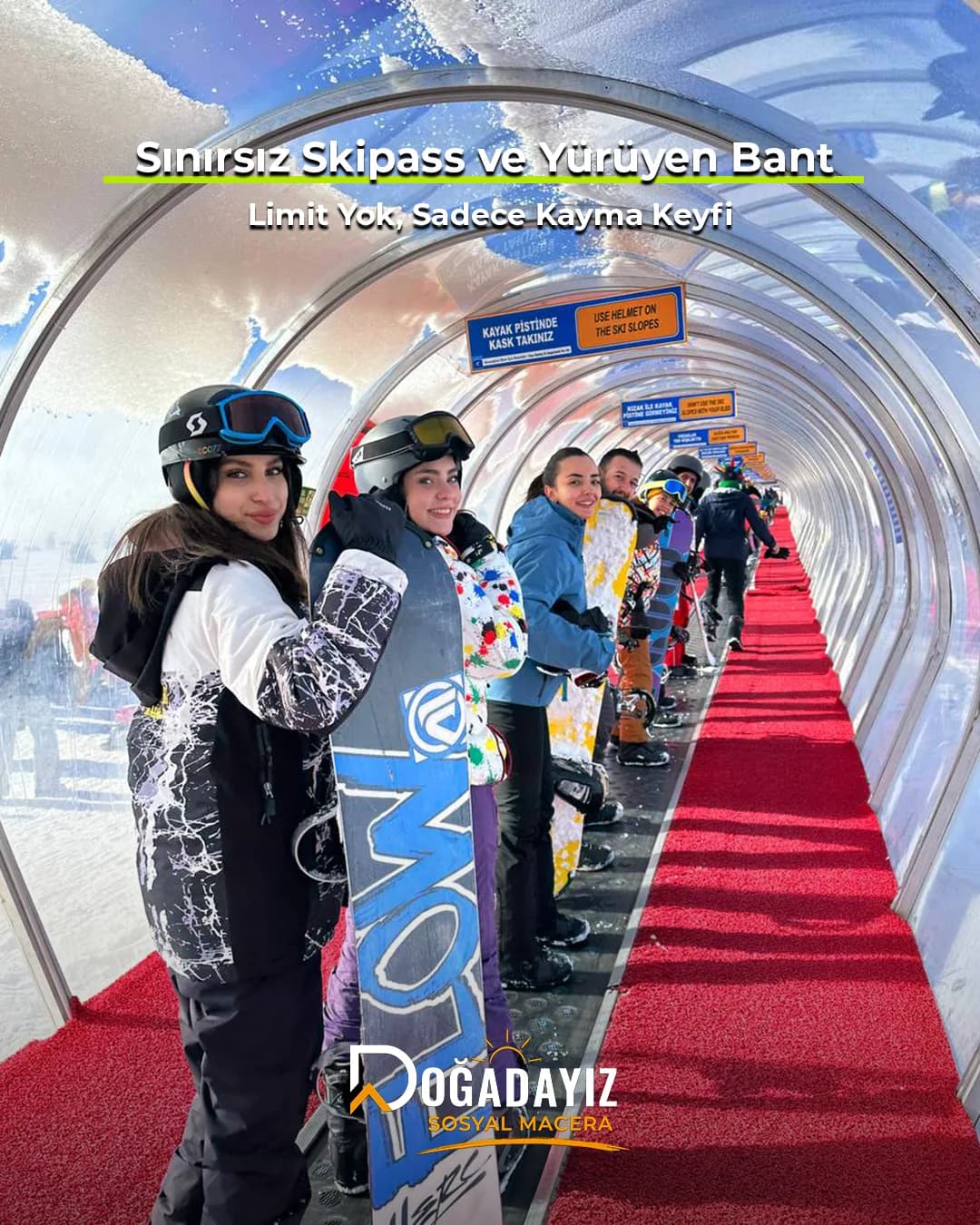
Choose a gently sloping beginner area. A wide area served by a magic carpet is the best place for your first day.
Have your equipment set up correctly. With rental equipment, give your correct weight, height, age and level; the binding is set accordingly. On a snowboard, wear wrist guards.
Prepare in advance. A few weeks of preparation that strengthens your leg and core muscles reduces fatigue in the first days.
Split your day. Lessons in the morning, practice in the afternoon; stop when you are tired. In a study in Scotland over three seasons, first-day skiers were 2.2 times more common among the injured than expected; being under 17 or over 26 were also independent risk factors. So being cautious on the first day is especially important for adults.
Set aside two or three days. For an adult, a single day is often only enough to get over the nerves; on the second and third days, what you have learned sinks in. For details, see our guide How Many Days Should a Ski Holiday Be?.
Skiing or snowboarding?
Both can be learned as an adult. On skis you usually fall less on the first day; on a snowboard, the first two days involve more falling and getting up, but once linked turns come, progress speeds up. To choose which one to start with, see our guides How Do You Start Learning to Ski? and How Do You Start Learning to Snowboard?.
Is there an age limit?
There is no upper age limit for learning to ski; what matters is health and fitness. On group programmes, however, limits are set by the programme: the Doğadayız Erciyes and Bansko programmes are open to ages 12–55, and the Sarıkamış programme to ages 14–65. If you have a chronic health condition, talk to your doctor first.
The easiest start for adults: an activity holiday
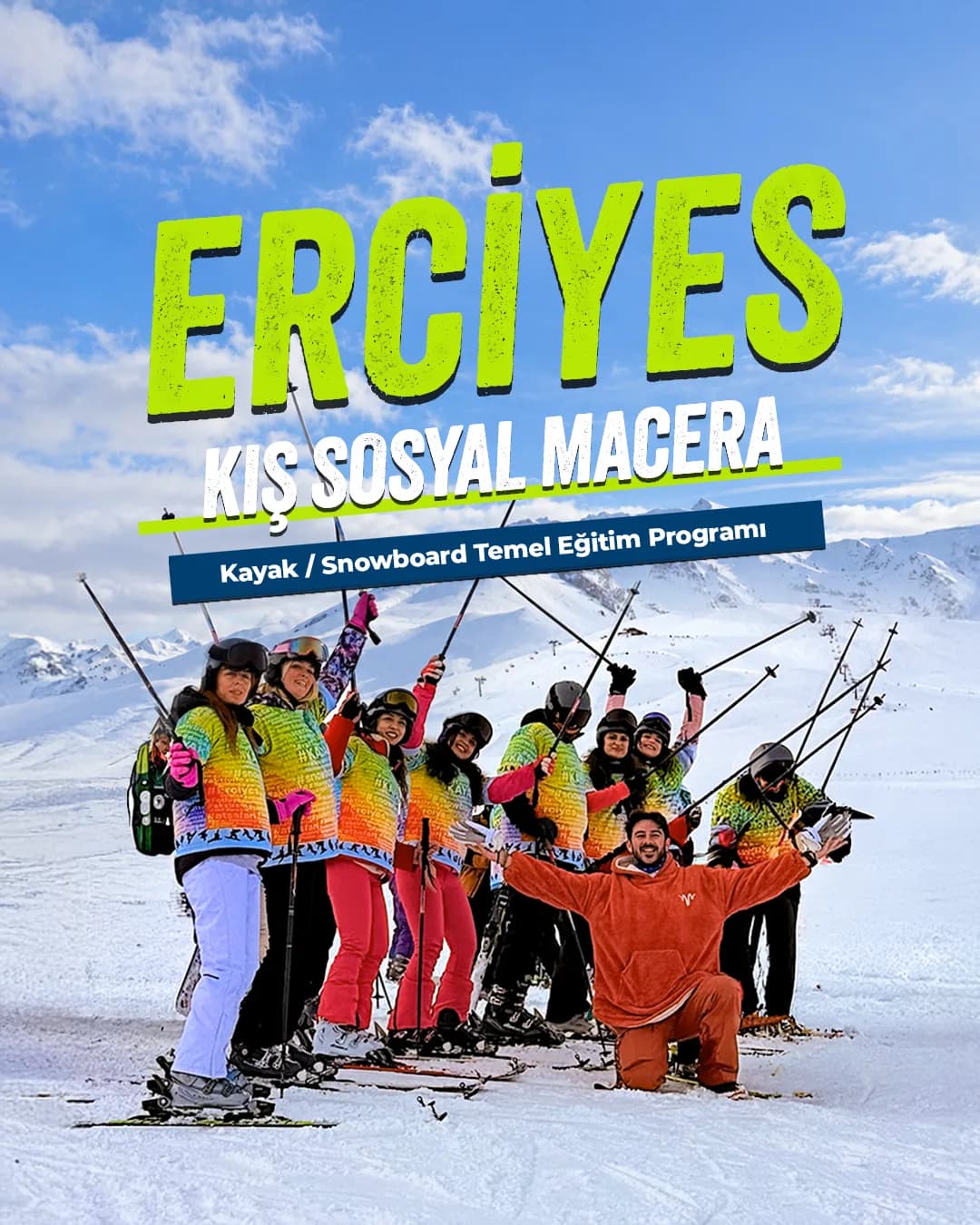
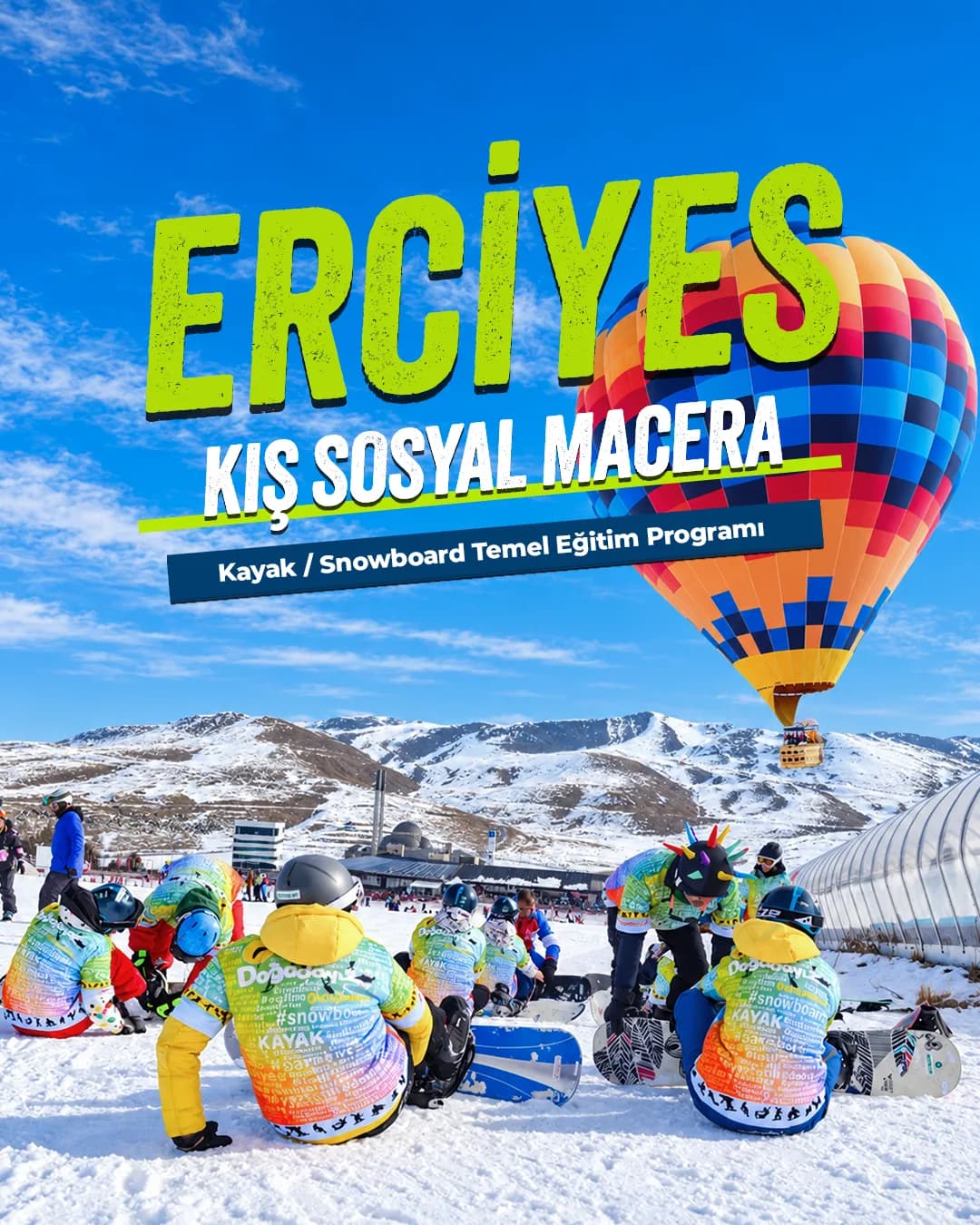
For adult beginners, the biggest obstacle is often logistics and nerves: where to go, how to rent equipment, how to find lessons. An activity holiday solves all of this in one plan. On Doğadayız Erciyes basic course packages, lessons with instructors affiliated with the Turkish Ski Federation, equipment (including helmet, goggles and protective gear), an unlimited ski pass and accommodation in Cappadocia come in one package. Learning with people of the same age and level also means you share the first-day nerves; that is why our winter programmes are designed as a social adventure holiday.
Doğadayız Packages
Doğadayız packages for your level
Winter activity holidays with accommodation, ski pass and equipment included, shared with a group.
The easiest way to learn to ski: a winter activity holiday
An activity holiday puts a sport at the heart of your trip: transport, accommodation and meals are planned, so you can focus on learning on the slopes. On Doğadayız winter activity holidays, accommodation, ski pass and ski or snowboard equipment are included in every package; course packages include basic lessons with instructors affiliated with the Turkish Ski Federation, while experience packages let you practise on the slopes at your own level.
What makes the programme different is the group: sharing the slopes with people at a similar level, dinners and nights out together, and a group leader by your side at all times. Solo travellers become part of this social adventure holiday from day one. That is why we describe our programmes as a social adventure holiday.
Yes. The average age of the 2,140 people who joined Doğadayız basic course packages over the last four winter seasons is 31.6, and more than half are over 30. Starting in the right order, with an instructor and in a beginner area, is all it takes.
Can you learn to ski or snowboard after 40?
Yes. Around 14% of Doğadayız basic course participants are 40 or over. What matters is not age but health and fitness; it is important to prepare physically in advance and to take the first days cautiously.
Do adults find it harder to learn than children?
They learn differently. Adults want to understand the reason for a movement and are more wary of falling. Progressing with an instructor, in a gently sloping area and in the right order largely closes this gap.
Is there an age limit for learning to ski?
There is no upper age limit for learning to ski; health and fitness are what matter. On group programmes, limits vary by programme: ages 12–55 on the Doğadayız Erciyes and Bansko programmes, and 14–65 on the Sarıkamış programme.
You start skiing with a beginner lesson with an instructor, rental equipment and easy (beginner) slopes. On day one you put on your skis, glide on flat ground, learn to stop with the snowplough and ride the magic carpet; on day two you come down an easy slope under control with snowplough turns. For an adult who has never skied, this stage usually takes 2 days.
You start snowboarding by finding your stance (regular or goofy), with a beginner lesson with an instructor and with rental equipment. On day one you learn to push with one foot and to side-slip on your heel edge (heelside) and your toe edge (toeside); then you change direction with the falling leaf, and usually on day 2–3 you make your first linked turns.
For someone who has never skied, a ski holiday should include at least 2–3 full days on the slopes; with travel days this usually means a holiday of between 2 nights/3 days and 4 nights/5 days. A common benchmark at ski schools is that a beginner can get down an easy run after three days of lessons. If you can already ski on your own, 3–4 days on the slopes is enough to get to know different runs. What matters is not the total number of nights but the number of full days you spend on the slopes; count travel days separately.