How to Choose a Ski Jacket and Trousers: Waterproofing and Breathability
A ski jacket and trousers have to do two jobs at once: keep snow and water out and let sweat escape. On labels, the first number shows waterproofing (mm) and the second shows breathability (g/m²/24 hours); according to Burton, 5K/5K for dry snow, 10K/5K for above-average snow and 20K/10K for heavy wet snow or rain are a good starting point. However, there is no official industry standard for these values, and results from different test methods cannot be compared with each other. Membrane fabrics are made as 2 layers (2L), 2.5 layers (2.5L) and 3 layers (3L). When the water-repellent surface coating (DWR) wears off, the fabric wets out and can no longer breathe; that is why caring for it matters. The most versatile choice for skiing is a shell jacket and trousers that you can layer underneath.
A ski jacket and trousers are the outermost layer of a layering system. Underneath you have a base layer that moves sweat away and, if needed, a mid-layer that keeps you warm. We explain the logic of layering in our guide what to wear skiing and snowboarding. This article is about choosing the outer layer.
What do the numbers on the label tell you?
Ski jackets usually carry two numbers, such as "10K/10K" or "20,000 mm / 15,000 g":
The first number, waterproofing (mm): Shows at what height in millimetres a column of water standing on the fabric starts to leak through. The higher the number, the more waterproof the fabric.
The second number, breathability (g/m²/24 h): Shows how many grams of water vapour pass through one square metre of fabric in a day. The higher the number, the better the fabric lets sweat out.
The levels Burton recommends:
Conditions
Recommended value (waterproofing / breathability)
Dry, cold snow
5K / 5K
Above-average snow
10K / 5K
Heavy wet snow or rain
20K / 10K
What is EN 343?
In Europe, there is a standard, EN 343, for protective workwear against rain. According to SATRA, this standard divides waterproofing into four classes, and the highest class (4) requires withstanding 20,000 Pa, or roughly 2,040 mm of water pressure; both the fabric and the seams are tested. Breathability is also divided into four classes, with class 4 being the best. The "20,000 mm" on a ski jacket label and the EN 343 values are not the same test; do not try to convert one into the other.
Membrane constructions: 2L, 2.5L, 3L
Waterproof, breathable fabrics contain a thin membrane. As Burton explains:
Construction
How is it made?
Characteristics
2L (two-layer)
The membrane is bonded to the outer fabric, with a loose lining inside
Common, comfortable; usually in insulated jackets
2.5L
Instead of a lining, a thin protective printed layer is applied over the membrane
Light, packable
3L (three-layer)
The outer fabric, membrane and inner fabric are bonded together
Durable; usually in shell jackets
DWR: the water-repellent coating
The DWR coating on the surface of the outer fabric makes water bead up and run off. According to Burton, when the DWR wears off, the outer fabric absorbs water ("wets out"); even though the membrane is still waterproof, breathability drops and moisture builds up inside. That is why it is important to wash your jacket according to the manufacturer's instructions and renew the DWR when needed.
PFAS-free coatings: Most older DWR coatings contained PFAS ("forever chemicals"). The European Commission has adopted a restriction banning PFHxA, from the PFAS group, in consumer textiles such as rain jackets; transition periods range from 18 months to 5 years depending on the use. The general restriction covering all PFAS is still under evaluation at ECHA. You can look for "PFC-free" or "PFAS-free" on the label.
Insulated or shell?
Insulated jacket: Has padding inside; comfortable on very cold days and for people who do not move much, but can make you sweat on mild days.
Shell jacket: No padding; you regulate warmth with the layers underneath. It is the most versatile choice, from mild spring days to very cold summits.
Whichever you choose, the temperature you feel changes a lot with the wind; see our guide to wind chill.
Details to look for in a jacket
Detail
Why does it matter?
Taped seams
Stitch holes are where water gets in most easily; taped seams prevent leaks
Powder skirt
Stops snow getting in under the jacket when you fall
Helmet-compatible hood
A hood that fits over your helmet is useful in a storm
Ventilation zips
Zips under the arms reduce sweating
Ski pass pocket
On the sleeve or chest, makes it easier to scan your card at the turnstile
Wrist cuffs
Join up with your gloves and stop snow getting in
Trousers or bibs?
Waterproofing and breathability are read the same way on ski trousers. In addition:
Inner gaiters: The elastic gaiters inside the legs go over your boots and stop snow getting in.
Reinforced inner hems: Make it harder for ski and snowboard edges to cut the fabric.
Bib trousers (bibs): Reach up to the chest; they stop snow getting in at the waist when you fall and in deep snow, and snowboarders in particular prefer them because they sit down often. Trousers are more practical and cooler.
Comfortable cut: You should be able to bend your knees and crouch, and wear a thin layer underneath.
Rented or borrowed
You do not have to buy an expensive outfit for your first ski holiday. A waterproof jacket and trousers, with layers underneath, are enough for many people. For goggles and helmets, see our guides on choosing ski goggles and choosing a ski helmet; for your hands, see our guide to ski gloves.
Stay dry and the day lasts longer
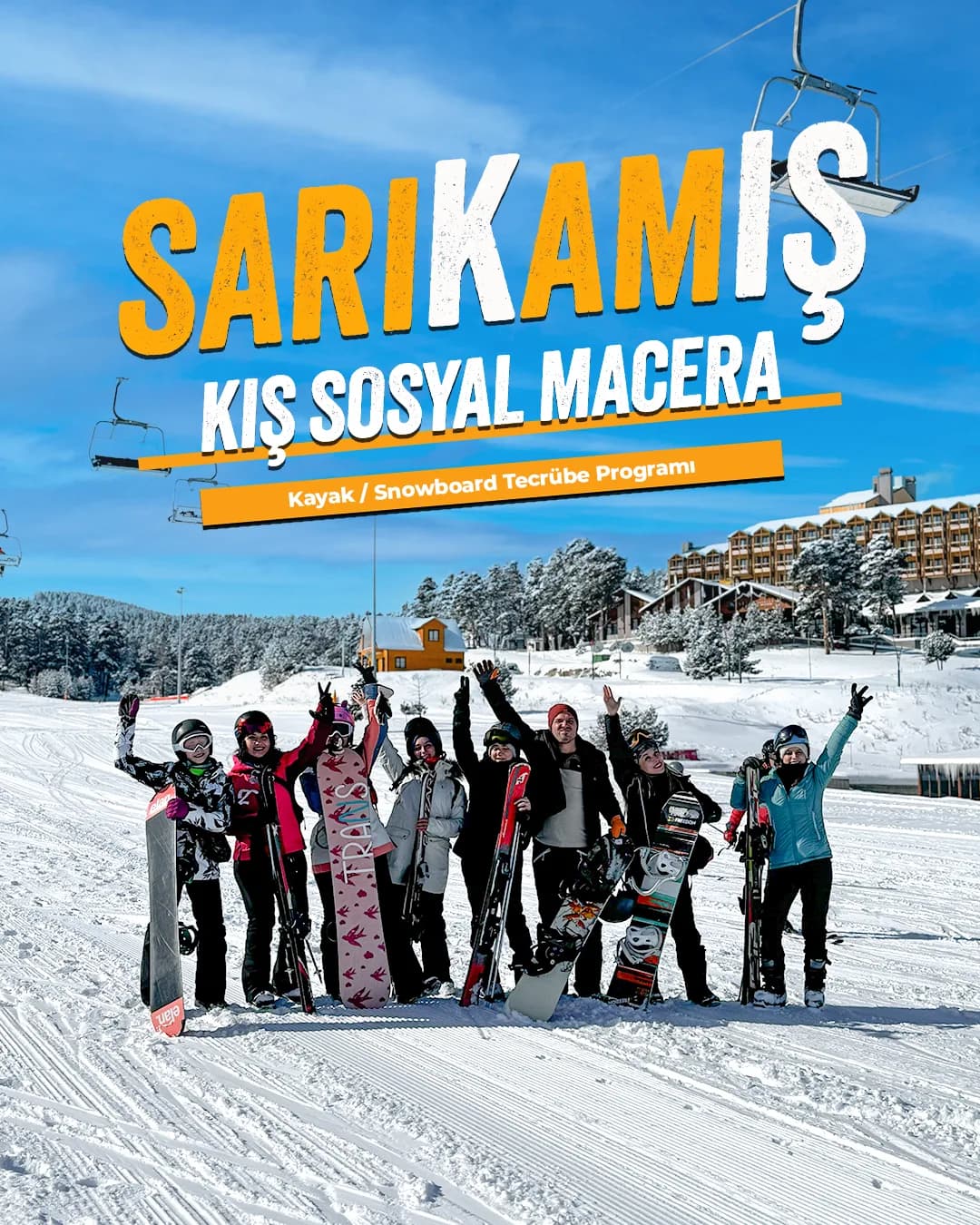
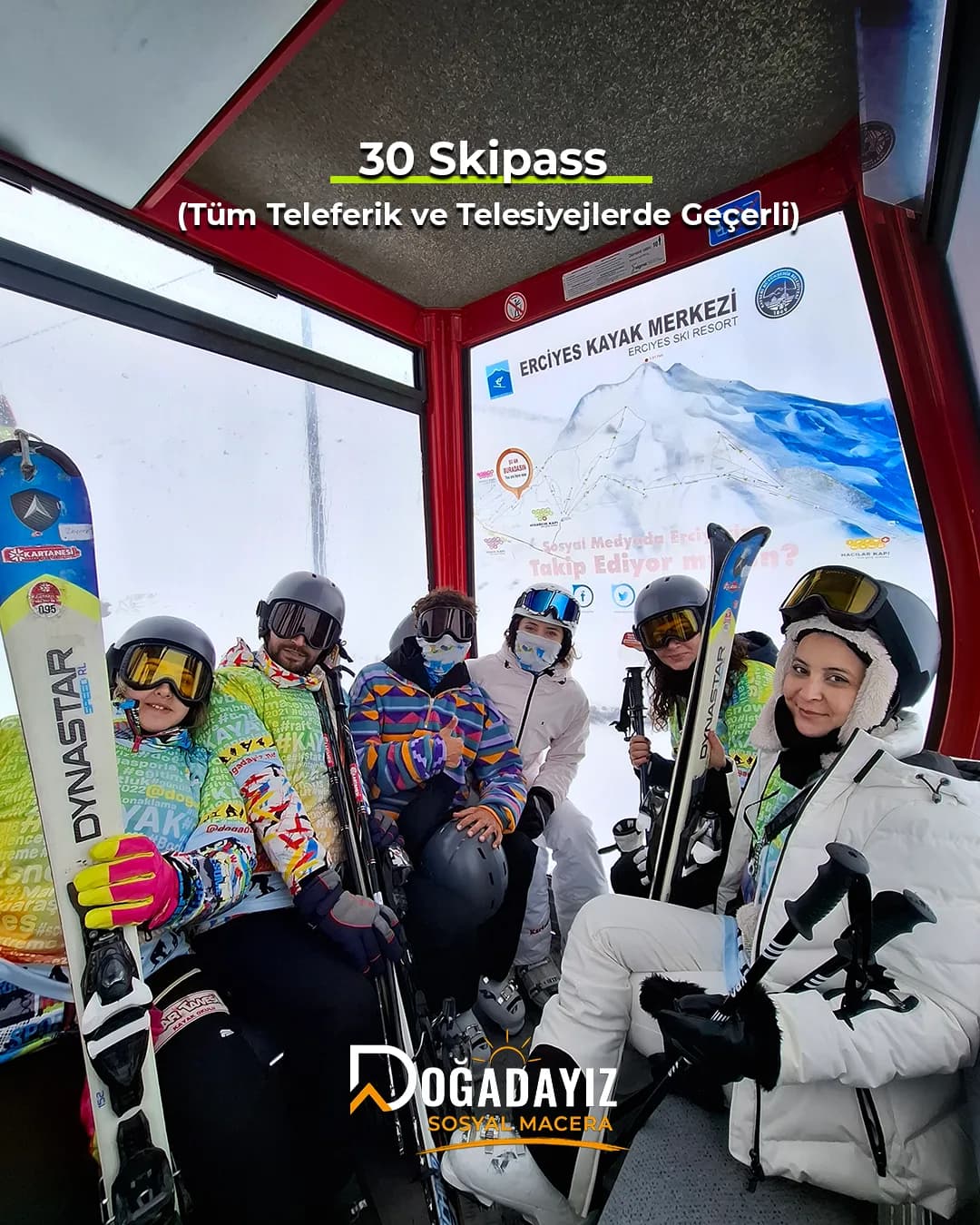
Someone who gets wet and cold leaves the slopes early in the afternoon; someone who stays dry skis until the end of the day. That is why the right outer layer directly affects how much you get out of an activity holiday. Doğadayız winter packages include accommodation, a ski pass and ski or snowboard equipment. Meeting up with the group at the end of the day, dry and warm, also adds to the fun of a social adventure holiday. For programmes, see our winter activity holidays page.
Doğadayız Packages
Doğadayız packages for your level
Winter activity holidays with accommodation, ski pass and equipment included, shared with a group.
The easiest way to learn to ski: a winter activity holiday
An activity holiday puts a sport at the heart of your trip: transport, accommodation and meals are planned, so you can focus on learning on the slopes. On Doğadayız winter activity holidays, accommodation, ski pass and ski or snowboard equipment are included in every package; course packages include basic lessons with instructors affiliated with the Turkish Ski Federation, while experience packages let you practise on the slopes at your own level.
What makes the programme different is the group: sharing the slopes with people at a similar level, dinners and nights out together, and a group leader by your side at all times. Solo travellers become part of this social adventure holiday from day one. That is why we describe our programmes as a social adventure holiday.
The first number shows waterproofing (a 10,000 mm water column), the second shows breathability (10,000 grams of water vapour per square metre per day). According to Burton, 10K/5K for above-average snow and 20K/10K for heavy wet snow are a good starting point; however, there is no official industry standard for these values.
What is the difference between a 2L and a 3L jacket?
In 2L, the membrane is bonded to the outer fabric and there is a loose lining inside; in 3L, the outer fabric, membrane and inner fabric are bonded together as a single piece. 3L is generally more durable and is used in shell jackets; 2.5L is lighter, with a thin protective printed layer instead of a lining.
Ski trousers or bibs?
Because bibs reach up to the chest, they stop snow getting in at the waist when you fall and in deep snow; snowboarders prefer them because they sit down often. Trousers are more practical and cooler. On both, the inner gaiters in the legs keep snow out.
For skiing and snowboarding you wear three layers: a synthetic or wool base layer that wicks sweat away, a fleece mid-layer that holds in warmth, and a ski jacket and trousers that keep out wind and water. Add a single pair of thin ski socks, waterproof gloves, a neck gaiter, a helmet and goggles. Do not wear cotton: it gets soaked with sweat and makes you cold.
On the slopes, your hands are the part of your body most exposed to both cold and wet. Mittens, where the fingers touch each other, generally keep you warmer than gloves with separate fingers; in a single-subject Antarctic test, the best results came from mittens with liner gloves and heated products. Gloves with fingers, on the other hand, make it easier to hold poles and use zips and buckles. Whichever you choose, get a waterproof model that covers your wrist, and add a thin liner glove underneath. The EN 511 code on a glove shows test results against cold and water but does not give a temperature rating. The first signs of frostbite are redness and pain, followed by white or grey-yellow, waxy and numb skin; if this happens, do not rub the skin, and warm it with lukewarm (not hot) water.
Wind chill is when the temperature you feel is lower than the actual air temperature because the wind quickly carries heat away from exposed skin. According to an information card from Turkey's Ministry of Labour and Social Security, at −5 °C a 30 km/h wind feels like −13 °C. According to Environment and Climate Change Canada, when the wind chill is between −28 °C and −39 °C, exposed skin can freeze in 10–30 minutes; at lower values this drops to a few minutes. When skiing, you create part of the wind yourself: skin cools very quickly when you are coming down fast and especially when you are sitting facing into the wind on a chairlift.