Wax helps ski and snowboard bases glide better on snow and protects the base from drying out. The longest-lasting method is hot waxing: the wax is melted into the base with an iron, left to cool, the excess is scraped off with a plexi scraper in the direction of travel and the base is brushed. According to Toko, the base starts absorbing wax from 70 °C; the iron temperature depends on the wax (Toko: yellow for warm snow 130 °C, red for general use 140 °C, blue for cold snow 150 °C), and you need to let it cool for at least 30 minutes before scraping. Wax is chosen according to snow temperature. FIS has banned fluorinated waxes in all races from the 2023/24 season onwards. With rental equipment, the rental shop does this maintenance; if you have your own equipment, it is time to wax when the base starts to look dry and whitish.
Ski and snowboard bases are made of a plastic that can absorb wax when heated. Wax:
Helps the base glide better on snow.
Stops the base drying out.
Helps the base perform better depending on the type of snow (cold and hard, or warm and wet).
According to Toko's manual, even new skis should be hot waxed several times before their first use.
Which wax?
Wax is chosen according to snow temperature. Manufacturers mark their waxes with a colour and a temperature range; in Swix's range, for example, yellow wax is for 0 to +10 °C and turquoise wax for −10 to −18 °C. If the air and snow temperature are uncertain, a "universal" (all-round) wax does the job. For how snow types affect glide, see our guide Snow types.
Hot waxing step by step
Step
What do you do?
Tip
1. Clean
Make sure the base is dry and clean
Old dirt and wax residue spoil the glide
2. Iron
Drip the wax onto the base with the iron and spread it evenly, keeping the iron moving
Do not hold the iron in one spot; you can burn the base
3. Cool
Leave it to cool at room temperature
Toko: at least 30 minutes
4. Scrape
Scrape with a plexi scraper, from tip to tail, in the direction of travel
Clean the wax off the edges too
5. Brush
Brush in the direction of travel, then wipe with a clean cloth
Swix: steel brush, then Fiberlene cloth
Iron temperature (Toko): Yellow (warm snow) 130 °C, red (general) 140 °C, blue (cold snow) 150 °C. According to Toko, the base starts absorbing wax from a surface temperature of 70 °C and absorbs more as it approaches 120 °C; the result is determined by temperature and dwell time. The temperature on the wax's own packaging always takes priority. A waxing iron with adjustable temperature makes it easier to hit these values.
How often?
Manufacturers do not give a fixed interval. A practical rule: if the base starts to look dry, whitish or grey, especially near the edges, it is time to wax.
End of season: According to Swix, dust dries out the base in storage; so in spring, before putting your gear away, you iron a storage wax onto the base.
The fluorinated wax ban
Fluorinated (fluoro) waxes were used in racing for many years, but the PFAS they contain ("forever chemicals") build up in the environment. FIS fully implemented its fluorinated wax ban from the start of the 2023/24 season: fluorinated wax and fluorine-containing care products are banned in all FIS disciplines and at all levels, and using them results in disqualification. In the European Union too, consumer products containing PFAS are increasingly restricted. When buying wax, look for "fluoro-free" or "fluorine-free" on the packaging.
Rental equipment
The rental shop takes care of waxing and edge maintenance for rental skis and snowboards. If you get equipment that does not glide, catches or has a very dry base, ask them to swap it. For whether renting or buying makes more sense in your first season, see Rent or Buy Skis and Snowboards?.
A week with well-maintained equipment
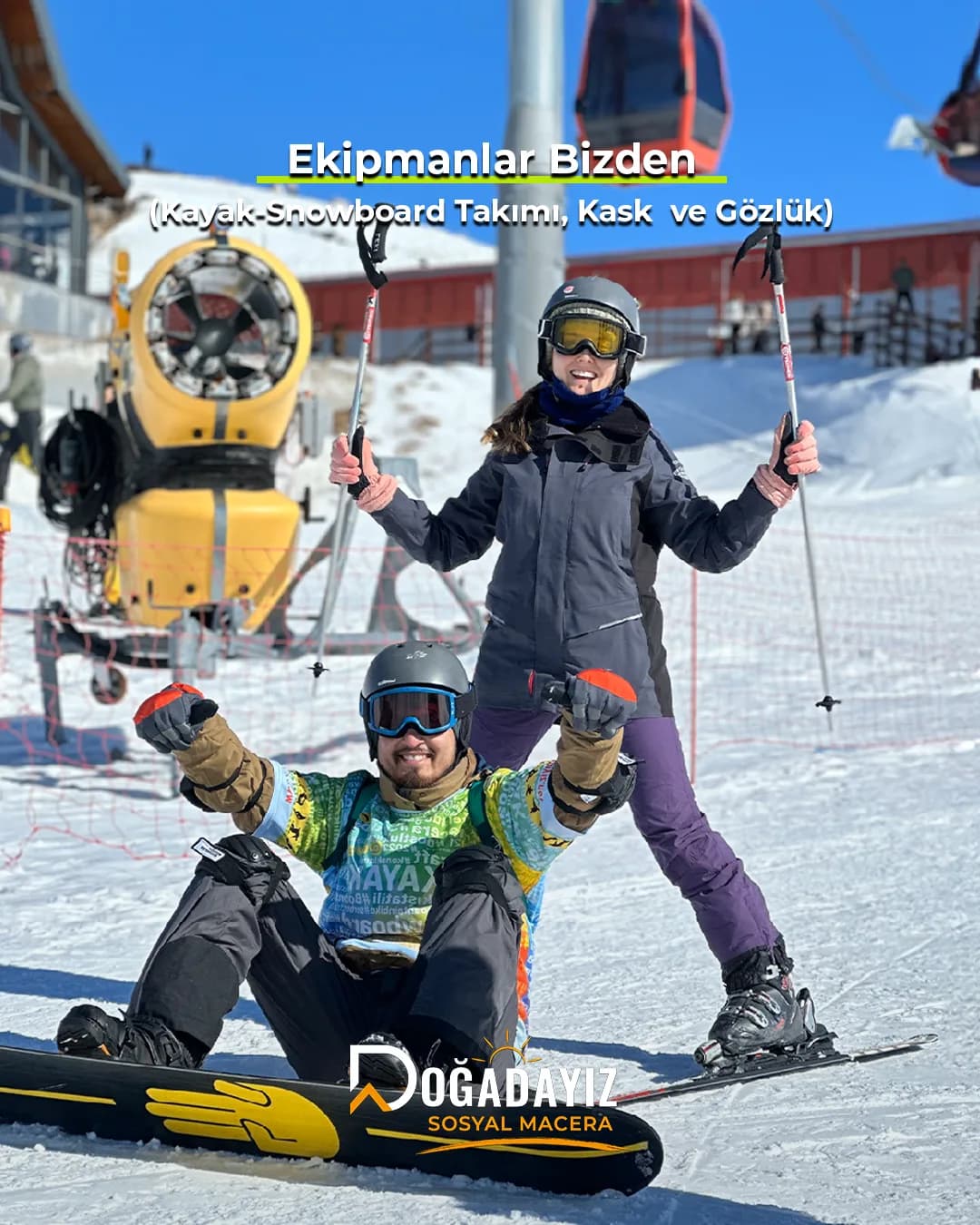
On an activity holiday, equipment should be the least of your worries: on Doğadayız winter packages, ski or snowboard equipment is included and collected from the rental shop. Leaving the maintenance to the rental shop and spending the day on the slopes with the group is the comfort of a social adventure holiday. For programmes, see the winter activity holidays page.
Doğadayız Packages
Doğadayız packages for your level
Winter activity holidays with accommodation, ski pass and equipment included, shared with a group.
The easiest way to learn to ski: a winter activity holiday
An activity holiday puts a sport at the heart of your trip: transport, accommodation and meals are planned, so you can focus on learning on the slopes. On Doğadayız winter activity holidays, accommodation, ski pass and ski or snowboard equipment are included in every package; course packages include basic lessons with instructors affiliated with the Turkish Ski Federation, while experience packages let you practise on the slopes at your own level.
What makes the programme different is the group: sharing the slopes with people at a similar level, dinners and nights out together, and a group leader by your side at all times. Solo travellers become part of this social adventure holiday from day one. That is why we describe our programmes as a social adventure holiday.
Manufacturers do not give a fixed interval. If the base starts to look dry, whitish or grey, it is time to wax; on artificial and hard snow, wax wears off faster.
What temperature should a waxing iron be?
It depends on the wax. According to Toko's manual, yellow wax for warm snow is 130 °C, red general-purpose wax 140 °C and blue wax for cold snow 150 °C; the temperature on the wax packaging always takes priority.
Is fluorinated wax banned?
FIS has banned fluorinated wax and fluorine-containing care products in all FIS disciplines and at all levels from the 2023/24 season onwards. For recreational use too, choosing fluoro-free waxes is the right choice for the environment.
For a beginner, skis should be short and easy to turn. Manufacturers' rules differ slightly: Atomic recommends a length at about chin height for beginners; Salomon says to choose skis 10–15 cm shorter than your height, and 15 cm shorter for complete beginners; Head points to between the chin and the nose. If you are light and inexperienced, choose the shorter end; if you are heavy or sporty, the longer end. A short turn radius (about 12–15 m) and a little rocker make turning easier. In your first season, renting rather than buying is the easiest way to try out the right length.
When choosing your first snowboard, weight matters more than height: according to Burton, the board only “knows” your weight and your boot size, and manufacturers' weight ranges are recommendations, not rules. A practical starting point is a length that comes between your chin and nose when the board is stood upright; for beginners, Ride finds a slightly shorter board more forgiving. If your boot size is large (men's US 11–12 and above), you may need a wide board; otherwise your toes and heels drag in the snow. For a beginner, soft flex and a forgiving profile (according to Burton, a soft flat profile) make the easiest start. Renting in your first season is the best choice.
The snow on the slope is not the same every day. According to the definitions of MeteoSwiss, the Swiss meteorological office, powder is fresh snow that has not yet been compacted; hard snow is snow compacted by melting and refreezing or by wind, and its most extreme form is crust; corn (spring) snow is moist snow whose surface thaws in the daytime sun, typical in spring. Artificial snow (machine-made snow, the name scientists prefer), according to the WSL Institute for Snow and Avalanche Research (SLF), is much denser than natural snow (fresh natural snow averages ~100 kg/m³, dry machine-made snow ~400 kg/m³) and consists of small, round grains of 0.1–1 mm. That is why machine-made snow creates a more durable but harder slope.