A Guide to Physical Preparation for Skiing and Snowboarding
Physical preparation for skiing and snowboarding gives you two things: less fatigue in the first few days and keeping control at the end of the day. The American Academy of Orthopaedic Surgeons (AAOS) recommends arriving in good condition, stopping when you get tired, and warming up for 3–5 minutes before skiing and starting with a few slow runs; many skiing injuries happen at the end of the day. To be honest, though, according to a systematic review there is not enough evidence that fitness training reduces injuries in recreational skiers; the evidence is strongest for knee injury awareness training and, in snowboarding, for wrist guards.
A systematic review of 30 papers found no evidence-based recommendation on physical fitness or training (Sports Medicine, 2013)
Evidence lacking
Knee injury awareness training
Video training explaining how knee ligament injuries happen reduced serious knee sprains among ski patrollers and instructors by 62% (American Journal of Sports Medicine, 1995)
Controlled but not randomised; ski staff
Neuromuscular training (racers)
In competitive young alpine skiers, core and neuromuscular training brought anterior cruciate ligament injuries to 3.9% versus 8.1% (2020); fewer traumatic injuries in racers under 16 (2022)
Historical control group; racers
Wrist guards (snowboarding)
In a randomised study of 5,029 snowboarders, there were 8 wrist injuries in the group with guards and 29 in the group without (American Journal of Sports Medicine, 2001)
Randomised controlled
Warming up
One study reported more injuries among those who warmed up (2009, observational); another group claimed that warming up reduces injuries (conference abstract only). According to the FIS 2025 consensus statement, evidence on warming up in snow sports is largely lacking
Conflicting
So the benefit of preparation is not that it “definitely prevents injury”, but that you get less tired and ski for longer and with more control. That makes a difference in the late hours of the day, when injuries increase.
Why prepare?
Fatigue and accidents: According to the AAOS, many skiing injuries happen at the end of the day, along with fatigue. A study in China that examined 753 injuries also found that 36.7% of injuries occurred in the last hours of the day.
Muscle fatigue in the first few days: Skiing and snowboarding work your leg muscles in a way they are not used to; the muscle soreness after day one is reduced by preparation.
General health: The World Health Organization recommends that adults do at least 150 minutes of moderate-intensity physical activity a week; preparing for a ski holiday is a good reason to start this habit.
A sample 4-week preparation plan
The plan below is based on the types of exercise (leg strength, core and balance) found in neuromuscular programmes developed for racers; it has not been proven to prevent injuries in recreational skiers, but it works the muscle groups skiing needs. If you have a chronic health condition, talk to your doctor first.
Week
Per week
Content
1–2
3 days, 20–30 min
Squats, lunges, bridges, planks, balancing on one leg (30 s)
3–4
3–4 days, 30–40 min
The same exercises with more repetitions; side lunges, wall sits, single-leg squats, standing on a balance cushion
Every week
2 days
Cardio: brisk walking, cycling or stairs (20–30 min)
Caution: In squats and lunges, do not let your knees collapse inwards; your knees should stay in line with your toes. This is also the basis of correct knee alignment in skiing.
On the slopes: warming up and planning your day
Warming up: The AAOS recommends a light 3–5-minute warm-up (jogging on the spot, jumping) and doing your first few runs slowly on an easy slope. Although the evidence that warming up reduces injuries in snow sports is not clear, it makes sense not to push your first run with cold muscles.
Planning your day: Lessons in the morning, practice in the afternoon; stop when you get tired. Do your last run on an easy slope.
Wrist guards in snowboarding: One of the few measures with randomised evidence; always wear them in your first days.
Helmet: Markedly reduces the likelihood of head injury; for details, see our guide Choosing a Ski Helmet.
Protecting your knees: awareness
The core of the training given to ski staff in the 1995 study was to recognise, through videos, the situations in which serious knee injuries happen and to notice those moments; serious knee sprains fell markedly among the staff who received the training. The practical lesson for recreational skiers: learn not to fight a fall, to fall in a controlled way, and not to try to get up before you have come to a complete stop. Your instructor teaches you the correct falling and getting up technique in your first lesson.
Preparation and your activity holiday
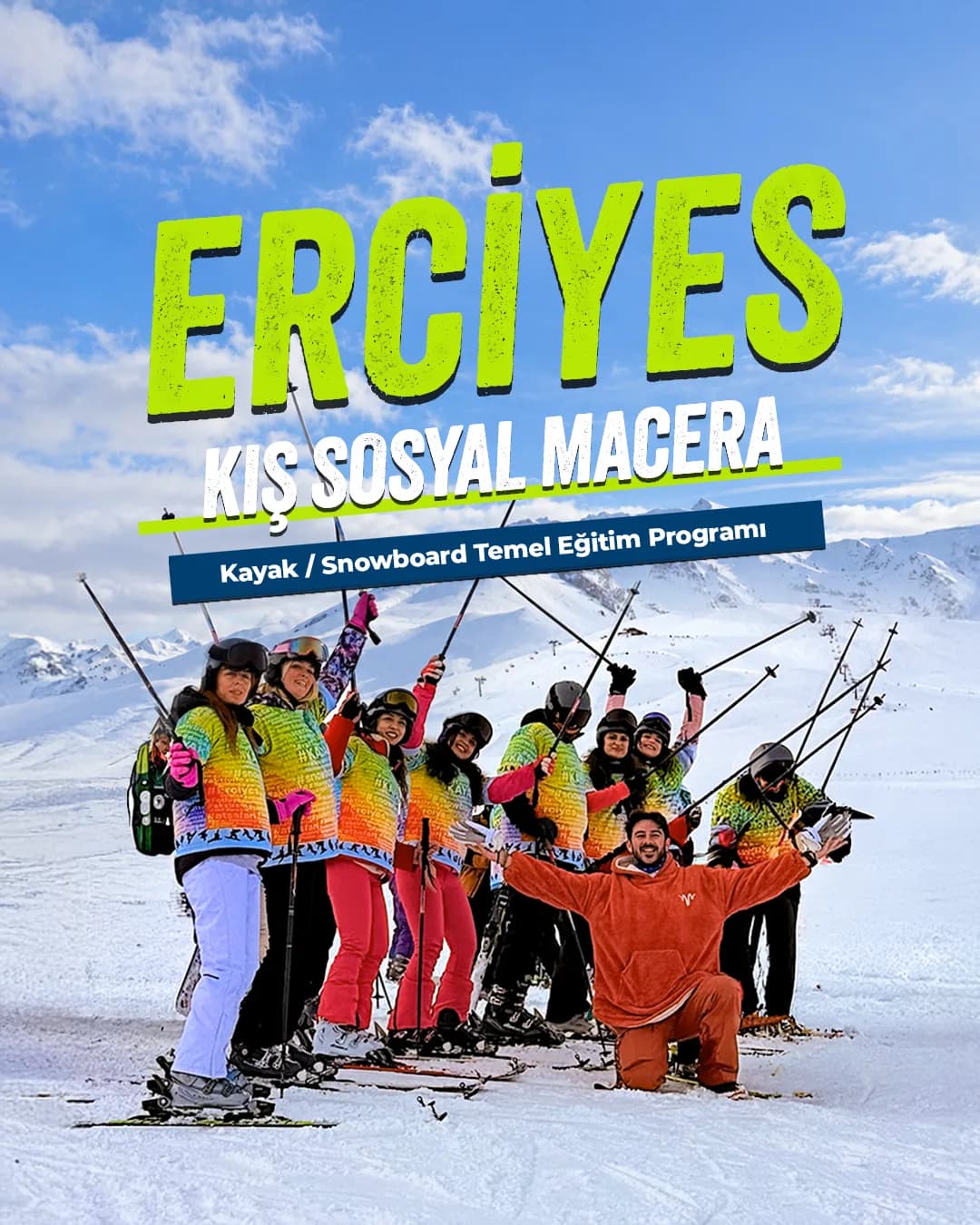
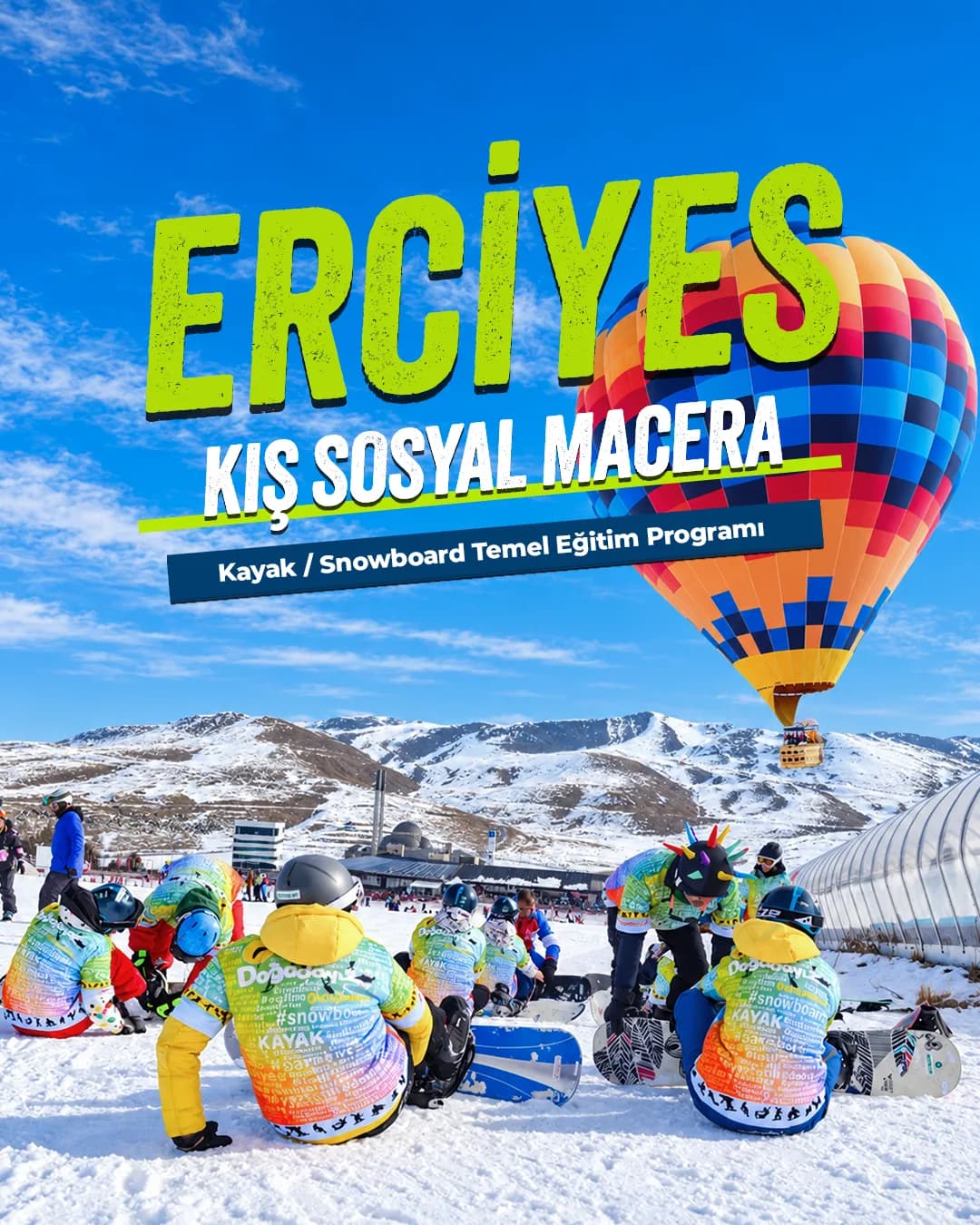
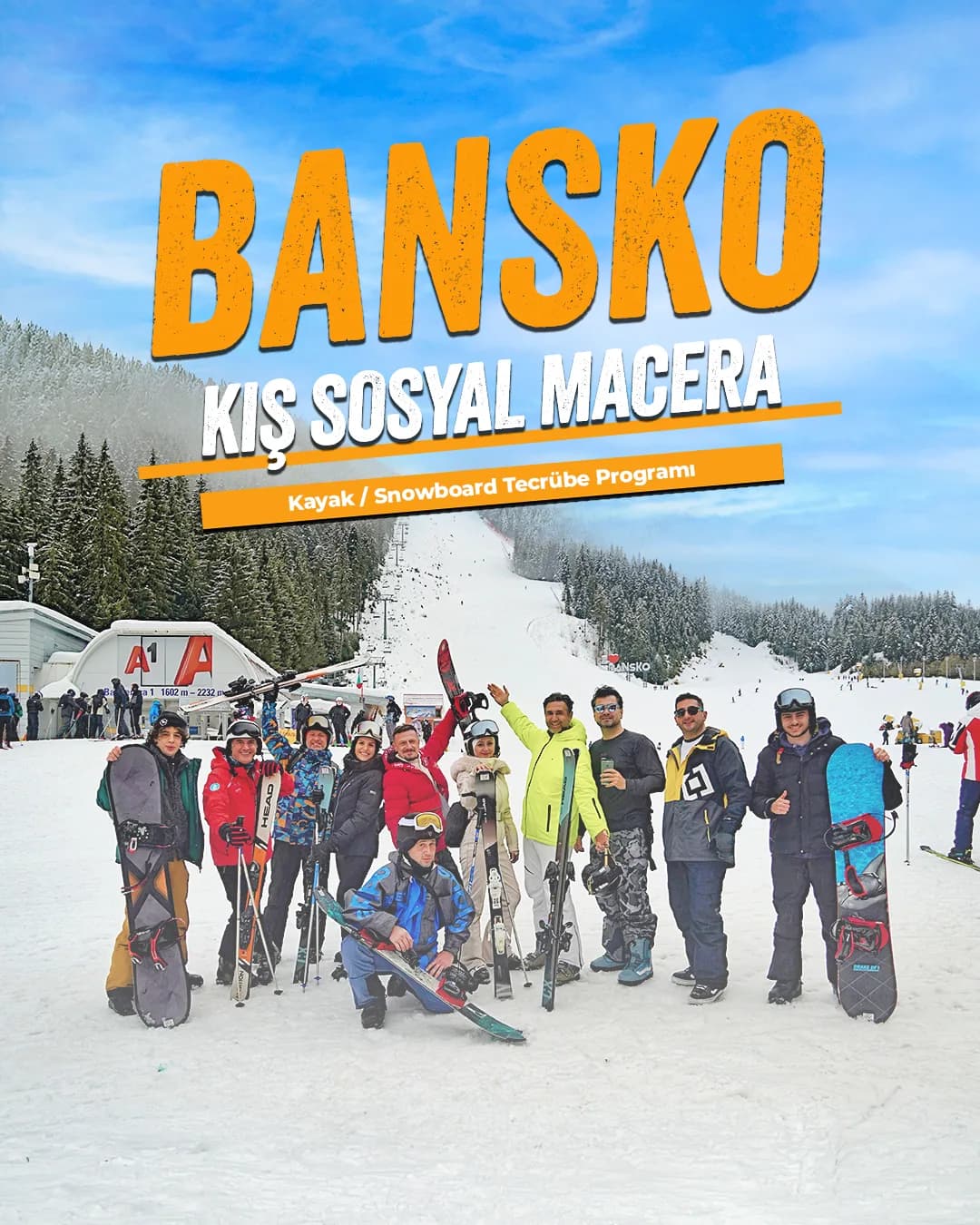
With good preparation, every day of an activity holiday is more enjoyable: less fatigue, more time on the slopes and energy to spend the evenings with the group. On Doğadayız winter programmes, the days are built around lessons in the morning, practice in the afternoon and a social programme in the evening; that is why our programmes are each a social adventure holiday. On the Erciyes basic course packages, wrist guards, hip protectors, knee pads and elbow pads are also included. To plan how long your holiday should be, see our guide How Many Days Should a Ski Holiday Be?.
Doğadayız Packages
Doğadayız packages for your level
Winter activity holidays with accommodation, ski pass and equipment included, shared with a group.
The easiest way to learn to ski: a winter activity holiday
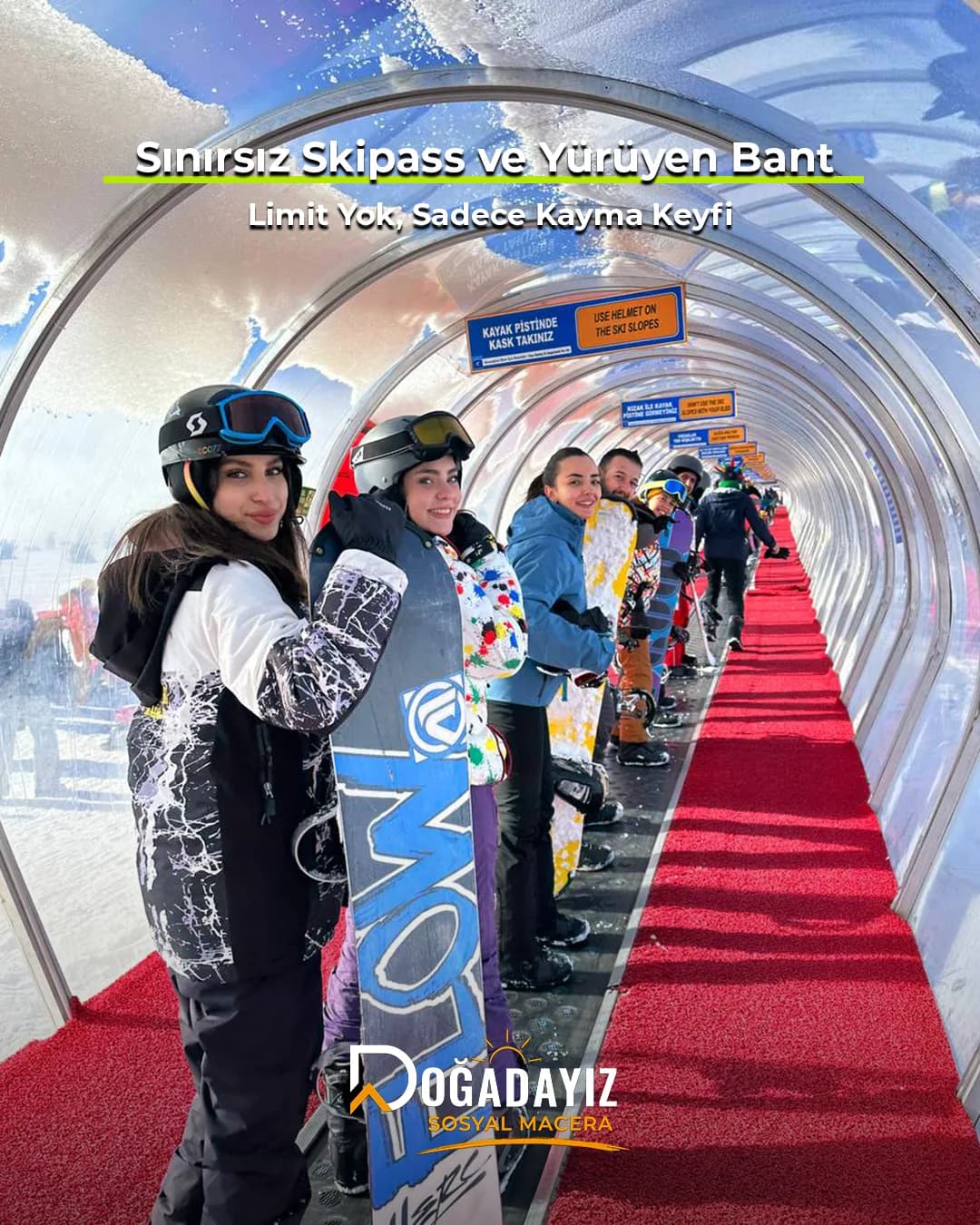
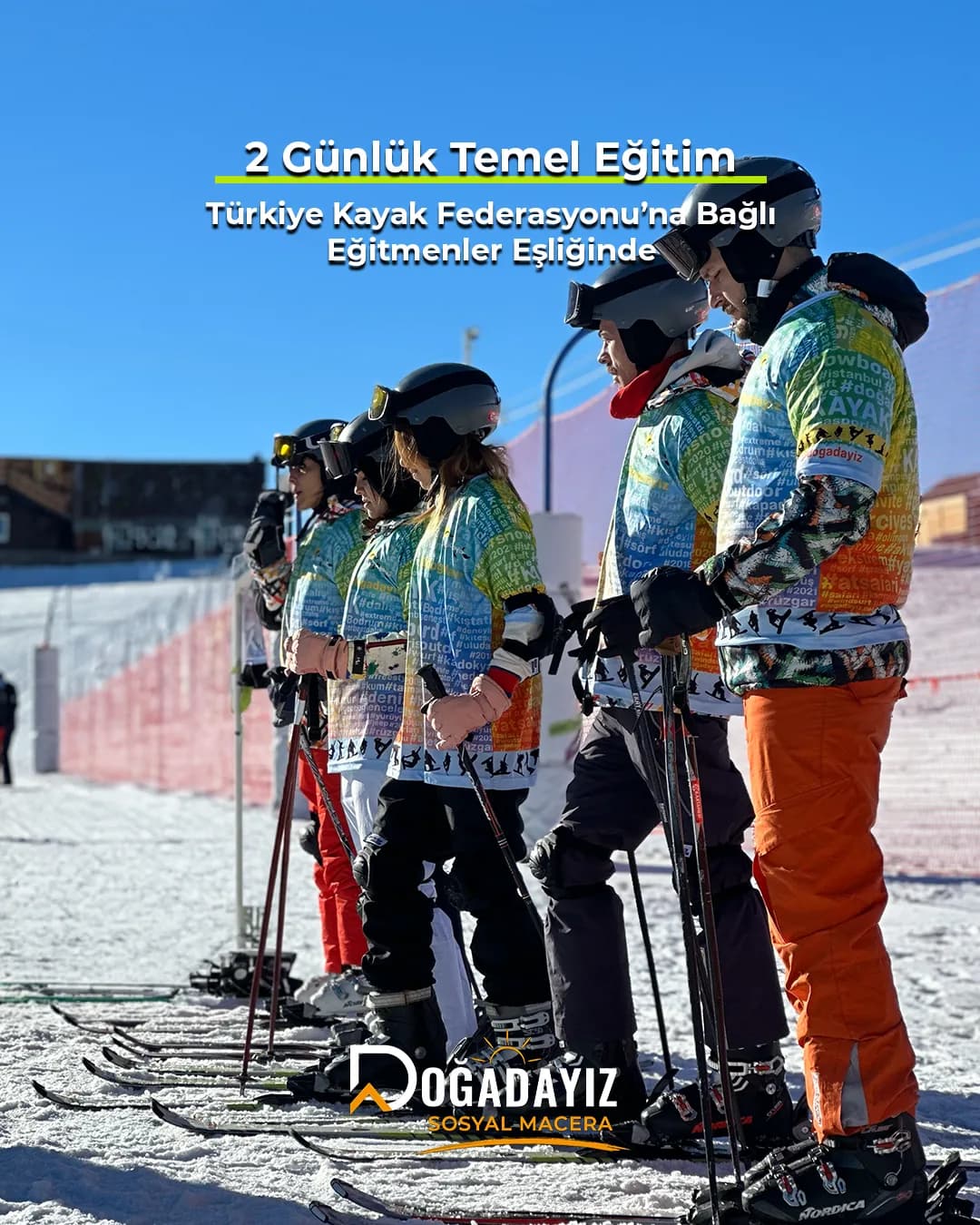
An activity holiday puts a sport at the heart of your trip: transport, accommodation and meals are planned, so you can focus on learning on the slopes. On Doğadayız winter activity holidays, accommodation, ski pass and ski or snowboard equipment are included in every package; course packages include basic lessons with instructors affiliated with the Turkish Ski Federation, while experience packages let you practise on the slopes at your own level.
What makes the programme different is the group: sharing the slopes with people at a similar level, dinners and nights out together, and a group leader by your side at all times. Solo travellers become part of this social adventure holiday from day one. That is why we describe our programmes as a social adventure holiday.
Leg strength, core and balance exercises 3–4 days a week plus 2 days of cardio, starting 3–4 weeks before your holiday, is a good start. The aim is to reduce fatigue in the first few days and to keep control at the end of the day.
Does exercising before skiing prevent injuries?
Not for certain. According to a systematic review, there is not enough evidence that fitness training reduces injuries in recreational skiers. The measures with stronger evidence are knee injury awareness training, wrist guards in snowboarding, and helmets.
Do I need to warm up before skiing?
The AAOS recommends a light 3–5-minute warm-up and taking your first few runs slowly. Research on whether warming up reduces injuries in snow sports is conflicting; even so, it makes sense not to push your first run with cold muscles.
Which muscles work when you ski?
Mainly the front and back thigh muscles, the hip (glute) and calf muscles, plus the abdominal and back (core) muscles that provide balance and trunk control. Squats, lunges, bridges, planks and balance exercises work these muscle groups during preparation.
For someone who has never skied, a ski holiday should include at least 2–3 full days on the slopes; with travel days this usually means a holiday of between 2 nights/3 days and 4 nights/5 days. A common benchmark at ski schools is that a beginner can get down an easy run after three days of lessons. If you can already ski on your own, 3–4 days on the slopes is enough to get to know different runs. What matters is not the total number of nights but the number of full days you spend on the slopes; count travel days separately.
No, adults do not find it hard to learn to ski; they just learn differently. According to Doğadayız booking records, the average age of the 2,140 people who joined the basic course packages over the last four winter seasons is 31.6; 56% are over 30 and 14% over 40. Adults are more cautious than children and more wary of falling, so it is important to start in the right order, with an instructor and in a gently sloping beginner area. Physical preparation, rental equipment that is set up correctly and a two- or three-day winter activity holiday are the most effective start for an adult.
When choosing a ski helmet, check three things: certification, fit and goggle compatibility. In Europe the standard for ski and snowboard helmets is EN 1077 (class A covers the ears and has a stricter penetration test; class B offers more ventilation and better hearing); in the USA it is ASTM F2040. The helmet should fit snugly but without hurting, stay put when you shake your head, and leave room for two fingers under the chin strap. According to a meta-analysis of 12 studies, helmet wearers are about 35% less likely to suffer a head injury, and neck injuries do not increase. After a serious impact, a helmet should be replaced even if there is no visible damage.