How Skiing and Snowboarding Contribute to Psychological Wellbeing
Research shows that outdoor sports such as skiing are positively associated with mental health, but most of it is observational and does not prove causation. In a Swedish study that followed more than 395,000 people for up to 21 years, participants in a long-distance cross-country ski race had roughly half the risk of depression and a markedly lower risk of anxiety. A study of 19,806 people in England found that spending at least 120 minutes a week in nature is associated with better health and wellbeing. According to the World Health Organization, physical activity reduces symptoms of depression and anxiety. A winter social adventure holiday brings these three together: movement, nature and social ties.
According to the World Health Organization, physical activity reduces symptoms of depression and anxiety and supports brain health and overall wellbeing.
Nature
Spending at least 120 minutes a week in nature has been found to be associated with better health and wellbeing.
Social ties
Doing an activity as a group supports motivation and consistency; a ski holiday often comes with new friendships.
Skiing, depression and anxiety: the Swedish cohort
A large study group in Sweden (395,369 people in total), which followed participants in the famous Vasaloppet cross-country ski race and matched individuals from the general population for up to 21 years, published two important results:
Depression: in the long term, the skiers’ risk of being diagnosed with depression was about half that of the comparison group (Psychiatry Research, 2019).
Anxiety: the skiers had a markedly lower risk of anxiety disorder (Frontiers in Psychiatry, 2021). An interesting detail: among female skiers, the fastest finishers had a higher risk of anxiety than slower female skiers; in other words, what matters is not performance but regular movement.
Time spent in nature
According to a study of 19,806 people in England (Scientific Reports, 2019), those who spent at least 120 minutes a week in nature rated their health and wellbeing better than those who spent none; the benefit peaked at 200–300 minutes a week. Whether this time was spent in one go or across several short visits made no difference. Even a single day on the slopes easily exceeds this weekly amount.
The feeling on the slopes: not in the moment, but afterwards
The emotional effect of skiing is not always felt on the slopes, in the moment. A study that measured backcountry skiers’ emotions both in the moment and afterwards (Frontiers in Psychology, 2018) showed that skiers were happier during breaks than on the descents, and that the real happiness emerged when remembering it afterwards. That is why the fear and tiredness of the first day are normal; the feeling changes when you tell the story of the day over dinner.
As you get older, too
In a controlled study of experienced older skiers with knee replacements (Scandinavian Journal of Medicine & Science in Sports, 2015), the wellbeing of those who took part in a 12-week skiing programme increased, and skiing had no negative effect on pain or knee function. It is a finding that shows skiing is not just for the young; to start as an adult, see our guide Do adults find it hard to learn to ski?.
The role of social ties
The most memorable part of a ski holiday is often the time spent together: waiting for each other on the slopes, retelling your falls over lunch, après-ski in the evening. According to Doğadayız booking records, the share of participants joining winter programmes with a single booking was around 39% in 2025–26; for these participants, the most important gain from the holiday is often a new circle of friends. We explain how the group works in our guide What is a social ski holiday?.
A winter holiday that boosts wellbeing
An activity holiday brings the three sources highlighted by research (movement, nature and social ties) together in one programme: hours of movement and fresh air on the slopes during the day, time shared with the same group in the evening. That is why Doğadayız winter programmes are each designed as a social adventure holiday. For all winter programmes, see the winter activity holidays page.
Doğadayız Packages
Doğadayız packages for your level
Winter activity holidays with accommodation, ski pass and equipment included, shared with a group.
The easiest way to learn to ski: a winter activity holiday
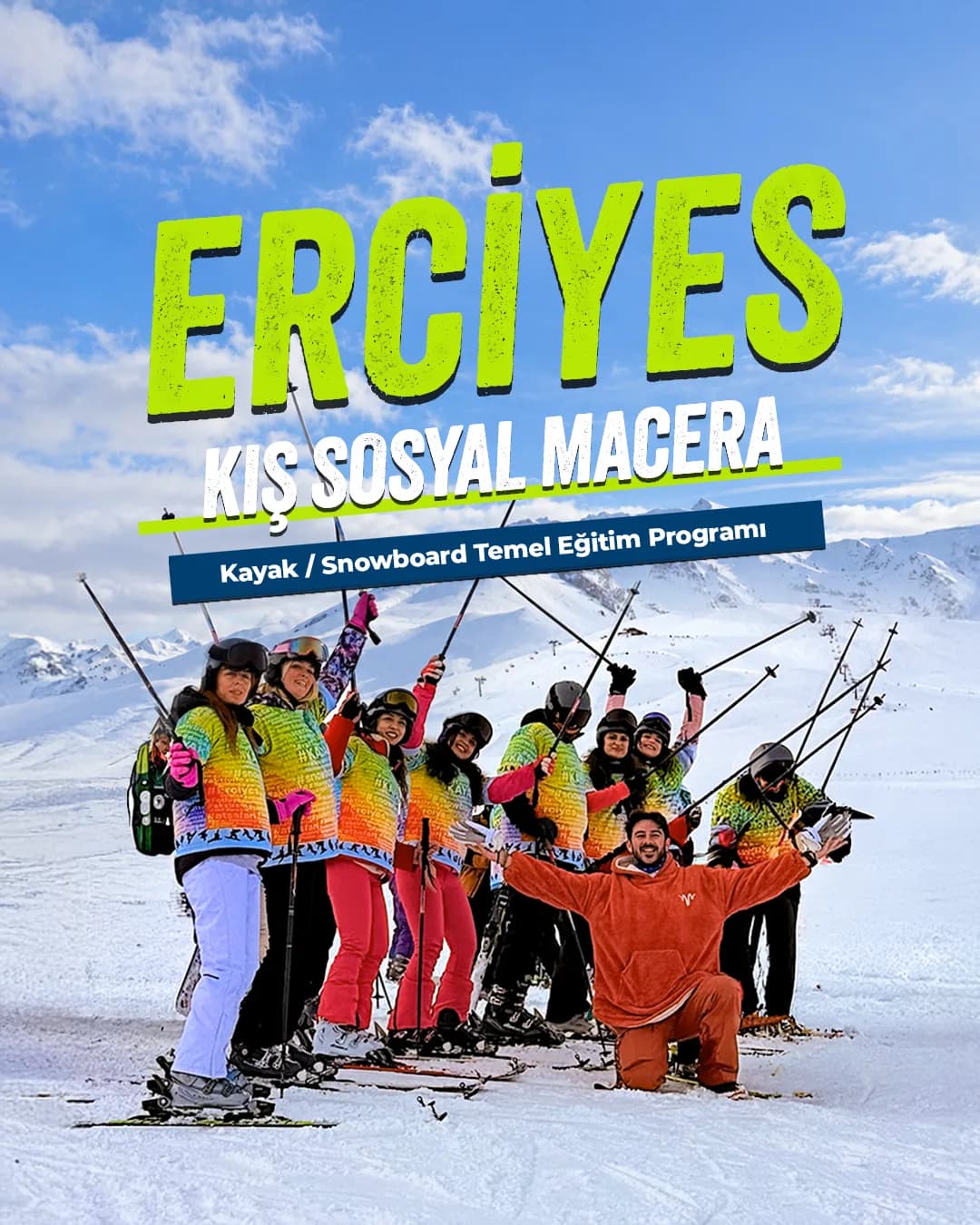
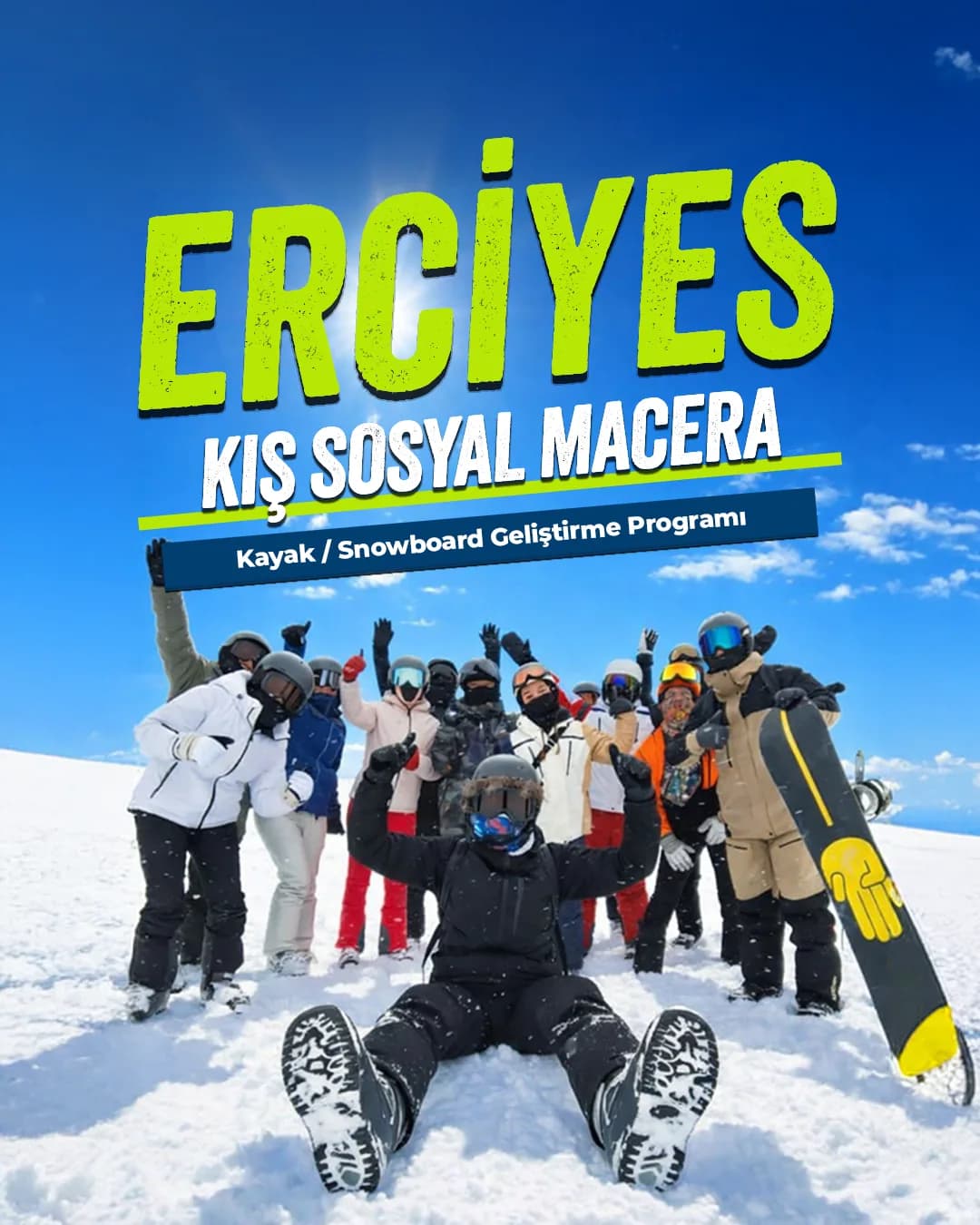
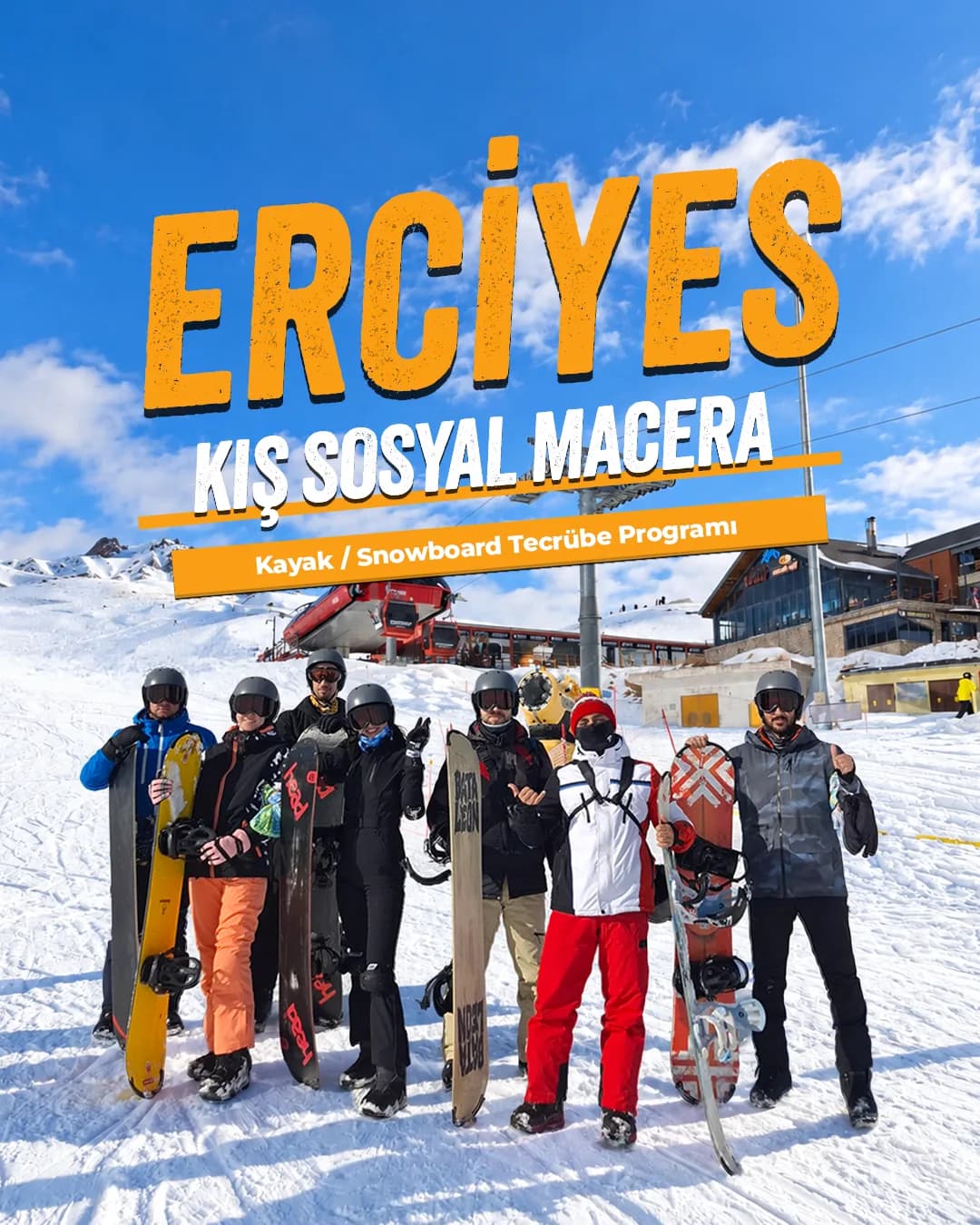
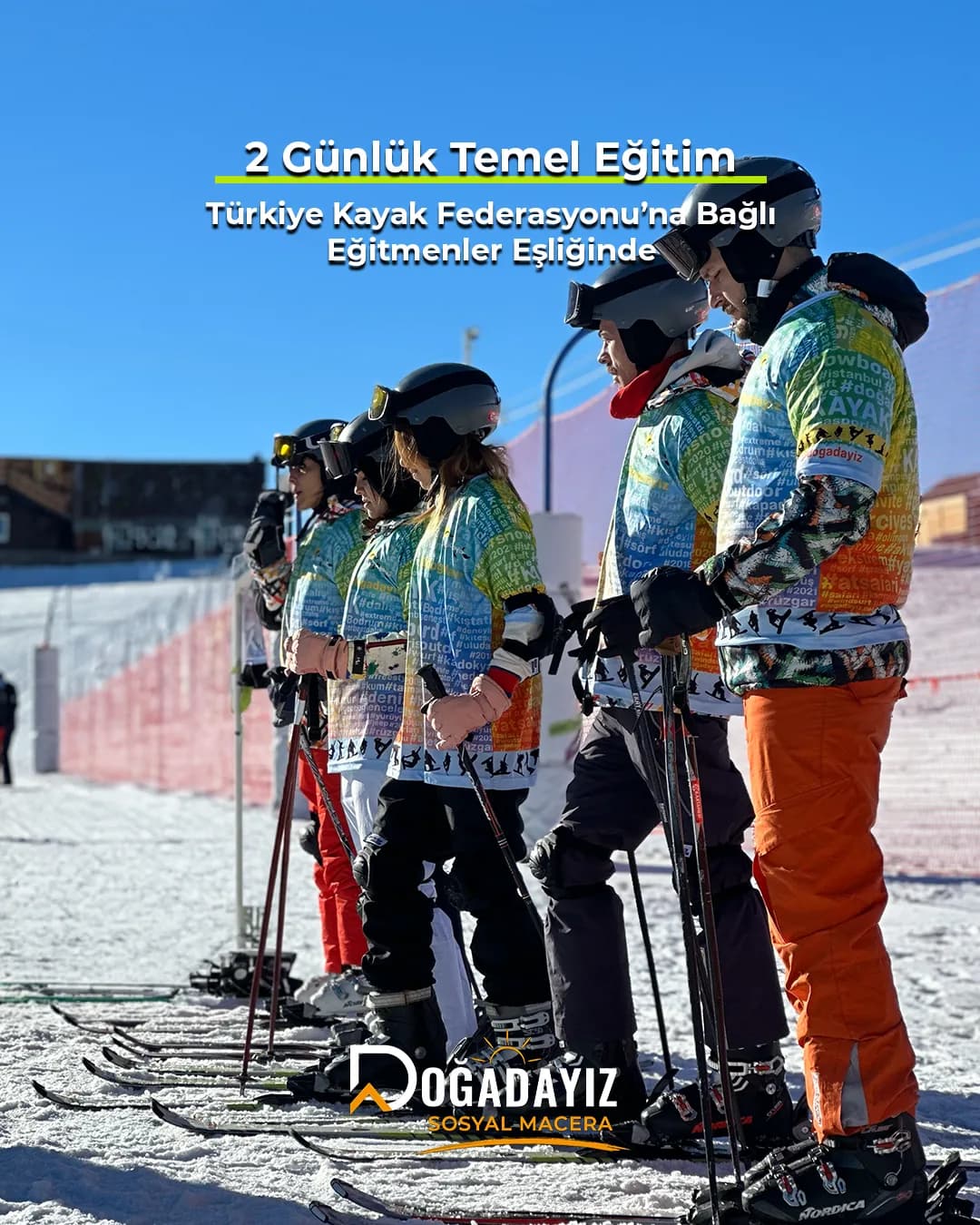
An activity holiday puts a sport at the heart of your trip: transport, accommodation and meals are planned, so you can focus on learning on the slopes. On Doğadayız winter activity holidays, accommodation, ski pass and ski or snowboard equipment are included in every package; course packages include basic lessons with instructors affiliated with the Turkish Ski Federation, while experience packages let you practise on the slopes at your own level.
What makes the programme different is the group: sharing the slopes with people at a similar level, dinners and nights out together, and a group leader by your side at all times. Solo travellers become part of this social adventure holiday from day one. That is why we describe our programmes as a social adventure holiday.
Research shows a positive association. In a Swedish study that followed more than 395,000 people, participants in a long-distance cross-country ski race had roughly half the risk of depression and a markedly lower risk of anxiety. However, these studies are observational and do not prove causation.
How much time do you need to spend in nature?
According to a study of 19,806 people in England, spending at least 120 minutes a week in nature is associated with better health and wellbeing; the benefit peaks at 200–300 minutes a week.
Why might I not feel happy on my first day of skiing?
That is normal. One study showed that skiers feel the real happiness not on the descents but during breaks, and especially when remembering it afterwards. The fear and tiredness of the first day ease as you share the day with the group.
A social ski holiday is a winter social adventure holiday where you learn and enjoy skiing or snowboarding as a group, spending the day on the slopes and the evening with the same group. Three things set it apart from a classic ski holiday: groups formed by level, a group leader who is with you at all times and a shared social programme after the slopes (dinner, nightlife, après-ski). It is also an activity holiday: accommodation, ski pass and equipment are planned, so all you have to do is focus on the slopes and the group. It is especially well suited to people travelling solo.
A winter social adventure holiday has three parts: lessons (tuition or practice that suits your level), experience (the resort, the slopes and the region) and social programme (the group, the group leader and the evenings). Choosing well means balancing these three according to your own priorities: if you have never skied, choose a programme focused on lessons; if you can ski, focus on the slopes and the resort experience; if meeting new people is your priority, choose a strong social programme. What they all share is the structure of an activity holiday, where transport, accommodation, ski pass and equipment are planned.
Being afraid while learning to ski is perfectly normal, and it directly affects learning: in a study of 337 students, beginners did better the lower their fear and the higher their self-efficacy (the belief that “I can do it”); self-efficacy predicted success. The way to manage fear is not to suppress it but to build confidence through small, successful steps: a gentle area, the right falling technique, an instructor who gives you choices and a group at the same level. In one study, teaching that gave learners choices (autonomy-supportive teaching) improved skill and self-confidence more without needing extra time.