In a 1998 study by Deibert and colleagues, which examined prospective records kept since 1972 at the Sugarbush ski resort in the US state of Vermont, the number of injuries per 1,000 skier-days was 4.27 for children, 2.93 for adolescents and 2.69 for adults. The most common injury in children was a knee contusion (bruising of the knee). So children do get injured slightly more often, which is why the precautions below matter.
We explain at what age a child can start skiing in our guide At What Age Can Children Start Learning to Ski?, and ways of teaching through play in our guide Teaching Children to Ski Through Play.
In a 2010 meta-analysis pooling 12 studies on ski helmets (Russell et al.), the risk of head injury among helmet wearers was about 59% lower in studies that included children under 13 (OR 0.41). There was no finding that helmets increase neck injuries.
Another study answers the worry that "a helmet puts strain on a child's neck": in the study by Macnab and colleagues on children under 13, no serious neck injuries were seen in either group; children without helmets had roughly twice the risk of head, face or neck injury (once adjusted for activity, the difference stayed at the edge of statistical significance).
The helmet must be the right size and the chin strap must be fastened; we explain how to choose one in our guide Choosing a Ski Helmet.
2. Binding settings: give the correct age and weight
Ski bindings are set to release the boot in a fall. The international standard for this setting, ISO 8061, specifies a release value about 15% lower for skiers under 10. In the Deibert study, in 42 (71%) of the 59 spiral tibial fractures examined, the binding release value was above the average of the uninjured skiers.
So when you rent equipment, give the child's age, weight, height and level correctly, and have the binding adjusted by a qualified technician. We explain the logic of binding settings in our guide What Are Ski Bindings and the DIN Setting?.
In a study by Glissmeyer and colleagues examining paediatric trauma records in Utah from 2004 to 2014, 29 (7%) of the 443 skiing and snowboarding cases admitted to hospital were falls from a chairlift. The average age of children who fell from a chairlift was 6.9, compared with 12.1 for the other injured children; being 7 or younger was a strong predictor of falling from a chairlift.
In a 2026 laboratory experiment, child mannequins representing 3- and 6-year-olds on a seat without a safety bar slid off and fell when the seat tilted by a smaller angle; the researchers recommend always using the safety bar and footrest.
Lift safety recommendations from the US National Ski Areas Association (NSAA):
- Sit fully back in the seat, with your back against the backrest.
- Lower the safety bar once everyone is seated.
- Adults should always help children lower the bar.
An adult should always sit next to the child; do not raise the bar before approaching the unloading area. We explain the lift types in our guide How to Use Chairlifts, Drag Lifts and Gondolas.
4. Sun: altitude and snow multiply UV
According to the World Health Organization (WHO), UV levels rise by about 10% with every 1,000 metres of altitude, and fresh snow almost doubles a person's UV exposure. Put sunscreen on the child's face, ears and lips and reapply it during the day; use ski goggles or sunglasses with UV protection. You can find the details in our guide Snow Blindness and the Effects of UV Rays.
5. Water, food and breaks
PSIA's instructor manual points out that high altitude and sunny spring weather can dehydrate the body, which can cause headaches and fatigue. Children often do not say they are thirsty or tired; give them regular water and snack breaks. For nutrition, see our guide Nutrition, Hydration and Energy Management on a Ski Holiday.
The NSAA recommends agreeing on a meeting point in advance in case you get separated. A practical plan:
- Before the day starts, show the meeting point together (for example a lift station or a cafeteria).
- Put a note in the child's pocket with your name and phone number written on it.
- Teach the child that if they get lost, they should stay where they are or go to a lift attendant or a ski school instructor.
Children learn rules best by example: stopping where you can be seen from above, giving way to the person in front, looking uphill at slope junctions. You can read our guides The FIS 10 Rules for Conduct on the Slopes and Reducing the Risk of Falls and Collisions in Skiing and Snowboarding together.
- A helmet of the right size, chin strap fastened.
- Bindings adjusted with the child's age and weight given correctly.
- On the chairlift: sitting fully back, lowering the bar, an adult sitting alongside.
- Sunscreen and goggles with UV protection.
- Regular water and breaks.
- A meeting point agreed in advance and contact details in a pocket.
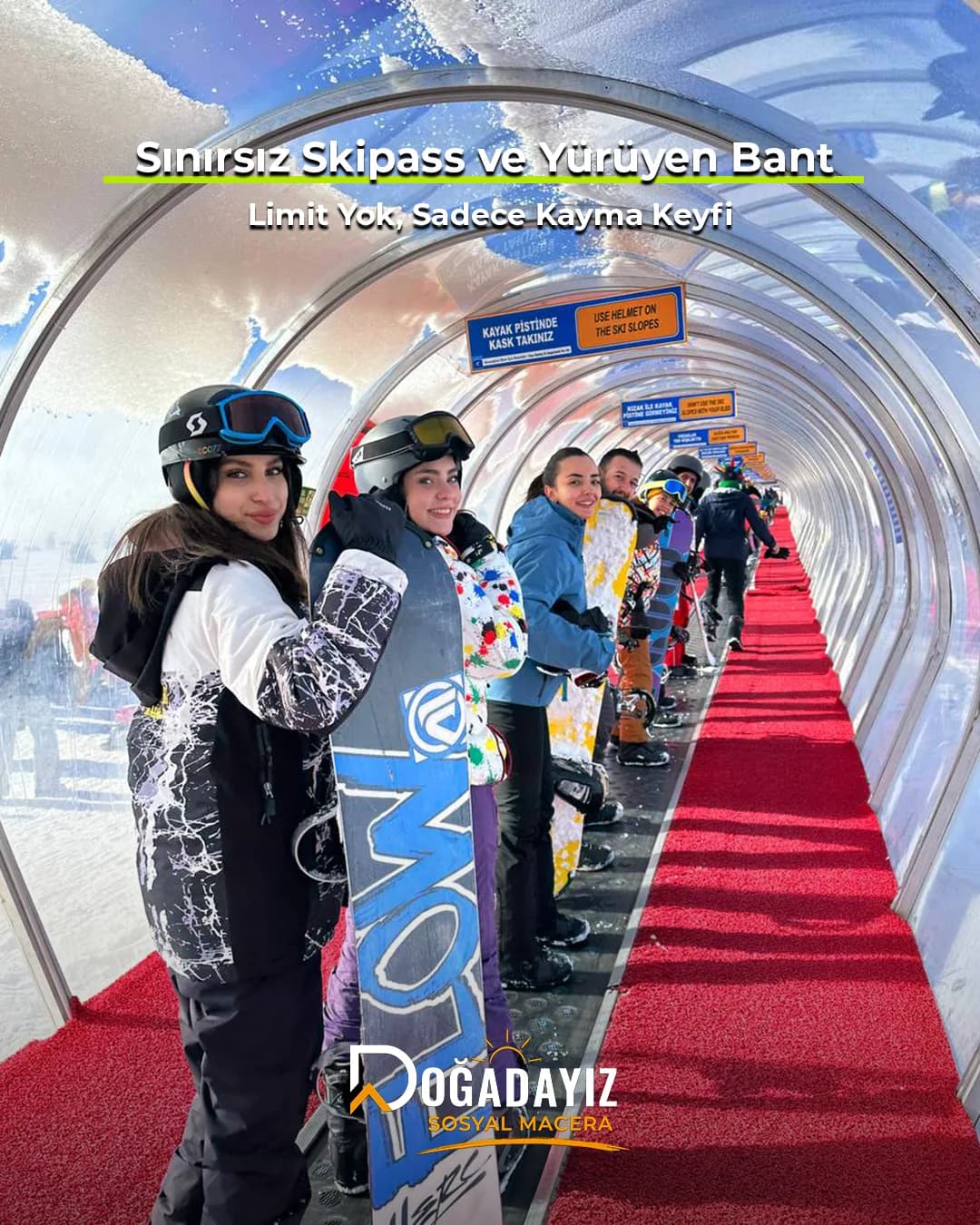
A ski day spent safely with children turns into an activity holiday for the whole family. Doğadayız winter packages include accommodation, ski pass and equipment; for the conditions for taking part with children, see the relevant package page. Children telling everyone about the most exciting run of the day over dinner is also the family-friendly side of a social adventure holiday. For the programmes, see the winter activity holidays page.